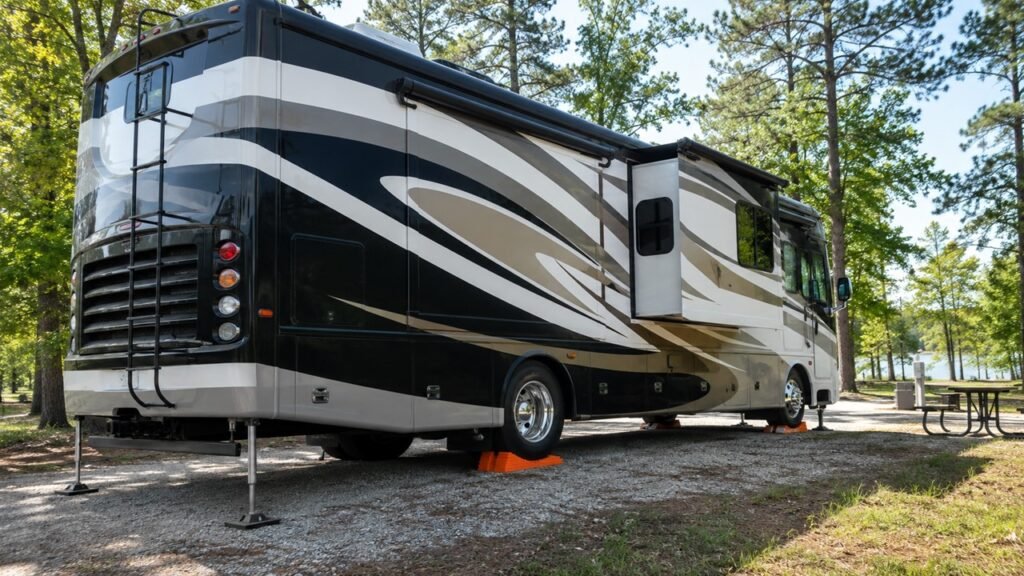
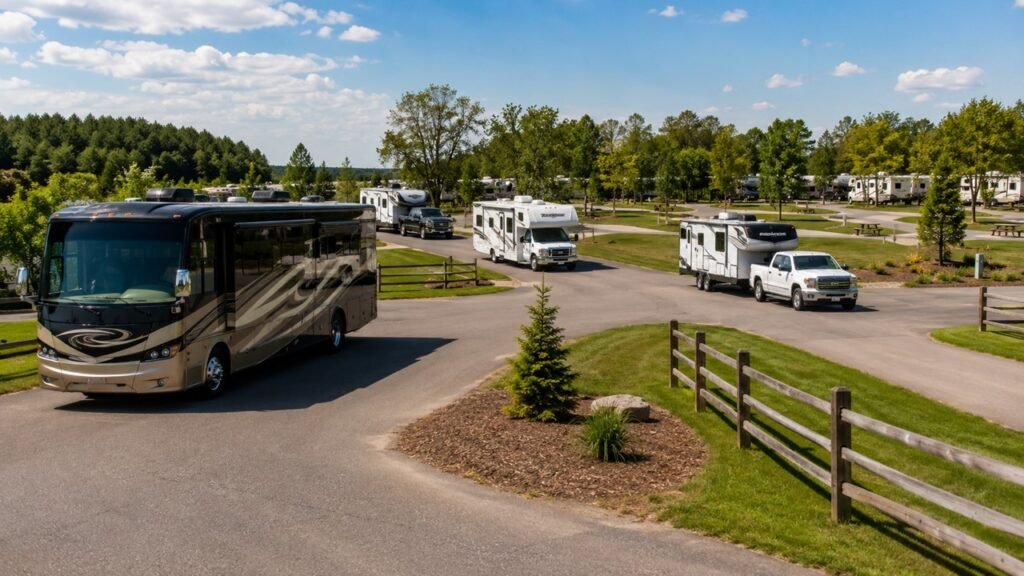
Yes, you can usually sleep in a slightly unlevel RV for one night, provided the RV is stable and securely parked. However, a noticeable slope can make sleeping uncomfortable and may interfere with your refrigerator, slide-outs, doors, plumbing, and holding tanks.
In this guide, I’ll explain how much tilt may be acceptable, when an unlevel RV becomes unsafe, and what you can do to create a more comfortable sleeping setup.
Key Takeaways
- A slightly unlevel RV may be manageable for a brief overnight stop.
- A severe slope can make sleeping, walking, and entering the RV unsafe.
- Absorption refrigerators are more sensitive to being unlevel while parked.
- Adjusting the mattress improves comfort but does not level the RV itself.
- Slide-out procedures vary, so always follow your RV manufacturer’s instructions.
- Repositioning the RV is often safer than building a tall stack of blocks.
- Stabilizer jacks normally reduce movement rather than level the RV.
- Always check the ground, tires, blocks, jacks, parking brake, and wheel chocks before sleeping.
Can You Sleep in an RV That Is Not Level?
You can sleep in an RV that is slightly unlevel, especially during a quick overnight stop. Many RV owners occasionally spend a night in a rest area, campground overflow space, driveway, or boondocking location where achieving a perfect level is difficult.
The important word here is “slightly.” There is a big difference between a barely noticeable tilt and an RV leaning enough to make you slide across the bed.
Before deciding to stay, consider the direction of the slope, the stability of the parking surface, your refrigerator type, and whether you plan to extend any slide-outs. You should also make sure the tires remain properly supported and the RV does not rock, shift, or feel unstable.
Sleeping comfort is only one part of the decision. Even if you can tolerate the angle of the bed, the RV’s appliances and systems may not operate correctly.
How Unlevel Is Too Unlevel for Sleeping?
There is no single tilt measurement that applies to every RV. Your RV, refrigerator, and leveling-system manuals should always take priority over a general recommendation.
A Slight Tilt You Can Barely Notice
A small slope may cause cabinet doors to swing slowly or make you feel like you are leaning slightly in bed. In many cases, this is manageable for a brief overnight stop.
A mild tilt may be acceptable when the RV feels stable, all tires are securely supported, and the refrigerator remains within its permitted operating angle.
You should still check the level in both directions. An RV that appears level from front to back may be leaning noticeably from side to side.
A Noticeable Tilt That Affects Movement
The RV is probably too unlevel when you can feel yourself walking uphill or downhill inside it.
Other warning signs include:
- Sliding toward one side of the bed
- Cabinet doors opening by themselves
- Water collecting in the shower
- The entry door rubbing or sticking
- Objects rolling across tables or counters
- An uncomfortable or unstable entrance step
At this point, repositioning or leveling the RV is usually worth the effort.
A Severe Lean or Unstable Position
You should not sleep in the RV when it leans heavily, rocks unexpectedly, or sits on unstable blocks.
A severe lean may place unusual loads on the tires, suspension, frame, jacks, and campsite surface. The problem becomes more serious when the ground is muddy, loose, sandy, or softened by rain.
Do not stay inside if a jack is sinking, a tire is poorly supported, or the leveling blocks are shifting. Bed comfort does not matter if the RV itself is unstable.
What Happens When You Sleep in an Unlevel RV?
Some effects of an unlevel RV appear immediately, while others develop after appliances or mechanical systems remain under uneven loads.
| Area Affected | What You May Notice | Concern Level |
| Sleeping position | Sliding, twisting, or pressure on one side | Low to moderate |
| Walking and balance | Uneasiness or difficulty moving safely | Moderate |
| Absorption refrigerator | Reduced cooling or abnormal operation | Moderate to high |
| Compressor refrigerator | Usually more tolerant of modest slopes | Low to moderate |
| Slide-outs | Binding, uneven movement, or seal gaps | Moderate to high |
| Sinks and shower | Water pooling away from the drain | Low to moderate |
| Holding tanks | Incomplete drainage or inaccurate readings | Moderate |
| Doors and cabinets | Swinging, rubbing, or failing to latch | Low to moderate |
| Jacks and blocks | Shifting, sinking, or uneven loading | High when unstable |
A small slope does not guarantee that something will break. The amount of risk depends on the RV design, severity of the tilt, length of the stay, and systems being used.
Is It Safe to Sleep With Your Head Lower Than Your Feet?
Sleeping with your head lower than your feet is not usually the most comfortable choice. You may feel like you are sliding toward the headboard, and the position can make it harder to relax.
When perfect leveling is not possible, try parking so the head of the bed is on the higher side. Most people find a slightly elevated head more comfortable than sleeping downhill.
A side-to-side slope can also be annoying because your shoulders, hips, and back remain at an angle for several hours.
People with reflux, vertigo, balance concerns, mobility limitations, or other medical conditions may be more sensitive to an inclined sleeping position. Follow advice from your healthcare provider when a sleeping position affects an existing condition.
Why Sleeping in an Unlevel RV Can Be Uncomfortable
A minor slope may not bother you while standing, but it often becomes much more noticeable after several hours in bed.
Your Body Slides or Twists
When the mattress slopes toward one side, your body may naturally slide in that direction.
You may unconsciously brace yourself or twist your back to remain in place. This can leave your shoulders, hips, neck, or lower back feeling stiff the next morning.
Your Head or Feet Remain Elevated
A front-to-back slope changes the position of your entire body.
Sleeping with your feet much higher than your head may feel unpleasant. Sleeping with your head slightly higher is often easier, although an excessive angle can still be uncomfortable.
Your Sense of Balance Can Be Affected
The walls and furniture inside an RV create strong visual reference points.
When those surfaces look straight but your body senses a slope, you may feel slightly disoriented. Walking during the night can also feel awkward, especially in a dark and narrow RV interior.
Loose Items and Doors May Move
Phones, water bottles, cups, and other items can slide from tables or counters.
Cabinet doors may swing open, while the entry door may close unexpectedly. These small problems can become especially frustrating when you are trying to sleep.
Can an Unlevel RV Damage the Refrigerator?
The effect of an unlevel RV depends heavily on the refrigerator type. Absorption and compressor refrigerators do not operate in the same way.
Absorption Refrigerators
Many traditional RV refrigerators use an absorption cooling system. Instead of relying on a mechanical compressor, the cooling unit uses heat and gravity-driven circulation.
When the RV remains parked at an excessive angle, the internal cooling solution may not circulate correctly. This can reduce cooling performance and may contribute to overheating or cooling-unit damage if operation continues.
The acceptable angle varies between models. Check the refrigerator manual instead of relying on a universal number.
You may also be able to check the refrigerator itself with a small bubble level. However, the manufacturer’s specified reference point should guide your measurement.
Compressor Refrigerators
A 12-volt or residential-style compressor refrigerator is generally less sensitive to a modest parking angle.
These refrigerators operate more like the refrigerator in a house. A slight campsite slope is less likely to interrupt the cooling process.
However, a compressor refrigerator still needs proper ventilation, secure installation, stable electrical power, and operation within the manufacturer’s limits.
Should You Turn the Refrigerator Off Overnight?
Turning off an absorption refrigerator may reduce refrigerator-related concerns during a brief unlevel stop.
However, switching it off does not solve problems involving vehicle stability, slide-outs, plumbing, doors, or drainage.
You must also consider food safety. Perishable food should remain at a safe temperature, so avoid leaving the refrigerator off longer than necessary.
Can You Use RV Slide-Outs When the RV Is Not Level?
You should not assume every RV follows the same slide-out procedure.
Some manufacturers instruct owners to level the RV before extending the slides. Other manufacturers may specify extending certain slides before using the leveling system.
Always follow the sequence in your owner’s manual.
A heavily tilted or twisted RV can place unusual pressure on the slide mechanism, seals, rollers, tracks, and surrounding structure. This may cause the slide to move unevenly or fail to seal correctly.
Stop operating the slide if you notice scraping, popping, hesitation, uneven movement, or a large gap around one side of the seal.
For a quick overnight stop, leaving the slides retracted may be the simplest option. This reduces setup time and avoids operating the mechanism while the RV is noticeably unlevel.
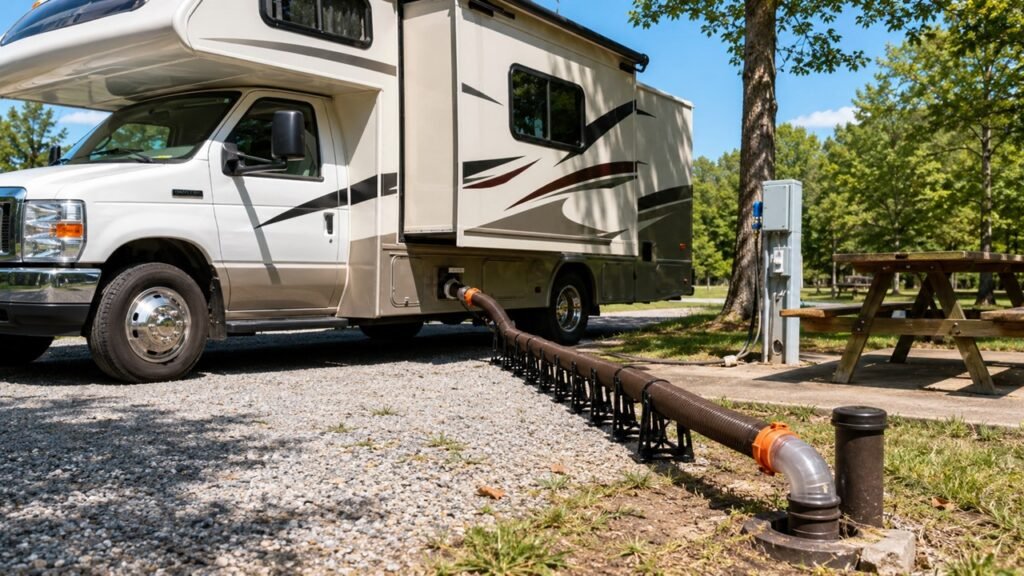
Does an Unlevel RV Affect Water and Holding Tanks?
Water naturally moves toward the lowest part of the RV. A noticeable tilt can therefore affect drains, tanks, pumps, and level sensors.
Sink and Shower Drainage
A sink or shower pan is designed to direct water toward its drain.
When the RV leans in the opposite direction, water may collect in a corner or remain along one side. This can leave standing water after washing or showering.
A small puddle may only be inconvenient, but repeated pooling can encourage odors, soap residue, and moisture problems.
Black and Gray Tank Drainage
Holding tanks may not empty completely when the RV is tilted away from the outlet.
Some liquid or waste can remain trapped at the low end of the tank. You may believe the tank is empty even though a significant amount remains inside.
For better drainage, the RV should be positioned according to the tank and plumbing layout.
Tank-Level Sensor Accuracy
Tank sensors may give inaccurate readings when liquid pools against one side.
Depending on the slope, the display may show a tank as fuller or emptier than it actually is. Tank sensors can already be imperfect, and an unlevel setup may make the readings even less dependable.
Freshwater Pump Operation
A significant lean can affect how water reaches the freshwater tank pickup.
You may notice this when the tank is nearly empty. Water can collect away from the pickup, causing the pump to pull air even though some water remains in the tank.
Is It Okay to Sleep in an Unlevel RV for One Night?
One night on a mild slope is different from leaving an RV unlevel for an entire camping trip. A brief stay may be reasonable when you complete the following checks:
- The RV feels stable and does not rock or shift.
- The parking brake is fully engaged.
- The motorhome transmission is in the required position.
- Towable RV wheels are securely chocked.
- Every tire has proper ground or block support.
- Leveling blocks are rated for the RV’s weight.
- The blocks are not cracked, leaning, or slipping.
- The refrigerator remains within its approved operating angle.
- Slide-outs are used according to the manufacturer’s instructions.
- Entry steps, doors, and walkways remain safe.
- No one inside has difficulty walking on the slope.
When several of these conditions cannot be met, find a flatter location.
When Should You Not Sleep in an Unlevel RV?
You should move or level the RV when the slope affects safety, stability, or important systems.
- The RV rocks, moves, or feels unstable.
- A tire has poor contact with the ground or blocks.
- Leveling blocks are leaning or beginning to slip.
- Jacks are sinking into soil, gravel, sand, or asphalt.
- The entrance step feels awkward or unsafe.
- Walking inside causes you to lose balance.
- You slide significantly while lying in bed.
- The refrigerator is not cooling correctly.
- A slide-out binds or makes unusual sounds.
- Doors cannot close or latch correctly.
- Water cannot reach the sink or shower drain.
- The slope exceeds a manufacturer’s stated limit.
- Rain or changing ground conditions may weaken the setup.
When in doubt, repositioning is usually the safer choice.
How to Level an RV for Sleeping
The correct leveling method depends on whether you have a travel trailer, fifth wheel, camper van, Class B, Class C, or Class A motorhome.
Check Side-to-Side and Front-to-Back Level
Start by measuring the RV in both directions.
You can use a bubble level, mounted RV level, or calibrated electronic leveling device. Place the level at a reliable reference point rather than on a warped counter or soft mattress.
Check the side-to-side level first, especially with a towable RV. This direction usually requires moving the tires onto blocks or ramps.
Reposition the RV First
Moving the RV a few feet can sometimes eliminate most of the slope.
Try moving forward, backward, or slightly to one side. A campsite that looks uneven may contain a flatter section nearby.
Repositioning is often easier and safer than stacking several layers of blocks.
Level a Travel Trailer Side to Side
Place properly rated leveling blocks or ramps in front of or behind the tires on the low side.
Slowly drive or back onto the blocks. Have another person guide you when possible, and stop once the trailer reaches an acceptable level.
Do not place blocks beneath only part of a tire unless the product is designed for that use. Each tire should receive proper support.
Chock the Wheels
Install wheel chocks before unhitching the trailer.
Chock the wheels securely on both sides according to your setup. Wheel chocks help prevent the trailer from rolling while you adjust the tongue jack or move around inside.
Do not rely on the tow vehicle or stabilizer jacks alone to hold a trailer in place.
Level a Trailer Front to Back
After correcting the side-to-side angle, unhitch according to your normal procedure.
Use the tongue jack to raise or lower the front of a travel trailer. Fifth-wheel owners can use the landing gear as directed by the manufacturer.
Continue checking the level until the trailer is comfortable and properly supported.
Level a Motorhome
Motorhome leveling procedures vary widely.
Some models use hydraulic or electric automatic leveling systems. Others require ramps or blocks beneath the tires.
Follow the correct procedure for:
- Parking brake engagement
- Transmission position
- Engine operation
- Leveling jack deployment
- Jack-pad placement
- Tire contact
- Slide-out operation
Do not lift tires off the ground unless the motorhome and leveling-system manufacturers permit it.
Recheck After the RV Settles
Blocks, jack pads, soil, and gravel may settle after the full weight of the RV is applied.
Walk around the RV and inspect every contact point. Recheck the level and confirm that no block or pad has shifted.
Check the setup again after heavy rain or a noticeable change in temperature.
How to Make an Unlevel RV Bed More Comfortable
Adjusting the sleeping surface can help you rest, but it does not correct the RV’s refrigerator, drainage, stability, or slide-out concerns.
Turn Around in the Bed
When the bed slopes from head to foot, try sleeping in the opposite direction.
Place your head toward the higher end whenever the layout allows. This simple change may make a mild incline much easier to tolerate.
Use a Foam Bed Wedge
A gradual foam wedge can raise one end of the sleeping surface.
A wedge is usually more comfortable than placing a hard object directly beneath one section of the mattress. It also creates smoother support across the body.
Choose a firm wedge that will not collapse or slide during the night.
Add Support Under the Mattress
You may be able to place a firm, flat support beneath one end of the mattress.
This works best for a very small correction. The support should remain stable and should not damage the mattress platform.
Avoid loose boards, books, containers, or objects that could shift when you move.
Adjust Pillows Carefully
An extra pillow may improve comfort when the slope is very small.
However, stacking several soft pillows can bend your neck into an uncomfortable position. A gradual wedge usually provides more even support.
Move to Another Sleeping Area
The main bed may not be the most level sleeping surface in the RV.
A dinette, sofa bed, bunk, or cab-over bed may sit in a different direction. Try lying on each available surface before settling in for the night.
Leveling Blocks vs. Leveling Jacks
Leveling blocks and jacks do not always perform the same job. Using the wrong equipment may damage the RV or create an unstable setup.
| Equipment | Primary Purpose | Common Use | Important Limitation |
| Leveling blocks | Raise low-side tires | Trailers and motorhomes | Must be rated and securely positioned |
| Leveling ramps | Create gradual tire elevation | Side-to-side correction | Require enough driving space |
| Tongue jack | Adjust trailer height | Front-to-back leveling | Not used for side-to-side correction |
| Landing gear | Support and adjust a fifth wheel | Front-to-back leveling | Must remain within operating limits |
| Stabilizer jacks | Reduce movement | Towable RVs | Usually not designed to lift the RV |
| Hydraulic leveling jacks | Level and support some motorhomes | Automatic or manual leveling | Procedures vary by manufacturer |
| Jack pads | Spread the load | Soil, gravel, sand, or hot asphalt | Do not correct the slope alone |
Before using any equipment, confirm its weight capacity and intended purpose.
Common Mistakes When Leveling an RV for the Night
Small setup mistakes can turn a manageable slope into an unstable parking situation.
- Using stabilizer jacks to lift the trailer
- Building an excessively tall stack of blocks
- Placing blocks on loose or soft soil
- Forgetting to chock the wheels before unhitching
- Supporting only part of a tire
- Lifting tires off the ground without approval
- Extending slide-outs without checking the correct sequence
- Checking only the bed instead of the entire RV
- Assuming every absorption refrigerator has the same limits
- Ignoring rain or changing ground conditions
- Using cracked lumber or damaged plastic blocks
- Focusing on comfort while overlooking vehicle stability
Take a few minutes to inspect the setup before going inside.
How Long Can an RV Stay Unlevel?
There is no universal amount of time that every RV can safely remain unlevel.
A mild slope that only affects sleeping comfort is different from an angle that disrupts an absorption refrigerator or causes a slide-out to bind. The amount of risk depends on the degree of tilt, RV design, appliance type, ground stability, and duration of the stay.
A refrigerator problem may develop faster than a structural issue. A loose block or sinking jack can create an immediate safety concern.
Do not assume that one hour, one night, or one weekend is automatically safe. Correct a noticeable slope as soon as reasonably possible.
Practical Overnight Stop Checklist
Use this checklist before sleeping in an RV at a campground, rest area, driveway, parking lot, or boondocking site.
- Choose the flattest legal parking space available.
- Avoid soft shoulders, drainage areas, and unstable ground.
- Engage the parking brake.
- Place the transmission in the required position.
- Chock the wheels on towable RVs.
- Check the level from side to side.
- Check the level from front to back.
- Reposition before stacking excessive blocks.
- Confirm the refrigerator’s leveling requirements.
- Follow the correct slide-out procedure.
- Inspect every tire, block, jack, and pad.
- Keep the head of the bed toward the higher side.
- Secure loose items and cabinet doors.
- Recheck the setup before going to sleep.
Final Verdict
You can usually sleep in a slightly unlevel RV for a single night when the vehicle is stable, the slope is mild, and the appliances remain within their operating limits.
However, do not judge the situation only by whether the bed feels comfortable. An uneven setup can also affect an absorption refrigerator, slide-outs, doors, plumbing, holding tanks, steps, blocks, and jacks.
When the slope is obvious, walking feels unsafe, or the RV sits on unstable ground, reposition or properly level it before staying inside. A few extra minutes spent setting up the RV can protect your equipment and give you a much better night’s sleep.
Related FAQs
Can You Sleep in an RV on a Slope?
Yes, you can usually sleep in an RV on a mild slope for one night if the vehicle is stable, securely parked, and within the operating limits of its appliances. A steep or unstable slope should be corrected before sleeping.
Is It Better to Sleep With Your Head Uphill in an RV?
It is generally more comfortable to sleep with your head toward the higher end of the RV. Sleeping with your head downhill may create an unpleasant sliding or pressure sensation.
Should an RV Be Perfectly Level?
An RV does not always need to be mathematically perfect, but it should be level enough for comfortable sleeping, safe movement, proper drainage, and operation within the manufacturer’s appliance limits.
Can You Run an RV Refrigerator When Parked Unlevel?
You can run the refrigerator only when it remains within the manufacturer’s permitted operating angle. Absorption refrigerators are more sensitive to tilting than most 12-volt or residential compressor models.
Can You Level an RV With Stabilizer Jacks?
Most stabilizer jacks should not be used to level or lift an RV. They are normally designed to reduce movement after the RV has already been leveled.
Can You Leave RV Tires off the Ground While Leveling?
You should leave the tires on the ground unless the RV and leveling-system manufacturers specifically allow lifting them. Unsupported tires can affect stability, suspension loading, and braking.
Do You Need to Level an RV for a Quick Overnight Stop?
You may not need a perfect setup for a quick overnight stop, but the RV must remain stable and within its appliance operating limits. Correct any slope that affects walking, sleeping, refrigeration, or tire support.
Can an Unlevel RV Cause the Door to Stick?
Yes, a noticeable slope or frame twist can change door alignment. Entry doors, cabinets, and storage compartments may rub, swing open, or become difficult to latch.
Should You Level an RV Before Extending the Slides?
It depends on the RV manufacturer’s instructions. Some RVs must be leveled before extending the slides, while others require a different sequence.
Can You Sleep in a Travel Trailer Before Unhitching?
You may be able to sleep in a travel trailer while it remains hitched if the manufacturer permits it and the trailer is stable. Engage the tow vehicle’s parking brake and avoid exceeding hitch or jack limitations.

Michael Carter is an experienced RV traveler who focuses on practical outdoor trips across the States. He writes clear, step-by-step guides and realistic reviews based on real travel needs. His aim is to help RV and camper owners plan informed, simpler journeys with confidence.