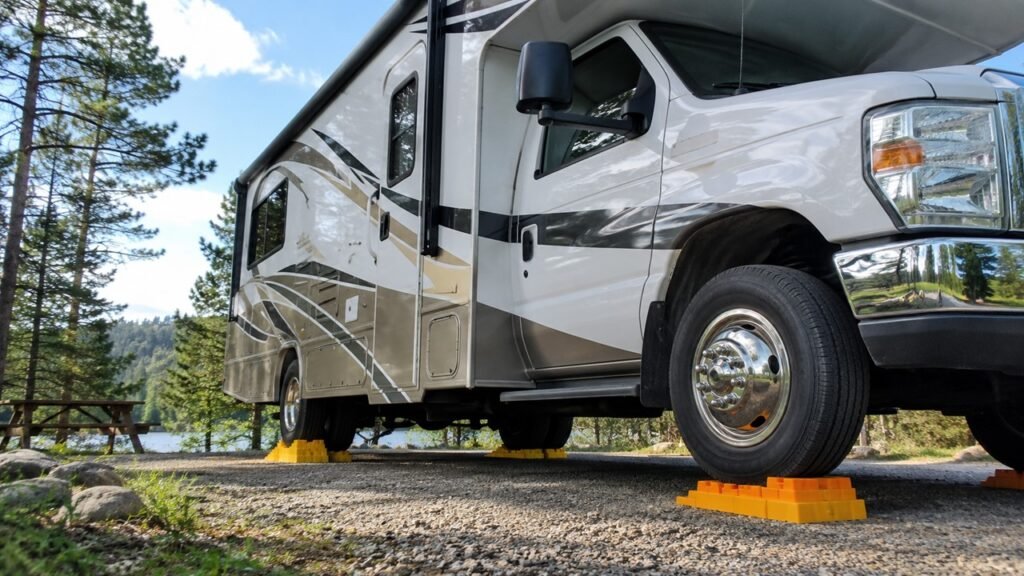
If an RV is not level, its absorption refrigerator may cool poorly or suffer damage, slide-outs can bind, plumbing may drain incorrectly, and doors or drawers may swing unexpectedly. A tilted RV can also make sleeping, walking, cooking, and using the bathroom uncomfortable.
Below, I’ll explain which RV systems are affected, how much unevenness is acceptable, and how to level your RV safely without damaging its frame or stabilizers.
Key Takeaways
- An absorption refrigerator may overheat when operated significantly off-level.
- Slide-outs can bind, move unevenly, or place extra strain on their mechanisms.
- Sinks, showers, and holding tanks may not drain completely.
- Holding tank sensors may display inaccurate readings.
- Doors, cabinets, and drawers can swing open or close unexpectedly.
- Sleeping, cooking, and walking become less comfortable on a noticeable slope.
- Stabilizer jacks should not normally be used to lift or level an RV.
- A slightly imperfect level is usually manageable, but a noticeable tilt should be corrected.
What Happens If an RV Is Not Level?
An unlevel RV may cause anything from mild discomfort to expensive appliance damage. The seriousness depends on how far the RV is tilted, how long it remains that way, and which systems you operate.
The Refrigerator May Not Cool Properly
Traditional RV absorption refrigerators rely on gravity to circulate refrigerant through the cooling unit. When the RV is significantly off-level, that liquid may stop flowing correctly and collect in the wrong area.
The refrigerator may still appear to run, but the cooling unit can become unusually hot. Over time, this heat may reduce cooling performance or permanently damage internal tubing.
Modern absorption refrigerators often tolerate more tilt than older models, especially while the RV is moving. However, you should still follow the refrigerator manufacturer’s leveling limits whenever you are parked.
A residential or 12-volt compressor refrigerator is less sensitive because it does not use the same gravity-based cooling cycle. Your RV should still be reasonably level for proper door sealing, food storage, and comfort.
Slide-Out Mechanisms Can Bind
A slide-out is designed to move through a carefully aligned opening in the RV wall. When the RV is sitting unevenly, the chassis and body may flex slightly.
That movement can change the alignment around the slide room. You may notice the slide moving slowly, making unusual noises, or sealing unevenly against the exterior wall.
Continuing to operate a binding slide can place additional strain on motors, gears, cables, tracks, rollers, or hydraulic components.
Slide-out procedures are not the same for every RV. Some manufacturers want the RV leveled before extending the slides, while others provide a different sequence. Your owner’s manual should always be the final guide.
Sinks and Showers May Drain Slowly
RV plumbing depends heavily on gravity. A sink or shower may drain poorly when the RV is leaning away from the drain opening.
You might notice water collecting along one side of the shower pan or remaining around the edge of a sink. This standing water can leave soap residue, create odors, and encourage mildew.
A small amount of unevenness may not stop drainage completely. However, a visible pool of water is a clear sign that the RV needs adjustment.
Holding Tanks May Not Empty Completely
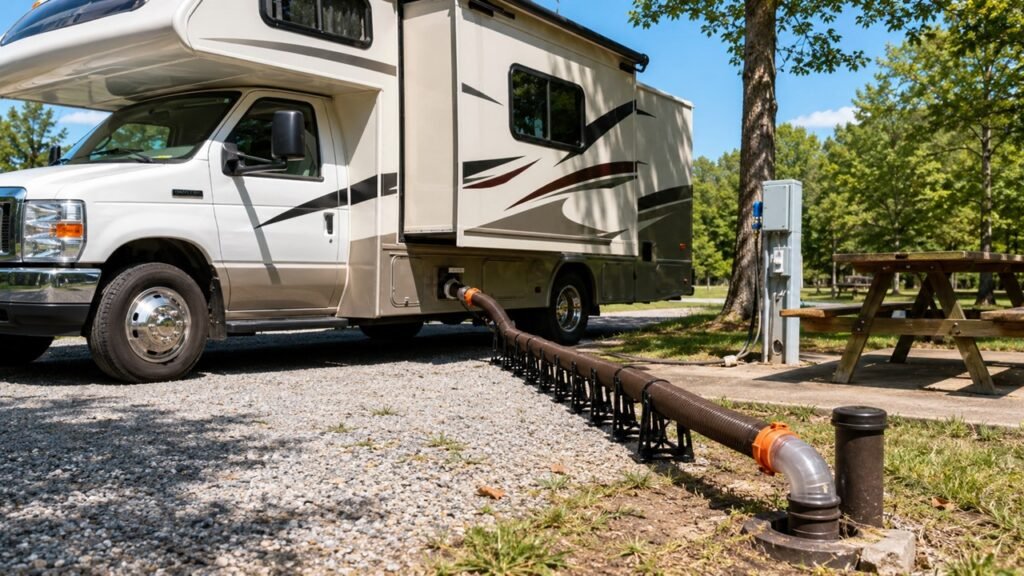
Gray and black holding tanks are designed so liquid moves toward the dump outlet. If the RV is leaning in the wrong direction, part of the tank’s contents can remain trapped on the low side.
This can make it seem as though the tank has been emptied even though wastewater remains inside.
Leftover waste may contribute to odors, dried residue, sensor problems, and buildup around the tank floor. Releveling the RV before dumping can help the tank drain more completely.
Tank Sensors May Show Incorrect Readings
Liquid inside an unlevel holding tank does not spread evenly. It may contact a sensor on one side while leaving another sensor dry.
As a result, the monitor panel might display the tank as fuller or emptier than it really is.
Unevenness is not the only cause of inaccurate readings. Toilet paper, grease, soap residue, and other debris can also stick to tank sensors. If the readings remain incorrect after leveling, the tank may need cleaning.
Doors and Cabinets May Swing
One of the first signs of an unlevel RV is a door that refuses to stay where you leave it. Entry doors, cabinet doors, bathroom doors, refrigerator doors, and drawers may swing toward the low side.
This is more than a minor annoyance. A cabinet can open while you are walking past, or a heavy door may close unexpectedly on your hand.
Repeated slamming can also wear hinges, latches, and catches faster than normal.
Sleeping and Walking Become Uncomfortable
Even a modest slope can feel much more noticeable when you are lying in bed. You may roll toward one side or sleep with your head lower than your feet.
Some people also experience headaches, dizziness, poor sleep, or a strange leaning sensation inside an unlevel RV.
Walking can feel awkward, particularly for children, older adults, or anyone with balance difficulties. The problem becomes more noticeable in narrow hallways and wet bathroom areas.
Cooking Can Become Less Safe
A tilted countertop or stovetop can cause round foods, utensils, pans, and liquids to move toward the low side.
Hot oil may collect unevenly in a pan. A pot may slide if the cooktop is smooth, and spilled liquids can run away from where you expect them to go.
You do not need laboratory-level precision for normal cooking, but the surface should not feel obviously sloped.
The RV May Feel Unstable
Leveling and stabilization are related, but they are not the same thing.
Leveling corrects the angle of the RV. Stabilization reduces rocking and movement after the RV is already level.
An RV can be level but still shake when someone walks inside. It can also be unlevel while feeling temporarily solid. For the best setup, you need to level first and stabilize afterward.
Common Problems Caused by an Unlevel RV
Different symptoms can point to different leveling problems. The following table gives you a quick way to identify what may be happening.
| RV System or Area | What You May Notice | Possible Long-Term Result | Recommended Action |
| Absorption refrigerator | Weak cooling, unusual heat, error code | Cooling-unit damage | Turn it off and level the RV |
| Slide-outs | Binding, hesitation, uneven seals | Motor, track, gear, or seal damage | Stop operating the slide and check level |
| Sink and shower drains | Slow drainage or standing water | Odors, residue, or mildew | Correct the RV’s angle |
| Gray and black tanks | Incomplete dumping | Waste buildup and odors | Relevel before dumping |
| Tank sensors | Incorrect full or empty reading | Poor tank management | Level the RV and clean the sensors |
| Doors and drawers | Swinging or difficult closing | Hinge and latch wear | Level the RV |
| Beds and floors | Sloped sleeping and awkward walking | Discomfort and poor sleep | Raise the low side |
| Jacks and frame | Uneven pressure or twisting | Stress on brackets and components | Reset the leveling setup |
Can an Unlevel RV Damage the Refrigerator?
Refrigerator damage is one of the most serious risks associated with an unlevel RV. However, the risk depends on the type of refrigerator installed.
Why Absorption Refrigerators Need Gravity
An absorption refrigerator does not use a standard compressor to move refrigerant. Instead, it heats a chemical solution that travels through a network of tubes.
Gravity helps that solution return through the cooling system. When the refrigerator is too far off-level, circulation may slow or stop in parts of the tubing.
Heat continues to be applied even though the solution is not moving as intended. That is why prolonged off-level operation can become damaging.
What Happens Inside the Cooling Unit?
When circulation is restricted, the cooling solution can collect in one area. Temperatures may then rise inside the boiler section of the cooling unit.
Repeated overheating may eventually create internal blockages or damage the tubing. Once that happens, leveling the RV may not restore normal cooling.
Replacing an absorption refrigerator cooling unit can be expensive. Preventing the problem is much easier than repairing it.
Are Compressor Refrigerators Affected?
A compressor refrigerator, including many residential and 12-volt RV models, does not depend on the same gravity-based process.
It is generally more tolerant of a slightly unlevel campsite. However, a severe angle may still cause other problems, including:
- Doors that do not seal correctly
- Food shifting inside the refrigerator
- Condensation draining improperly
- Shelves or containers sliding
- Increased noise or vibration
Check the refrigerator manual if you are unsure which type you have.
Signs of an Off-Level Refrigerator Problem
Watch for the following warning signs:
- The refrigerator stops cooling normally.
- The freezer works while the fresh-food section stays warm.
- Excessive heat comes from the exterior refrigerator vent.
- The control panel shows an error code.
- A strong ammonia odor appears near the refrigerator.
- Yellow residue is visible around the cooling unit.
- The refrigerator repeatedly shuts itself down.
Turn the refrigerator off immediately if you smell ammonia or see yellow residue. These signs may indicate a cooling-unit leak that requires professional service.
Can an Unlevel RV Damage the Slide-Outs?
A slight slope does not automatically destroy a slide-out. Problems become more likely when the chassis is noticeably twisted or the slide is already worn or misaligned.
How Being Unlevel Changes Slide Alignment
A large RV body is not completely rigid. Uneven support under the tires or leveling jacks can allow small amounts of chassis flex.
That flex can change the shape of the slide opening. The slide room may then press harder against one side or sit lower at one corner.
You may notice hesitation, uneven gaps, or a seal that does not compress correctly.
What Damage Can Occur?
Operating a slide while it is binding may contribute to:
- Damaged rollers
- Misaligned tracks
- Worn gears
- Strained electric motors
- Broken cables
- Bent brackets
- Hydraulic leaks
- Torn slide seals
- Water leaks around the opening
- Uneven interior flooring
Stop operating the slide if you hear grinding, popping, or repeated clicking. Forcing it may turn a small alignment issue into a costly repair.
Should You Level Before Extending the Slides?
There is no universal rule that works for every RV.
Many manufacturers recommend leveling first and extending slides afterward. Some RVs, however, use a different procedure because of their frame design or automatic leveling system.
Follow the sequence listed in your RV owner’s manual. That instruction is more reliable than general campsite advice.
How Being Unlevel Affects RV Plumbing and Holding Tanks
RV plumbing uses pumps to deliver fresh water, but gravity still controls much of the drainage process. A poor angle can therefore affect several areas at once.
Slow Sink and Shower Drainage
Water naturally flows toward the lowest point. If that point is away from the drain, water may remain in the basin or shower pan.
You may also notice food particles, soap, hair, and residue collecting in areas that normally rinse clean.
If your shower always holds water in one corner, check the RV level before assuming the drain is blocked.
Incomplete Black and Gray Tank Dumping
Holding tanks often have broad, shallow floors. Wastewater may spread across that floor instead of flowing directly toward the outlet.
When the RV is leaning away from the dump connection, a portion of the contents may remain behind.
This is especially troublesome in black tanks because solid waste can dry onto the tank surface. Over time, that buildup may contribute to odors and repeated sensor errors.
False Tank-Level Readings
Many RV tank monitors use sensors positioned at different heights. A tilted liquid surface can touch sensors unevenly.
For example, the low side may reach the “full” sensor even when the tank still has usable capacity.
If the monitor changes after you level the RV, the original reading was probably affected by the angle. If it remains unchanged, residue may be coating the sensors.
Water Heater and Freshwater Concerns
A moderately unlevel RV usually does not stop the freshwater pump from operating. However, severe unevenness may affect how some tanks fill, drain, or register their water level.
Appliance designs vary, so avoid assuming every water heater or freshwater system has the same leveling requirements.
Check the instructions for your specific water heater, pump, and tank arrangement if you notice unusual operation.
Comfort and Safety Problems Inside an Unlevel RV
Mechanical issues may take time to appear, but comfort problems are usually immediate. These symptoms often tell you that the campsite angle needs correction.
- You sleep with your head lower than your feet.
- You roll toward one side of the bed.
- Doors and drawers move by themselves.
- Drinks and cookware slide across counters.
- Shower water pools away from the drain.
- Walking feels awkward or disorienting.
- Children or older adults have trouble balancing.
- Hot pans sit unevenly on the stove.
- The refrigerator door does not remain open.
- The RV feels as though it is leaning while you sit.
A minor tilt may be tolerable for a quick roadside stop. For an overnight stay, correcting a noticeable slope is usually worth the effort.
Does Being Unlevel Damage the RV Frame?
Parking slightly off-level does not automatically bend an RV frame. Frames are built to handle changing road surfaces, driveways, and campsite conditions.
The greater concern is improper lifting or uneven support. Placing excessive pressure on one stabilizer, lifting from an incorrect frame point, or allowing a jack to sink can twist the body.
That twist may affect walls, doors, windows, seals, cabinetry, and slide openings.
Standard stabilizer jacks are usually designed to reduce movement, not lift the RV’s weight. Trying to use them as leveling jacks can bend their mounting brackets or damage the frame.
Only lift the RV with equipment and lifting points approved by the manufacturer.
How Unlevel Is Too Unlevel for an RV?
There is no single angle that applies to every RV, refrigerator, or leveling system. Your manuals provide the most reliable limits for your equipment.
Follow the Manufacturer’s Limits
Older absorption refrigerators were often more sensitive to off-level operation than newer designs.
Some manufacturers describe acceptable limits in degrees, while others advise keeping the RV comfortable enough for normal living. Because designs differ, it is better to check the refrigerator manual than rely on a universal number.
You should also follow the leveling-system instructions for jack placement, tire contact, and maximum extension.
Signs the RV Is Too Far Off-Level
Your RV probably needs adjustment when:
- The floor feels noticeably sloped.
- Doors swing open or closed by themselves.
- Water pools away from the shower drain.
- You feel uncomfortable while sleeping.
- Walking feels unusual or unsteady.
- Slide-outs hesitate or bind.
- An absorption refrigerator displays an error.
- The leveling indicator is clearly outside its acceptable range.
- Items roll across counters or tables.
- One jack is extended much farther than the others.
These practical signs are often more useful than trying to judge the campsite by sight.
Is a Slightly Unlevel RV Acceptable?
Yes, a slightly imperfect level is usually acceptable.
Campsites are rarely perfectly flat, and chasing absolute precision can waste time or lead to unsafe block stacking.
The RV should feel comfortable, drain normally, and remain within the operating limits listed for the refrigerator and leveling system.
If you can clearly feel or see the lean, it is worth correcting.
How Long Can an RV Stay Unlevel?
An RV can be temporarily off-level while you park, load gear, refuel, or move through a sloped driveway. The bigger concern is operating certain systems for several hours while parked at a noticeable angle.
An absorption refrigerator should not be left running for an extended period when the RV is significantly off-level.
There is no universal safe number of minutes or hours because refrigerator designs and angles vary. The best approach is to turn the refrigerator off or level the RV as soon as practical.
You should also avoid repeatedly operating a slide-out that hesitates or binds. Continuing to push the button can strain the drive system.
For a quick roadside stop, mild unevenness may be unavoidable. For overnight camping, take the time to correct it.
What to Do If Your RV Is Not Level
The safest solution is often to reposition the RV before adding more blocks. A small change in parking position may greatly reduce the amount of correction needed.
- Check Both Directions: Measure the RV from side to side and front to back using a bubble level, mounted level, or calibrated electronic level.
- Reposition the RV When Possible: Move slightly forward, backward, or sideways to find a flatter section of the campsite.
- Level a Towable Side to Side: Place properly rated leveling blocks or ramps under the tires on the low side.
- Chock the Wheels Securely: Install wheel chocks before unhitching or making front-to-back adjustments.
- Level the Trailer Front to Back: Use the tongue jack or fifth-wheel landing gear according to the manufacturer’s instructions.
- Use the Motorhome’s Approved Leveling System: Follow the correct procedure for the parking brake, transmission, jacks, and tire contact.
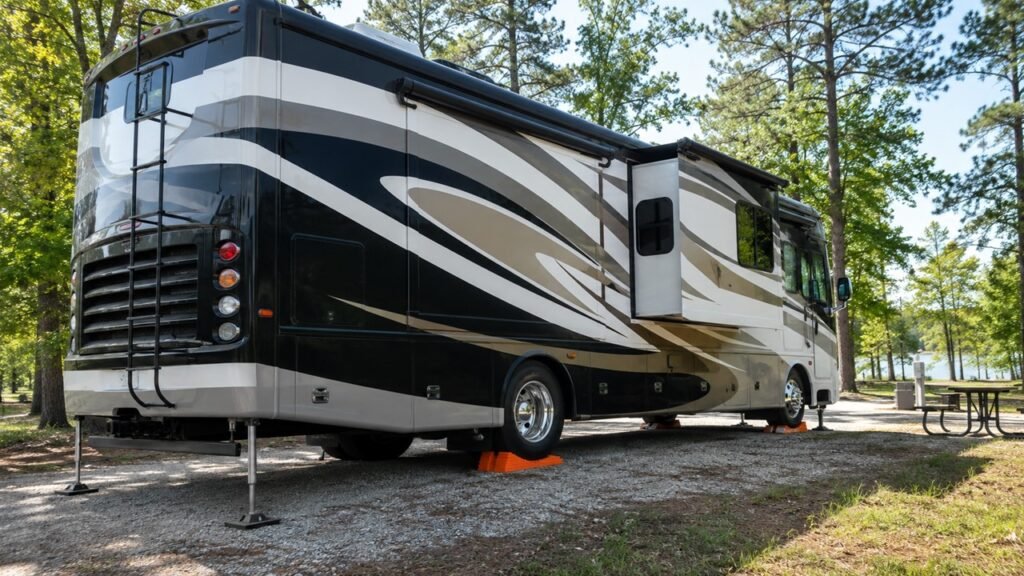
- Place Pads Under the Jacks: Jack pads spread the RV’s weight and help prevent the jacks from sinking into soil, gravel, sand, or hot asphalt.
- Recheck the Level: Leveling blocks and jack pads may settle after the RV’s full weight is applied.
- Stabilize the RV: Extend the stabilizer jacks only after leveling unless the manufacturer specifies a different sequence.
- Extend the Slides as Instructed: Follow the slide-out procedure listed in your RV owner’s manual.
Never crawl under an RV supported only by leveling or stabilizer jacks.
Leveling Blocks, Jacks, and Stabilizers
RV setup equipment is often grouped together, but each tool has a different job. Using the wrong tool for lifting can damage the RV or create an unsafe campsite.
| Equipment | Main Purpose | Supports RV Weight? | Common Use |
| Leveling blocks | Raise low-side tires | Yes, when properly rated | Side-to-side leveling |
| Leveling ramps | Gradually raise tires | Yes, when properly rated | Motorhomes and towables |
| Tongue jack | Raise or lower a trailer tongue | Yes | Front-to-back trailer leveling |
| Landing gear | Support and level a fifth wheel | Yes | Fifth-wheel setup |
| Hydraulic leveling jacks | Lift and level approved RVs | Yes, within rated limits | Motorhomes and some trailers |
| Stabilizer jacks | Reduce rocking and movement | Usually no | Stabilizing after leveling |
| Wheel chocks | Prevent tire movement | No | Securing the RV before unhitching |
| Jack pads | Spread jack pressure | No | Preventing sinking or surface damage |
Always check the load rating of blocks, ramps, and pads before placing them under your RV.
Common RV Leveling Mistakes
Incorrect leveling can be more dangerous than leaving the RV slightly uneven. Avoid shortcuts that place too much pressure on tires, jacks, or the frame.
Using Stabilizer Jacks to Lift the RV
Most scissor-style stabilizers are not designed to raise the trailer.
They are intended to make firm contact with the ground and reduce movement after leveling. Using them to lift the RV may bend the jack, damage its mounting bracket, or twist the frame.
Building a Tall Stack of Blocks
Leveling blocks are safe when used according to their instructions. However, an excessively tall or poorly supported stack can shift as the tire climbs onto it.
If you need a large amount of lift, try repositioning the RV or choosing another site.
The tire should remain fully supported by the block surface. Do not allow part of the tread to hang over the edge.
Forgetting to Chock the Wheels
A towable RV does not have its own transmission holding it in place after unhitching.
Chock the wheels before disconnecting the trailer from the tow vehicle. Place the chocks firmly against the tires according to the product instructions.
Skipping this step can allow the trailer to roll unexpectedly.
Leveling on Soft Ground
Mud, sand, loose gravel, and damp soil can settle under the RV’s weight.
A setup that looks level during arrival may lean several hours later. Use wide jack pads or another approved base to spread the load.
Recheck the RV after heavy rain or when the ground feels soft.
Lifting the Wrong Wheels
Motorhome leveling procedures can be more complicated because the parking brake may act only on specific wheels.
Lifting those wheels off the ground may reduce stability. Some manufacturers also advise keeping all tires in contact with the surface.
Follow your chassis and leveling-system manuals before raising any wheel.
Ignoring the Slide-Out Procedure
Do not assume every RV should be leveled before extending the slides.
The correct order depends on the manufacturer, frame design, and slide mechanism. Following incorrect general advice may create the alignment problem you are trying to prevent.
Assuming Level Means Stable
A level RV may still rock when people move inside.
After leveling, use the approved stabilizers to reduce motion. Do not keep lifting the RV with stabilizers in an attempt to eliminate every small vibration.
How to Tell If Your RV Has Shifted
An RV may be level when you arrive and then settle later. This is common on grass, dirt, gravel, and warm asphalt.
Signs that your setup has shifted include:
- Doors begin swinging when they previously stayed still.
- Water starts collecting in the shower.
- A jack pad sinks into the ground.
- One stabilizer becomes loose.
- The RV rocks more than it did earlier.
- Slide seals develop an uneven gap.
- A bubble level no longer shows the original position.
- The refrigerator displays an off-level warning.
- One side of the RV looks lower.
- Blocks or ramps have moved beneath a tire.
Check the level again after heavy rain, major temperature changes, or several days on soft ground.
Do not place your hands or body under a tire, block, or jack while making adjustments.
When to Call an RV Technician
Leveling corrects the RV’s position, but it cannot repair damaged appliances or mechanical components.
Contact an RV technician when:
- You smell ammonia near the refrigerator.
- Yellow residue appears around the cooling unit.
- The refrigerator remains warm after leveling.
- A slide-out jumps, tilts, or makes grinding noises.
- Hydraulic fluid leaks from a jack or hose.
- A leveling jack retracts unexpectedly.
- The RV leans while parked on level pavement.
- One side of the suspension sits unusually low.
- Doors remain misaligned after the RV is leveled.
- A frame bracket or stabilizer appears bent.
- The automatic leveling system gives repeated incorrect readings.
- The RV cannot be leveled without extreme jack extension.
A persistent lean on flat ground may indicate low tire pressure, suspension damage, uneven loading, or a bent component.
How to Prevent RV Leveling Problems
A few setup habits can prevent most off-level problems.
- Inspect the campsite before parking.
- Avoid deep holes, raised roots, and soft shoulders.
- Carry properly rated leveling blocks.
- Keep reliable wheel chocks in the RV.
- Use jack pads on soft surfaces.
- Check the level before operating an absorption refrigerator.
- Follow the correct slide-out sequence.
- Inspect jacks and stabilizers regularly.
- Check tire pressure before traveling.
- Distribute cargo evenly.
- Recheck the setup during longer stays.
- Calibrate automatic leveling sensors when required.
- Replace cracked or distorted leveling blocks.
- Follow the RV and appliance manuals.
It also helps to practice leveling at home. You will become familiar with how much each block or jack adjustment changes the RV’s angle.
Is Leveling Different for Motorhomes and Travel Trailers?
The goal is the same for every RV, but the tools and sequence depend on the vehicle type.
Travel Trailers
A travel trailer is normally leveled side to side while it is still connected to the tow vehicle.
Place leveling blocks under the tires on the low side and drive onto them slowly. Once the trailer is level from side to side, chock the wheels before unhitching.
Use the tongue jack to adjust the front-to-back angle. Lower the stabilizer jacks only after the trailer is level.
Fifth Wheels
Fifth wheels are also leveled side to side using tire blocks or an approved automatic system.
After chocking the wheels and disconnecting from the truck, use the landing gear to adjust the front-to-back position.
Many modern fifth wheels have automatic leveling systems. Follow the control-panel instructions and avoid exceeding the jack extension limits.
Motorhomes
Motorhomes may use tire ramps, hydraulic jacks, electric jacks, or air-leveling systems.
Engage the parking brake and place the transmission in the required position before beginning. Use jack pads when necessary and follow all tire-contact instructions.
Never assume it is safe to lift the rear or front wheels without checking the chassis manual.
Camper Vans and Class B RVs
Small camper vans are often leveled with ramps or blocks under the tires.
Because these vehicles are lighter and have shorter wheelbases, small changes can make a noticeable difference inside.
Choose a stable parking position and keep the tires fully supported on the ramps.
Final Thoughts
Leaving an RV noticeably unlevel can cause more than an uncomfortable night. It may interfere with refrigerator operation, slide alignment, wastewater drainage, tank readings, cooking safety, and normal movement inside the RV.
You do not need to chase perfect precision at every campsite. Your goal is to keep the RV comfortable, stable, and within the operating limits provided by its manufacturers.
Park on the flattest area available, use properly rated leveling equipment, chock the wheels, and stabilize the RV only after it is level. Following those steps can protect your appliances and make your campsite feel much more comfortable.
Related FAQs
Can an RV Refrigerator Run While the RV Is Unlevel?
An absorption refrigerator should not run for long when the RV is noticeably off-level because its cooling solution relies on gravity, while compressor refrigerators are generally less sensitive.
Can I Sleep in an RV That Is Not Level?
You can sleep in a slightly unlevel RV, but a noticeable tilt may cause poor sleep, balance problems, swinging doors, and an uncomfortable head-down sleeping position.
Can an RV Be Too Level?
Being properly level does not harm an RV, but lifting it excessively or using unsafe block stacks to achieve perfect level can create stability and frame problems.
Should I Level My RV Before Extending the Slide-Outs?
The correct order depends on your RV and slide system, so follow the manufacturer’s instructions rather than assuming every RV must be leveled first.
Can I Use Stabilizer Jacks to Level My RV?
Most stabilizer jacks are designed only to reduce movement and should not lift or level the RV unless the manufacturer specifically approves them for that purpose.
Does an RV Need to Be Perfectly Level?
An RV does not usually need to be perfectly level to the smallest fraction, but it should feel comfortable and remain within the limits specified for its refrigerator and leveling system.
Why Does My RV Lean on Level Ground?
Uneven tire pressure, suspension wear, cargo imbalance, tank weight, bent components, or a miscalibrated leveling sensor can make an RV lean on otherwise level ground.
Should I Relevel My RV During a Long Stay?
You should recheck the RV periodically because soil, gravel, jack pads, and asphalt can settle, especially after rain or major temperature changes.
Will an RV Refrigerator Work While Driving?
Absorption refrigerators are designed to tolerate the changing angles experienced during normal travel, but the RV should be leveled when parked for an extended period.
Can an Unlevel RV Cause Water Leaks?
An unlevel RV can allow water to pool around slide seals, roof edges, windows, or drainage channels, potentially exposing weak seals that might otherwise drain properly.

Michael Carter is an experienced RV traveler who focuses on practical outdoor trips across the States. He writes clear, step-by-step guides and realistic reviews based on real travel needs. His aim is to help RV and camper owners plan informed, simpler journeys with confidence.