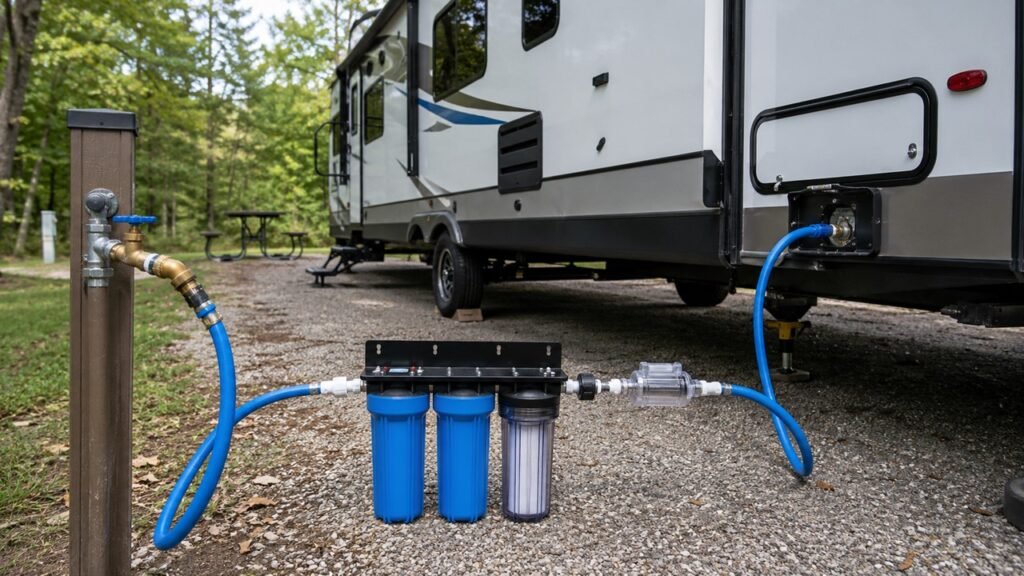
RV water usually tastes bad because stale water, dirty tanks, bacteria, biofilm, plastic hoses, old filters, mineral-heavy campground water, or water heater buildup has affected the system. If the bad taste is strongest from the hot tap, the RV water heater is often the first place to check.
In this guide, we’ll walk through the most common causes, how to match each taste or smell to the real problem, how to fix bad RV water step by step, and how to keep your water fresh on future trips.
Key Takeaways
- Bad RV water taste usually starts in the hose, fresh tank, plumbing lines, filter, water heater, or campground water source.
- A plastic or rubber taste often comes from using a regular garden hose instead of a drinking-water-safe hose.
- A rotten egg smell often points to hydrogen sulfide, sulfur bacteria, or a problem inside the water heater.
- A chlorine taste usually means leftover sanitizer or highly treated city water.
- A metallic, bitter, or salty taste can come from hard water, minerals, old fittings, or source water.
- Filters can improve taste, but they cannot fix a dirty fresh tank by themselves.
- If the water smells like sewage, fuel, chemicals, or looks cloudy or slimy, do not drink it.
- Regular flushing, sanitizing, filter changes, and clean filling habits prevent most RV water taste problems.
Quick Diagnosis: What Does Your RV Water Taste Like?
Before you start tearing into the whole water system, try to identify the taste first. The flavor, smell, and which tap it comes from can tell you a lot about the real cause.
| Taste Or Smell | Most Likely Cause | How To Confirm It | First Fix |
| Plastic or rubber | Regular garden hose, new hose, new tank, or plastic fittings | Worse after water sits in the hose or sun | Use a potable water hose and flush the system |
| Rotten egg or sulfur | Hydrogen sulfide, sulfur bacteria, or water heater reaction | Stronger from hot tap than cold tap | Flush the water heater and sanitize the system |
| Chlorine or pool-like | Sanitizer residue or city water treatment | Started after cleaning or filling from city water | Flush the lines and use a carbon filter |
| Metallic | Iron, copper, manganese, old fittings, or mineral-heavy water | Changes from campground to campground | Use filtration and test the water source |
| Bitter or flat | Stale tank water, old filter, or hard water | Water sat unused for weeks | Drain, sanitize, refill, and replace filter |
| Musty or swampy | Biofilm, algae, bacteria, or old water in the tank | Worse after RV storage or hot weather | Sanitize the tank, lines, pump, and faucets |
| Salty | High dissolved minerals or softened water | Happens only at certain fill locations | Use another source or a separate drinking filter |
This simple taste test helps you avoid guessing. For example, a plastic taste usually points to the hose or fittings, while rotten egg water is more likely connected to sulfur bacteria, hydrogen sulfide, or the hot water heater. Hydrogen sulfide gas is known for creating a rotten egg taste or odor, and it can come from groundwater, plumbing systems, or water heaters.
The Most Common Reasons RV Water Tastes Bad
Bad RV water taste usually has a simple cause, but it can hide in more than one part of the system. Your hose, tank, pump, water lines, filters, water heater, and source water all touch the water before it reaches your glass.
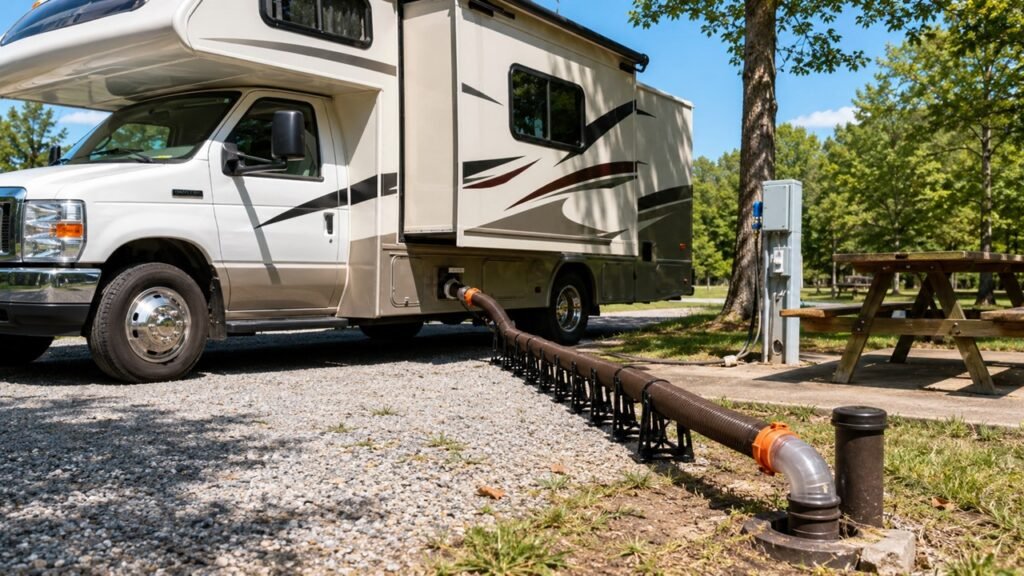
You Used A Regular Garden Hose
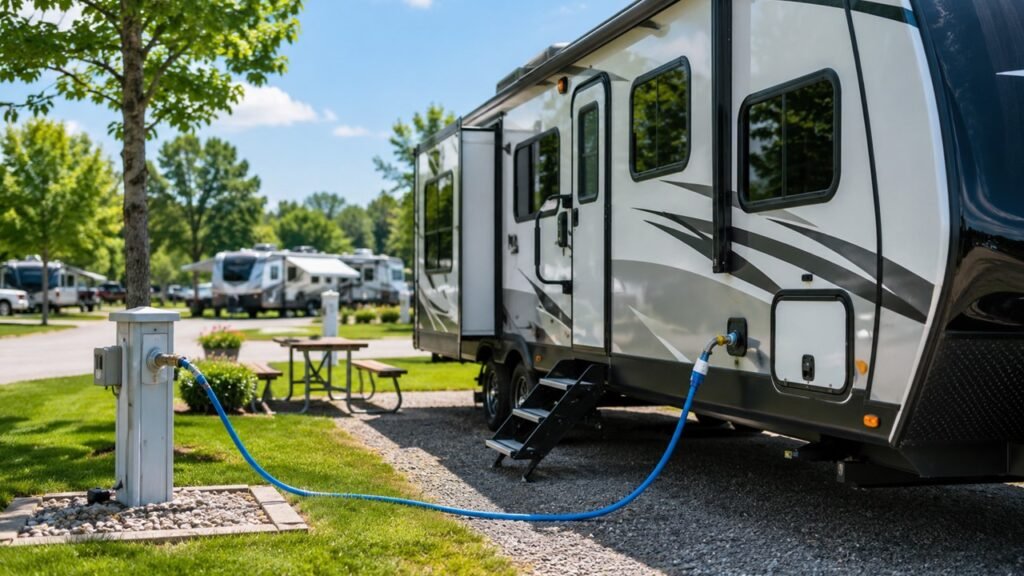
One of the most common reasons RV water tastes bad is the fill hose. A standard green or black garden hose may be fine for watering plants, but it is not what you want for drinking water.
Regular garden hoses can leave a plastic, rubbery, or chemical taste in your RV water. The taste often gets worse when the hose sits in the sun. Warm water sitting inside the hose can pick up more odor before it even reaches your fresh tank.
That is why RV owners use drinking-water-safe hoses. These are usually labeled as potable water hoses, drinking water hoses, lead-free hoses, or BPA-free RV water hoses. The color is often white or blue, but the label matters more than the color.
Also, remember that the hose is not the only part touching your water. Your pressure regulator, filter housing, fittings, inlet connection, and storage caps can all affect taste. If one part is dirty, old, or not rated for potable water, your water can taste off.
Water Sat Too Long In The Fresh Tank
RV water is not meant to sit forever. When water sits in a warm fresh tank for too long, it can start tasting flat, stale, musty, or swampy.
This is especially common after storage. You may fill the tank before a trip, leave some water inside, park the RV for a few weeks, and then wonder why the next glass tastes strange. Even if the water looked clear when you filled it, time and heat can change the taste.
Signs of stale fresh tank water include:
- Flat or dull taste
- Musty smell
- Swampy odor
- Slimy faucet screens
- Bad taste after storage
- Worse taste during hot weather
- Taste that returns shortly after refilling
If water has been sitting for weeks or months, draining and refilling may not be enough. The tank walls and plumbing lines may still hold biofilm or odor. That is when sanitizing becomes important.
Bacteria Or Biofilm Built Up In The Plumbing Lines
A fresh water tank can look clean from the outside and still have buildup inside the system. Over time, bacteria, algae, and biofilm can grow in damp areas of the RV plumbing.
Biofilm is a thin layer of buildup that can stick to tank walls, PEX lines, faucet screens, filter housings, and pump parts. Once it forms, fresh water may keep picking up taste and odor as it moves through the system.
This is why cleaning only the fresh tank may not solve the problem. You need the sanitizing solution to reach the full system, including:
- Kitchen faucet
- Bathroom faucet
- Shower
- Outside shower
- Water pump
- Filter housing
- Low-point drains
- Toilet sprayer, if connected to the fresh system
- Water heater, if your manual allows it
Safe water storage also depends on clean containers and clean handling. The CDC recommends washing and sanitizing water storage containers properly before use, using unscented bleach with 5%–9% sodium hypochlorite for sanitizing containers.
The Water Heater Needs Flushing
If only your hot water tastes bad, smells like sulfur, or has a rotten egg odor, your RV water heater is the likely problem.
Water heaters can collect minerals, sediment, and stale water. In some cases, sulfur bacteria or a reaction inside the heater can create a strong rotten egg smell. This can happen even when your cold water tastes normal.
Many RV water heaters also use an anode rod, depending on the tank type. The anode rod is designed to protect the water heater tank from corrosion. However, certain water conditions can react with the rod and create an unpleasant odor.
If your hot water smells bad but your cold water tastes fine, do not blame the whole fresh tank first. Start with the water heater.
The Filter Is Old Or Saturated
An RV water filter can improve taste, but only when it is clean and still working. An old filter can become clogged with sediment, minerals, and organic material.
When a filter gets saturated, water may start tasting worse again. You may also notice slower water flow. In some cases, an old filter can hold odor instead of removing it.
Inline carbon filters are helpful for improving chlorine taste, light odor, and some plastic-like flavors. Sediment filters catch dirt, sand, and rust particles. Under-sink filters can improve drinking water at one faucet.
However, a filter is not a magic fix. If the fresh tank is dirty, the lines are contaminated, or the water heater smells bad, replacing the filter alone will not solve everything.
The Campground Water Source Has Minerals
Sometimes the problem is not your RV. It is the water source.
Campgrounds may use municipal water, well water, or a local water system. The mineral content can change from one location to another. That is why your RV water may taste fine at one campground and metallic, bitter, or salty at the next.
Minerals like iron, manganese, chloride, sulfate, and total dissolved solids can affect taste, odor, color, and staining. EPA secondary drinking water standards focus on nuisance issues like taste, odor, color, staining, and cosmetic effects rather than direct health limits.
This is why many RVers use a filter at the spigot before water enters the hose or tank. It helps reduce sediment and improves taste before the water moves through your system.
Sanitizer Was Not Fully Flushed Out
Sanitizing your RV fresh water system is a good thing. But if you do not flush it properly afterward, your water can taste like chlorine or a swimming pool.
This often happens after using bleach or tank cleaner. The system may be clean, but the leftover sanitizer taste remains in the tank, lines, pump, or faucet screens.
The fix is usually simple: drain, refill, and flush until the chlorine smell fades. Open every faucet, not just the kitchen sink. The sanitizer can sit in lines you rarely use, like the outside shower or bathroom sink.
Is Bad-Tasting RV Water Safe To Drink?
Bad taste does not always mean the water is dangerous. Sometimes the taste comes from harmless minerals, chlorine, or a new hose. However, taste alone cannot prove that water is safe.
Some unsafe water may not taste bad at all. On the other hand, some mineral-heavy water may taste terrible but not always be an immediate health risk. That is why you should use common sense and avoid drinking water when the signs are serious.
Do not drink RV water if:
- It smells like sewage, fuel, chemicals, or strong rotten eggs.
- It looks cloudy, slimy, rusty, or has floating particles.
- It came from an unknown or untreated water source.
- The fresh tank has been sitting unused for months.
- The water tastes bad even after flushing and filtering.
- Someone gets stomach discomfort after drinking it.
- You are unsure whether the hose or tank is drinking-water safe.
When in doubt, use bottled water or a separate trusted drinking container until the RV system is cleaned. You can still use the RV water for flushing or basic washing in some situations, but drinking and cooking water should be treated more carefully.
How To Fix Bad-Tasting RV Water Step By Step
The best fix depends on the cause, but this step-by-step process works for most RV water taste problems. It starts with safety, then moves through draining, flushing, sanitizing, filtering, and refilling.
Step 1: Stop Using The Questionable Water For Drinking
If the water tastes strange, stop drinking it until you know the cause. This is especially important if the taste is rotten, chemical, musty, or sewage-like.
Switch to bottled water, campground potable water, or a separate filtered jug for drinking and cooking. This gives you time to clean the RV system without taking risks.
You may still use the water for flushing the toilet or washing the floor, depending on the smell and source. However, avoid brushing teeth, making coffee, cooking, or filling pet bowls with water you do not trust.
Step 2: Drain The Fresh Water Tank
Start by draining the old water. Stale water sitting in the tank can keep causing bad taste, even if you add fresh water on top of it.
A basic draining process looks like this:
- Turn off the water pump.
- Open the fresh tank drain.
- Open faucets to help release water from the lines.
- Drain the water heater only after it cools down.
- Open low-point drains if your RV has them.
- Let the system empty as much as possible.
If the water smells terrible, do not rush the refill. Let the tank drain completely first.
Step 3: Flush The Lines With Fresh Water
After draining, flush the system with clean water. This helps push out stale water from the pump, pipes, faucets, and fixtures.
Run fresh water through:
- Kitchen sink
- Bathroom sink
- Shower
- Outside shower
- Toilet sprayer
- Low-point drains
- Hot and cold sides of each faucet
Do not forget the hot water side. If the water heater is part of the problem, the hot lines may hold the strongest odor.
Step 4: Sanitize The Fresh Water System
Sanitizing helps remove bacteria, biofilm, and odors from the fresh water system. Many RV owners use plain, unscented household bleach, but you should always check your RV owner’s manual first.
A common RV guideline is to use about 1/4 cup of unscented household bleach for every 15 gallons of fresh tank capacity. Public fresh tank disinfection guidance from San Antonio Metropolitan Health District also lists 1/4 cup of household bleach per 15 gallons of fresh water tank capacity.
Follow this basic process:
- Drain the fresh tank and water lines.
- Remove or bypass water filters if your RV manual recommends it.
- Mix the bleach with water before adding it to the tank.
- Fill the fresh tank with clean water.
- Turn on the water pump.
- Open each faucet until you smell a light bleach odor.
- Let the solution sit for the recommended time.
- Drain the tank and lines.
- Refill with fresh water.
- Flush every faucet until the chlorine smell and taste are gone.
Never use scented bleach. Avoid splash-less bleach, thickened bleach, or bleach mixed with other cleaners. The CDC’s water storage guidance also specifies unscented bleach with 5%–9% sodium hypochlorite for sanitizing containers.
Step 5: Replace Or Clean The Filter
After sanitizing, check your filter setup. If the filter is old, replace it. If the filter housing is dirty, clean it before installing a new cartridge.
Different filters solve different problems:
- Sediment filters catch sand, dirt, and rust.
- Carbon filters improve chlorine taste and odor.
- Under-sink filters improve taste at one faucet.
- Reverse osmosis systems reduce many dissolved solids for drinking water.
- Water softeners help with hard water but do not disinfect water.
If your water still tastes bad after a new filter, the problem is probably not just the filter.
Step 6: Flush The Water Heater
If the hot water smells worse than the cold water, flush the water heater. This is one of the most overlooked fixes.
Before working on the water heater, turn it off and let the water cool. Hot water and pressure can cause injury. Then follow your RV manual for draining and flushing.
A basic water heater check may include:
- Turning off power or propane to the heater
- Letting the water cool completely
- Relieving pressure
- Draining the tank
- Flushing sediment out with clean water
- Checking the anode rod if your heater uses one
- Replacing a heavily worn anode rod
- Refilling before turning the heater back on
If the rotten egg smell keeps coming back, the water source, anode rod, or heater tank may need closer attention.
Step 7: Refill From A Better Water Source
Once the system is clean, refill with trusted potable water. Do not undo all your cleaning by filling from a questionable spigot or dirty hose.
Use these filling habits:
- Use only a drinking-water-safe hose.
- Flush the campground spigot before connecting.
- Keep hose ends off the ground.
- Use clean hose caps during storage.
- Use a filter at the spigot when possible.
- Avoid filling from unknown or non-potable sources.
- Keep sewer gear far away from fresh water gear.
Fresh water starts before it reaches the RV. A clean tank cannot protect you from a dirty fill routine.
How To Fix Each Specific RV Water Taste
The fastest way to fix bad RV water is to match the taste to the likely cause. Use this table as a quick troubleshooting guide before choosing your next step.
| Problem | Likely Cause | Best Fix |
| Plastic taste | Wrong hose, new hose, new plastic tank, or fittings | Use a potable hose, flush repeatedly, and add carbon filtration |
| Rotten egg taste | Hydrogen sulfide, sulfur bacteria, or water heater reaction | Flush the water heater, sanitize the system, and check the anode rod |
| Chlorine taste | Sanitizer residue or treated city water | Flush the lines and use a carbon filter |
| Metallic taste | Iron, manganese, copper, corrosion, or minerals | Use sediment/carbon filtration and test the water source |
| Musty taste | Stagnant water, biofilm, or algae | Sanitize the tank, lines, pump, and faucets |
| Bitter taste | Old filter, hard water, or mineral-heavy source | Replace filters and consider a water softener |
| Salty taste | High dissolved minerals or softened source water | Use a better fill source or a separate drinking filter |
| Dirt-like taste | Sediment from campground plumbing | Flush the spigot and use a sediment pre-filter |
| Chemical taste | Cleaner residue or contaminated source | Stop drinking, drain, flush, and refill from trusted water |
| Flat taste | Old stored water | Drain, refill, and rotate water more often |
This is also why one solution does not fix every RV water problem. A carbon filter may help chlorine taste, but it will not remove biofilm from the tank. Sanitizing may clean the tank, but it will not fix mineral-heavy campground water.
Why Does Only The Hot RV Water Taste Bad?
If the cold water tastes fine but the hot water smells or tastes bad, focus on the water heater. The fresh tank may not be the main problem.
The Water Heater May Have Sediment Buildup
Minerals can settle inside the water heater tank over time. This is more common when you travel through hard-water areas.
That sediment can make hot water taste stale, bitter, or metallic. It can also reduce heater performance and make odors stronger when the water sits for a while.
Flushing the water heater helps remove loose sediment. If you have never flushed it before, you may be surprised by how much cloudy or gritty water comes out.
The Anode Rod May Be Reacting With The Water
Some RV water heaters use an anode rod to protect the tank from corrosion. The rod slowly wears down so the tank does not.
In certain water conditions, the anode rod can react with minerals or bacteria and create a sulfur-like smell. This does not always happen, but when it does, the hot water usually smells worse than the cold water.
If the rod is heavily corroded, it may need replacement. Always use the correct type of anode rod for your specific water heater.
Sulfur Bacteria May Be Growing In The Heater
Warm, stagnant water can make odor problems worse. Sulfur bacteria can produce a rotten egg smell, and hydrogen sulfide can also be created by chemical reactions in water heaters.
If the RV sat unused with water in the heater, the smell may be very strong when you first turn on the hot tap. Flushing and sanitizing can help, but recurring sulfur odor may need a deeper water heater service.
The Fix Is Different From A Fresh Tank Problem
A fresh tank cleaning may not fully fix hot-water odor. If the issue lives inside the water heater, you need to drain and flush the heater itself.
That is why the hot-versus-cold test is so useful. Run the cold tap first. Then run the hot tap. If only the hot side smells bad, start with the water heater instead of blaming the entire system.
Best Filters And Treatments For Better RV Water Taste
Filters and treatments can make RV water taste much better, but each option does a different job. The key is choosing the right tool for the actual problem.
| Option | Best For | What It Improves | Limitation |
| Inline carbon filter | Weekend camping and easy setup | Chlorine, light odor, some plastic taste | Limited lifespan |
| Sediment pre-filter | Sandy, rusty, or gritty campground water | Dirt, rust, visible particles | Does not remove all taste issues |
| Under-sink carbon filter | Better drinking water at one faucet | Taste and odor at kitchen sink | Only treats that faucet |
| RV water softener | Hard-water areas | Scale, mineral taste, appliance protection | Does not disinfect water |
| Reverse osmosis system | Drinking water only | Dissolved solids, minerals, taste | Needs space and wastes some water |
| UV purifier | Microbial control after filtration | Microorganisms in clear water | Needs power and clear water |
| Tank treatment tablets | Stored water freshness | Helps maintain stored water | Must follow product directions |
| Water test kit | Unknown water quality | Helps identify minerals or concerns | Does not fix the issue by itself |
For most RV owners, a simple setup works well: potable hose, pressure regulator, sediment/carbon filter, clean tank, and regular sanitizing. Full-time RVers may want a more advanced setup with under-sink filtration or a dedicated drinking water system.
How To Prevent RV Water From Tasting Bad Again
Once your RV water tastes fresh, the goal is to keep it that way. Prevention is easier than cleaning a dirty system later.
Use these habits:
- Use only a drinking-water-safe hose.
- Keep fresh water hoses separate from sewer gear.
- Cap hose ends when storing them.
- Store hoses dry and out of direct sunlight.
- Flush campground spigots before connecting.
- Use a water filter before filling the tank.
- Replace filters on schedule.
- Drain stale water after trips.
- Sanitize the system before camping season.
- Sanitize again after long storage.
- Flush the water heater regularly.
- Clean faucet aerators and screens.
- Avoid filling from unknown sources.
- Do not leave water sitting in hot weather for too long.
- Use bottled water if the source is questionable.
The biggest habit is separation. Your drinking-water hose should never be used for rinsing sewer hoses, cleaning dump station areas, or washing muddy gear. Once that hose gets contaminated, it can affect every refill after that.
Common Mistakes That Make RV Water Taste Worse
A lot of RV water problems come from small habits. These mistakes seem harmless at first, but they can make your water taste bad over time.
- Filling the tank with a regular garden hose
- Leaving water in the fresh tank for months
- Forgetting to flush the water heater
- Reusing an old inline filter
- Storing hoses wet and uncapped
- Letting hose ends touch the ground
- Filling from non-potable spigots
- Using too much bleach
- Not flushing sanitizer out properly
- Using scented bleach or harsh cleaners
- Thinking a filter can clean a dirty tank
- Ignoring faucet aerators
- Forgetting the outside shower
- Mixing fresh water gear with sewer gear
- Assuming clear water is always safe water
The most important point is this: a filter improves water that passes through it, but it does not clean the whole RV plumbing system. If the tank and lines are dirty, you need to clean the system first.
When Should You Test RV Water?
You do not need to test your RV water every time the taste is slightly different. Many taste changes come from harmless minerals or chlorine.
However, testing is smart when the issue keeps coming back, the source is unknown, or the water has a strong smell. This is especially true if you use your RV full-time or drink from the fresh tank every day.
Test the water if:
- You rely on campground well water.
- The same bad taste returns after sanitizing.
- The water smells like rotten eggs, sewage, fuel, or chemicals.
- You see rust, slime, or floating particles.
- Children or older adults drink from the system.
- You use the fresh tank for full-time drinking water.
- The water causes stomach discomfort.
- You are filling from a private or unknown source.
A basic test kit can help identify hardness, iron, pH, chlorine, and total dissolved solids. For serious concerns, use a certified lab or contact the campground or local water provider.
Can You Drink RV Tank Water?
Yes, you can drink RV tank water if the tank, hose, plumbing, and source water are clean and meant for potable water. Many RV owners drink from their fresh tank without problems.
However, you should not treat the fresh tank like a permanent storage barrel. It needs regular turnover, cleaning, and safe filling habits.
If you only camp occasionally, it may be easier to use the fresh tank for washing and carry separate drinking water. If you camp often or full-time, a good filtration setup and regular sanitizing routine are worth it.
The safest approach is simple: start with potable water, use potable equipment, keep the system clean, and filter drinking water when needed.
Final Thoughts
RV water usually tastes bad for one of five reasons: the hose, the tank, the lines, the filter, the water heater, or the source water. Once you identify where the taste is coming from, the fix becomes much easier.
Start simple. Check the hose, drain stale water, replace old filters, flush the water heater, and sanitize the system when needed. Once your RV water routine is clean and consistent, every trip feels easier because you are not second-guessing every sip.
Related FAQs
Why Does My RV Water Taste Like Plastic?
RV water often tastes like plastic when you use a regular garden hose, a new hose, a new fresh tank, or new plastic plumbing parts. The taste may get stronger when water sits in the hose under direct sun. To fix it, switch to a drinking-water-safe hose, flush the system several times, and use a carbon filter. If the RV is new, the taste may fade after repeated flushing and normal use.
Why Does My RV Water Smell Like Rotten Eggs?
A rotten egg smell usually points to hydrogen sulfide, sulfur bacteria, or the RV water heater. It is often worse when using hot water. Start by comparing the cold and hot taps. If only the hot water smells bad, drain and flush the water heater. If both hot and cold smell bad, sanitize the full fresh water system and check the source water.
Why Does My RV Hot Water Smell Bad But Cold Water Is Fine?
When only the hot water smells bad, the water heater is usually the source. Sediment, stagnant water, sulfur bacteria, or an anode rod reaction may be causing the smell. Flush the water heater first. Then check the anode rod if your heater uses one. If the odor returns quickly, inspect the source water and sanitize the system.
How Often Should I Sanitize My RV Fresh Water Tank?
Sanitize your RV fresh water tank at the start of the camping season, after long storage, after filling from questionable water, or whenever the water tastes or smells bad. Many RV owners also sanitize before a long trip. Always follow your RV manual because some systems have filters, tankless heaters, or special parts that need extra care.
Can An RV Water Filter Remove Bad Taste?
Yes, an RV water filter can remove or reduce many taste problems. Carbon filters are especially helpful for chlorine taste, light odor, and some plastic-like flavors. However, a filter cannot fix everything. If your tank has biofilm, your lines are dirty, or your water heater smells bad, you need to clean the system too.
Is It Safe To Use Bleach In An RV Fresh Water Tank?
Plain, unscented household bleach is commonly used to sanitize RV fresh water tanks when properly diluted. The key is using the right amount and flushing the system well afterward. Do not use scented bleach, splash-less bleach, or bleach mixed with other cleaners. Also, check your RV manual before sanitizing, especially if you have special filters or a tankless water heater.
Should I Store My RV Fresh Water Tank Full Or Empty?
RV owners have different opinions on this. Some prefer storing the tank full with treated potable water to limit air space. Others prefer draining and drying the system so stagnant water cannot sit inside. For most occasional RV owners, draining after trips and sanitizing before use is a practical routine. However, your RV manual should be the final guide.
Why Does Campground Water Taste Different At Every Stop?
Campground water tastes different because every location has a different water source, treatment method, plumbing setup, and mineral level. Some use municipal water, while others use well water. That is why a filter setup is helpful for RV travel. It gives you more consistent taste even when the source water changes from place to place.
Why Does My RV Water Taste Like Chlorine?
A chlorine taste usually comes from city-treated water or leftover sanitizer in the RV system. It often happens after you sanitize the fresh tank and do not flush long enough. Run fresh water through every faucet until the smell fades. A carbon filter can also help reduce chlorine taste from campground or municipal water.
Why Does My RV Water Taste Metallic?
A metallic taste can come from minerals like iron or manganese, older fittings, campground plumbing, or corrosion. EPA secondary standards include several contaminants that affect taste, odor, staining, and appearance, including iron, manganese, pH, and total dissolved solids. Try a sediment and carbon filter first. If the taste keeps returning, test the water source and inspect your RV plumbing.

Michael Carter is an experienced RV traveler who focuses on practical outdoor trips across the States. He writes clear, step-by-step guides and realistic reviews based on real travel needs. His aim is to help RV and camper owners plan informed, simpler journeys with confidence.