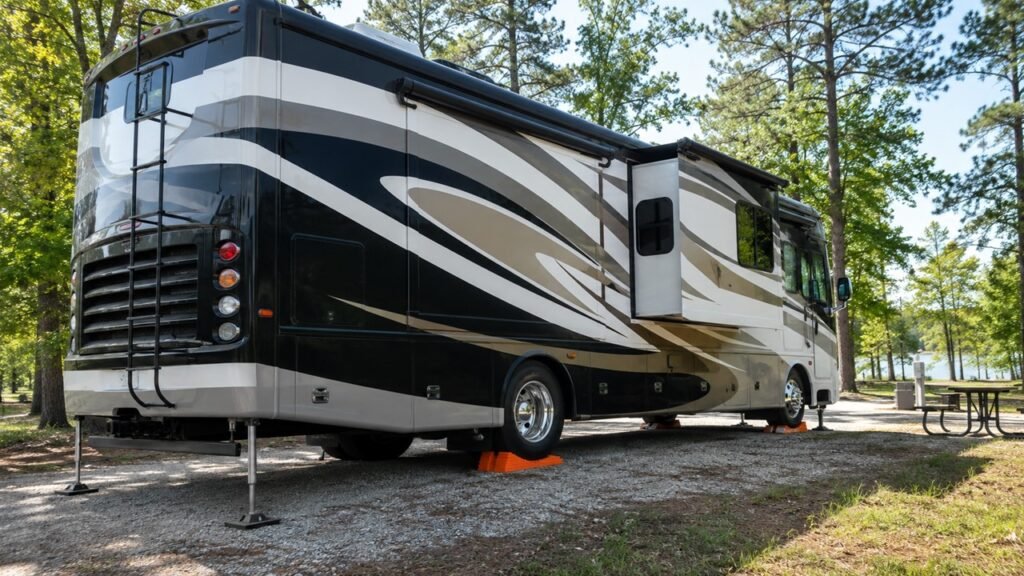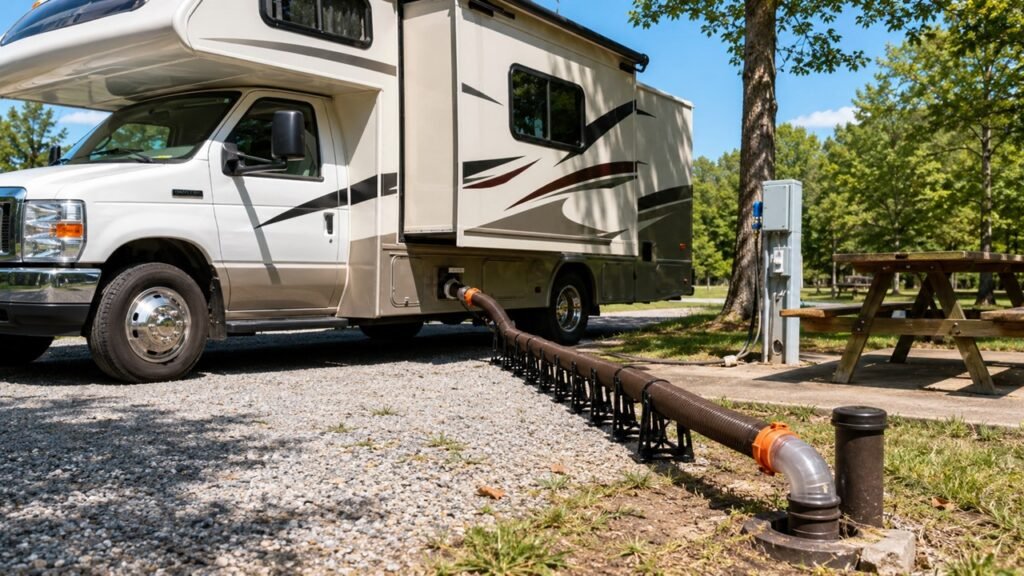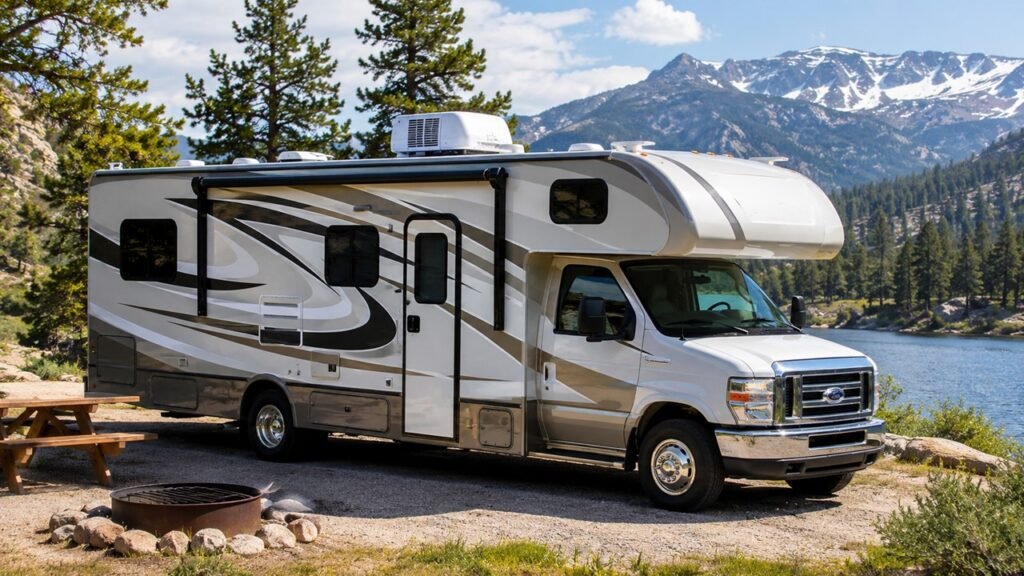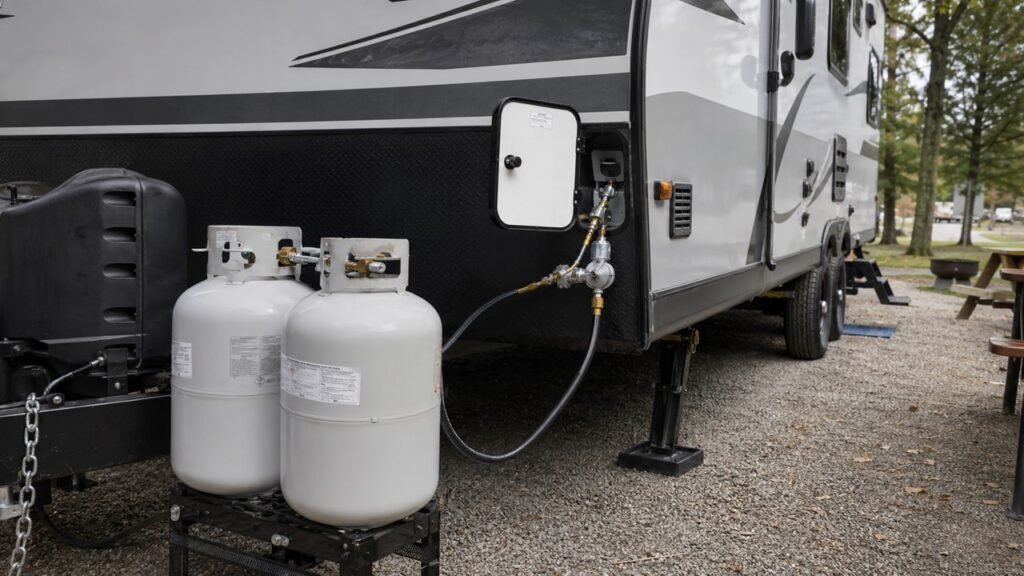
Your RV shakes when you walk inside because each step transfers weight through the floor, frame, tires, suspension, and stabilizer jacks. These components can flex or compress slightly, causing the RV to rock from side to side, move front to back, or bounce vertically.
In this article, I will help you identify where the movement comes from, explain how to stabilize your RV correctly, and show you when excessive shaking may indicate a mechanical problem.
Key Takeaways
- A small amount of movement is normal in most parked RVs.
- Leveling makes your RV even, while stabilizing reduces movement.
- Tires and suspension can still move after the stabilizer jacks are down.
- Long stabilizer-jack extension often increases wobbling.
- Wheel chocks help control front-to-back movement.
- Jack pads prevent stabilizers from sinking into soft ground.
- Long trailers may need extra support near the center of the frame.
- Standard stabilizer jacks should not be used to lift or level an RV.
- Sudden shaking, loud noises, or visible damage should be inspected.
Why Does My RV Shake When I Walk Inside?
An RV is not permanently attached to a concrete foundation like a house. It remains supported by flexible tires, suspension components, jacks, landing gear, and a lightweight frame.
When you walk from one part of the RV to another, your body weight briefly pushes down on the floor. That force travels through the floor and into the RV frame. The frame then transfers the movement to the suspension, tires, stabilizers, and ground.
Even a small amount of movement at one support point can feel much larger inside the living space. You may notice cabinets rattling, blinds moving, furniture shifting, or the mattress rocking when another person walks nearby.
The amount of shaking also depends on several factors, including:
- The length and weight of your RV
- The number and position of the stabilizer jacks
- How far the jacks are extended
- Whether the wheels are properly chocked
- The firmness of the campsite surface
- Whether the slide-outs are extended
- The condition of the frame and suspension
- How weight is distributed inside the RV
In most cases, shaking does not mean your RV is unsafe. It usually means movement is still occurring through the wheels, frame, or support system.
Leveling vs. Stabilizing an RV
Leveling and stabilizing are closely related, but they are not the same job. Understanding the difference can save you from using the wrong equipment or placing too much pressure on your stabilizer jacks.
| Process | Main Purpose | Common Equipment | Effect on Shaking |
| Leveling | Makes the RV sit horizontally | Leveling blocks, ramps, tongue jack, landing gear, hydraulic jacks | May reduce some movement |
| Wheel chocking | Prevents the tires from rolling | Standard wheel chocks | Reduces front-to-back movement |
| Stabilizing | Limits frame and body movement | Scissor jacks, power stabilizers, jack pads | Reduces bounce and sway |
| Bracing | Resists movement in multiple directions | Diagonal braces, cross-braces, frame stabilizers | Reduces side-to-side and fore-aft movement |
Leveling should normally happen before stabilizing. You first adjust the RV until the floor is reasonably level, then use the stabilizers to reduce movement.
Most standard scissor jacks and electric stabilizer jacks are not designed to lift the RV. They are intended to make firm contact with the ground and support the already-leveled frame.
Using a stabilization-only jack to raise a corner can bend the jack, twist the frame, or place stress on the mounting points. Always follow the instructions for your specific RV and stabilization system.
What Type of RV Movement Are You Feeling?
Identifying the direction of movement can help you locate its source. Ask another person to walk through the RV while you watch the frame, tires, jacks, steps, and landing gear from outside.
Side-to-Side Sway
Side-to-side sway feels like the upper section of the RV is shifting left and right. You may notice hanging lights moving, cabinet doors rattling, or the walls swaying when someone walks across the floor.
Common causes include:
- Limited lateral support
- Stabilizer jacks extended too far
- Narrow stabilizer-jack placement
- Soft or uneven ground
- Flexible frame sections
- Strong wind pushing against the sidewalls
- Stabilizers that are not applying equal pressure
Vertical stabilizer jacks are usually effective at reducing up-and-down movement. However, they may provide less resistance against sideways motion unless they are paired with diagonal bracing.
Front-to-Back Rocking
Front-to-back rocking often feels like a gentle seesaw. It may happen when someone walks from the rear bedroom toward the front kitchen or living area.
This movement commonly comes from:
- Tires rolling slightly
- Flexible suspension components
- Improperly positioned wheel chocks
- Movement at the tongue jack
- Movement in fifth-wheel landing gear
- Weight shifting between the front and rear of the RV
Standard wheel chocks can help prevent the tires from rolling. Tandem-axle trailers may also benefit from between-wheel stabilizers that limit movement between the tires.
Up-and-Down Bouncing
Vertical bouncing is often most noticeable near the middle of a long travel trailer, close to the entrance, or inside a slide-out.
Possible causes include:
- Tire sidewall flex
- Suspension compression
- Long unsupported frame sections
- Flexible flooring
- Stabilizers positioned only at the corners
- Stabilizers with insufficient ground pressure
- Hanging entry steps acting like a lever
Corner stabilizers may not fully control movement in the center of a long RV. An approved mid-frame stabilizer can sometimes reduce this type of bounce.
Frame or Floor Flex
RV frames and floors are designed to be strong, but many are also built to remain relatively lightweight. As a result, they may flex slightly when weight moves through the living area.
Mild frame or floor flex is not always a sign of damage. However, you should investigate movement that is accompanied by:
- Loud popping or cracking sounds
- Visible frame deformation
- Separating wall panels
- Changing slide-out gaps
- Doors that suddenly stop closing correctly
- Soft or sagging floor sections
These symptoms may indicate a structural, mounting, or suspension problem rather than a simple stabilization issue.
Common Reasons an RV Shakes While Parked
RV movement often comes from several small issues working together. Correcting one problem may improve stability, but you may need to address multiple support points for the best result.
The Stabilizer Jacks Are Extended Too Far
A stabilizer jack becomes less rigid as it extends farther from the RV frame. The longer the jack legs are, the more opportunity they have to flex or shift.
You can often reduce this movement by placing solid, appropriately rated blocks beneath the jack pads. The blocks reduce the distance the jacks must travel before reaching the ground.
Make sure the blocks are:
- Wide enough for the jack foot
- Placed on firm ground
- Stacked evenly
- Free from cracks or damage
- Rated for the expected load
Avoid building tall, unstable stacks. The goal is to shorten the jack extension without creating another source of movement.
The Wheels Are Not Fully Secured
Your RV tires and suspension remain flexible even when the stabilizer jacks are extended. If the wheels can move slightly, the entire RV may rock front to back.
Place standard wheel chocks firmly against the tires according to your RV manufacturer’s setup procedure. Chocking should usually occur before unhitching a towable RV.
For tandem-axle trailers, an expanding stabilizer placed between the tires may provide additional resistance. These devices can reduce movement between the tires, but they should not replace conventional wheel chocks.
The Ground Is Soft or Uneven
Grass, loose gravel, sand, wet soil, and warm asphalt can allow stabilizer feet to sink or tilt. The RV may initially feel stable, then begin moving after the ground settles.
Wide jack pads help spread the load across a larger surface. This reduces pressure on the ground and makes the stabilizer less likely to sink.
After setting up, inspect each jack again after several hours. Recheck the setup after heavy rain because the soil may soften beneath the pads.
The Stabilizer Jacks Have Too Little Pressure
A stabilizer may appear to be touching the ground without applying enough pressure to limit movement.
Extend each stabilizer according to the manufacturer’s directions. The jack should make firm contact and remove looseness without lifting the RV.
If one jack is supporting much more pressure than the others, the frame may still move unevenly. Try to create balanced contact at all approved stabilization points.
The Trailer Frame Has a Long Unsupported Span
Long travel trailers and fifth wheels may have a large distance between the axles and the corner stabilizers. The middle of the frame can flex slightly when someone walks through the RV.
An approved mid-frame stabilizer may reduce this bounce. However, it must be positioned at a structural location recommended by the RV or stabilizer manufacturer.
Do not place random jacks beneath:
- Holding tanks
- Plumbing lines
- Thin floor sections
- Axles
- Suspension components
- Unapproved frame extensions
Supporting the wrong area can cause serious damage.
The Tongue Jack or Landing Gear Is Moving
The tongue jack on a travel trailer and the landing gear on a fifth wheel support a large amount of weight. Any looseness at these points can transfer movement throughout the RV.
Check for:
- Loose mounting bolts
- A small or sinking jack foot
- Excessive jack extension
- Bent jack components
- Worn landing-gear mechanisms
- Unstable blocks beneath the jack
Placing a solid block beneath the tongue jack may reduce extension and improve stability. Fifth wheels may benefit from compatible diagonal braces or front stabilization systems.
The RV Steps Are Transferring Movement
Traditional hanging RV steps attach directly to the frame. When you step onto them, they can pull down on the side of the RV like a lever.
You may feel the movement strongly near the entrance, even if the rest of the RV is fairly stable.
Ground-contact entry steps or approved step stabilizers can transfer some of your weight directly to the campsite surface. Make sure any step support is adjusted correctly and does not push the RV upward.
The Slide-Out Changes the Weight Distribution
Extending a slide-out moves weight away from the center of the RV. This can make movement more noticeable, particularly on larger slides containing furniture, appliances, or a bed.
The slide itself may not be causing the problem. Instead, the extended weight can magnify movement already occurring in the frame or suspension.
Avoid using slide-out supports unless your RV manufacturer specifically approves them. If the RV settles while the slide is rigidly supported, the support may place damaging pressure on the slide mechanism.
Stabilizer Components Are Loose or Worn
A worn or damaged stabilizer cannot support the RV properly.
Inspect the system for:
- Loose mounting bolts
- Bent jack legs
- Rusted joints
- Damaged footpads
- Worn screw mechanisms
- Missing pins
- Cracked welds
- Loose braces
Repair damaged equipment before adding more stabilizers. Additional equipment will not solve a mechanical failure in the existing system.
How to Diagnose the Source of RV Shaking
Before buying new equipment, determine where the movement starts. A simple walk-through test can help you match the symptom with the most likely cause.
| What You Notice | Likely Source | First Area to Check | Possible Solution |
| RV rocks when someone walks lengthwise | Tire or suspension movement | Wheel chocks and tongue support | Improve chocking or add compatible wheel stabilizers |
| RV sways from side to side | Limited lateral support | Jack extension and brace placement | Shorten jack extension or add diagonal bracing |
| Floor bounces near the center | Unsupported frame span | Middle frame area | Use an approved mid-frame stabilizer |
| Entrance shakes when stepped on | Flexible hanging steps | Step mounting and ground contact | Add a step stabilizer or ground-contact steps |
| One corner moves more than others | Poor jack contact | Jack pad and ground condition | Reset the jack on a firm base |
| Movement worsens after rain | Soft campsite surface | Sinking pads or blocks | Use wider pads and reset the system |
| RV makes loud clunks while moving | Loose or damaged component | Frame, jacks, suspension, or slide area | Arrange a professional inspection |
| Fifth-wheel bedroom moves heavily | Front overhang or landing gear | Landing-gear feet and braces | Improve front support or add compatible bracing |
You can also place a glass of water on a countertop while another person walks around. Watch which direction the water moves. This simple test can help distinguish side-to-side sway from front-to-back rocking.
How to Stop Your RV From Shaking When You Walk
The most effective approach is to stabilize the RV in a logical order. Each step controls a different source of movement.
- Choose the Firmest Parking Position Available: Avoid deep ruts, loose soil, soft mud, and steeply sloped ground whenever possible. A firm, stable surface gives your leveling and stabilization equipment a much better foundation.
- Level the RV From Side to Side: For a towable RV, place leveling blocks or ramps beneath the tires on the low side before unhitching. Proper side-to-side leveling helps distribute weight more evenly across the RV.
- Chock the Wheels Securely: Position wheel chocks according to your RV manufacturer’s instructions before unhitching. Properly chocked wheels prevent the RV from rolling and significantly reduce front-to-back rocking.
- Level the RV From Front to Back: Use the tongue jack, fifth-wheel landing gear, or your motorhome’s approved leveling system to bring the RV level from front to rear before extending the stabilizers.
- Place Pads Beneath the Stabilizer Feet: Use solid, flat, appropriately rated jack pads that suit the campsite surface. Pads spread the load over a larger area and help prevent the stabilizers from sinking into soft ground.
- Keep Stabilizer Extension as Short as Practical: A stabilizer jack is generally more rigid when it is only partially extended. If necessary, use sturdy blocks beneath the jack feet to reduce the amount of extension required.
- Extend the Stabilizers Correctly: Lower each stabilizer until it makes firm contact with the ground, but do not continue extending it to lift the RV. Standard stabilizer jacks are designed to reduce movement, not to level or support the RV’s full weight.
- Check for Wheel Movement: Ask someone to walk around inside the RV while you watch the tires and suspension from outside. If the wheels are still moving slightly, additional wheel stabilization may help.
- Add Compatible Between-Wheel Stabilizers if Needed: If you have a tandem-axle trailer, between-wheel stabilizers can help reduce fore-and-aft movement by limiting tire movement between the two wheels. They should always be used alongside standard wheel chocks.
- Test Different Areas Inside the RV: Walk around the entrance, center, rear, bedroom, and slide-outs to identify where movement is most noticeable. This helps you determine whether additional stabilization is actually needed.
- Add Targeted Support Only Where Necessary: Install approved diagonal braces, step stabilizers, or mid-frame supports based on the specific source of movement instead of adding unnecessary equipment throughout the RV.
- Recheck the Setup After Settling: After the RV has been occupied for a while, inspect the stabilizers, pads, and blocks again. They can shift or settle slightly, especially on soft ground, and may need minor readjustment.
Trying to make every stabilizer extremely tight is not the answer. The goal is balanced, firm support without twisting or lifting the RV frame.
How to Stabilize Different Types of RVs
Different RV designs transfer weight in different ways. The right stabilization method for a travel trailer may not be suitable for a motorhome or fifth wheel.
Travel Trailers
A travel trailer is usually supported by its tires, suspension, tongue jack, and corner stabilizers.
For a stable setup:
- Level the trailer side to side using blocks beneath the tires.
- Chock the wheels before unhitching.
- Level front to back using the tongue jack.
- Place sturdy pads beneath the corner stabilizers.
- Keep the stabilizers reasonably short.
- Use between-wheel stabilizers if the tandem tires move.
- Add an approved center stabilizer if the frame bounces.
- Support flexible entry steps when necessary.
Pay close attention to the tongue jack. A narrow jack foot or tall block stack can allow the front of the trailer to move.
Fifth Wheels
Fifth wheels have an elevated front section supported by landing gear. Their long frames and raised bedrooms can make movement feel more noticeable.
For better stability:
- Chock the wheels securely.
- Check that both landing-gear feet are on solid pads.
- Keep landing-gear extension as short as practical.
- Use rear stabilizers correctly.
- Inspect the center of the frame for bounce.
- Consider compatible diagonal landing-gear braces.
- Consider an approved mid-frame stabilizer.
- Check whether the entrance steps transfer movement.
A kingpin tripod may help reduce movement near the front overhang, but it is not a universal solution. It may provide limited improvement when the main movement comes from the tires, suspension, or middle of the frame.
Motorhomes
Motorhomes may use hydraulic jacks, electric leveling systems, air suspension, or a combination of these systems.
Follow the chassis and leveling-system instructions carefully because setup procedures vary.
Depending on the model, stabilization may involve:
- Setting the parking brake
- Positioning the transmission correctly
- Chocking the wheels
- Dumping or maintaining air suspension
- Placing pads beneath hydraulic jacks
- Running an automatic leveling sequence
- Confirming that each jack is on solid ground
- Supporting flexible entry steps
Never assume that every motorhome should be leveled with the tires off the ground. Follow the limitations provided by the chassis and leveling-system manufacturers.
Pop-Up Campers and Truck Campers
Pop-up campers have lightweight frames and lifting mechanisms that require careful setup. Their stabilizers should normally be used only after the camper is level.
Truck campers may rely on the pickup suspension while loaded or on camper jacks when removed from the truck. Follow the manufacturer’s instructions for jack placement, height, and support.
Because these campers are lighter, occupants may notice movement more easily. Wide pads, short jack extension, and balanced support can make a significant difference.
Best Equipment for Reducing RV Movement
You do not need every type of stabilizing product. Choose equipment that addresses the specific movement you identified.
Leveling Blocks
Leveling blocks are primarily used beneath the tires to raise the low side of an RV. They can also be used beneath some jack feet when permitted by the manufacturer.
Their main benefits include:
- Correcting an uneven campsite
- Reducing jack extension
- Keeping jack feet away from wet ground
- Creating a more stable contact point
Replace blocks that are cracked, crushed, warped, or badly weathered.
RV Jack Pads
Jack pads increase the contact area beneath stabilizer or leveling jacks. This helps prevent the feet from sinking into soil, gravel, grass, sand, or warm asphalt.
Rubber pads may also absorb a small amount of vibration. However, their primary purpose is to improve ground contact and distribute the load.
Standard Wheel Chocks
Standard wheel chocks are essential for preventing the RV from rolling.
Select chocks that fit the tire size and campsite surface. Place them firmly against the tires rather than leaving a gap.
Wheel chocks provide safety as well as stability. Do not rely on stabilizer jacks alone to prevent a towable RV from moving.
Between-Wheel Stabilizers
Between-wheel stabilizers expand between the tires of a tandem-axle trailer. They limit the small amount of tire movement that can create front-to-back rocking.
These stabilizers are most useful when:
- The trailer has tandem axles
- There is enough space between the tires
- Fore-and-aft movement is the main problem
- Standard wheel chocks are already in place
They are not designed to replace conventional wheel chocks.
Diagonal Stabilizer Braces
Diagonal braces connect the stabilizer or landing gear to another point on the frame. This creates triangular support that resists sideways and front-to-back movement.
They can be especially useful on:
- Long travel trailers
- Fifth wheels
- RVs with tall landing gear
- Setups affected by lateral sway
Check frame clearance, plumbing, underbelly panels, and manufacturer compatibility before installation.
Mid-Frame Stabilizers
A mid-frame stabilizer adds support between the front and rear ends of a long RV. It may help when the floor feels firm near the corners but bounces near the center.
Only place this type of stabilizer at an approved structural point. Never guess where the frame can safely accept support.
Fifth-Wheel Front Stabilizers
Kingpin tripods and front braces are designed to reduce movement around the raised front section of a fifth wheel.
A tripod creates another ground-contact point beneath the kingpin. Frame-mounted braces connect the landing gear to the chassis and resist movement in multiple directions.
The best option depends on where the movement originates. Landing-gear braces may be more effective when the legs are flexing, while a tripod may help with movement in the front overhang.
Entry-Step Stabilizers
Entry-step stabilizers support the bottom of hanging RV steps. They prevent each step from transferring as much force into the frame.
Adjust the support so it touches the ground firmly without lifting the side of the RV. Recheck it if the campsite surface settles.
What Not to Do When Stabilizing an RV
- Do not use standard stabilizer jacks to lift or level the RV.
- Do not force a jack beyond its approved operating range.
- Do not lift tires off the ground with a stabilization-only system.
- Do not place jacks beneath holding tanks or plumbing.
- Do not support thin floor sections or unapproved frame extensions.
- Do not build tall towers from loose wood or damaged blocks.
- Do not overtighten the stabilizers to remove every small vibration.
- Do not crawl beneath an RV supported only by stabilizer jacks.
- Do not use between-wheel stabilizers as a replacement for wheel chocks.
- Do not add slide-out supports without manufacturer approval.
- Do not move the RV while any stabilizer or leveling jack is extended.
- Do not assume aftermarket braces are compatible with every frame.
- Do not ignore bent jacks, damaged welds, or loose mounting hardware.
How Much RV Movement Is Normal?
A small amount of movement is normal in most parked RVs. Tires compress, suspension components flex, floors move slightly, and lightweight frames may respond when weight shifts.
A well-stabilized RV can feel much firmer, but it may never feel exactly like a permanent home. This is especially true for lightweight trailers, pop-up campers, and long RVs with large unsupported floor areas.
You should be more concerned when the movement changes suddenly or appears together with other symptoms.
Warning signs include:
- One side of the RV settling noticeably
- A sudden increase in shaking
- Loud clunks, pops, or grinding sounds
- A stabilizer leaning or bending
- Cracks near frame joints or wall connections
- Slide-outs becoming difficult to operate
- Doors changing alignment
- Soft areas developing in the floor
- Jacks repeatedly sinking or losing pressure
These signs may indicate damaged equipment, weakened ground, suspension trouble, frame movement, or a leveling-system problem.
When Should You Have the RV Inspected?
Normal campsite movement usually improves after correcting the setup. Movement that appears suddenly, becomes severe, or includes unusual noises may need professional attention.
Shaking Appeared Suddenly
Have the RV inspected if it was previously stable but now moves excessively.
Possible causes include:
- A bent stabilizer
- Loose mounting bolts
- Broken suspension parts
- Damage from a pothole or curb strike
- A cracked weld
- A shifted axle component
- A hydraulic or electric jack problem
Inspect the RV before continuing a long trip if the shaking began after a road impact.
The Frame Makes Loud Popping or Cracking Sounds
Occasional small noises can come from materials expanding, settling, or adjusting to temperature changes.
Frequent or loud popping may indicate movement around:
- Frame outriggers
- Stabilizer mounting points
- Slide-out openings
- Floor supports
- Welded connections
- Suspension hangers
Stop using any damaged support component until it has been inspected.
A Jack Is Bent, Loose, or Uneven
A bent stabilizer should not be forced back into position or used to support the RV.
Loose mounting hardware, damaged gears, leaking hydraulic components, or twisted jack legs can cause the RV to settle unexpectedly.
Repair or replace the damaged component before relying on it again.
The RV Leans After Being Stabilized
An RV that begins leaning after setup may have:
- A sinking jack pad
- Soft ground
- A leaking hydraulic jack
- A retracting electric stabilizer
- Uneven tire pressure
- Suspension damage
- Improper weight distribution
Recheck the ground and stabilization equipment immediately. Do not simply tighten one jack until the RV appears level again.
Doors or Slide-Outs No Longer Align
Changing door gaps or binding slide-outs may indicate that the frame is being twisted by uneven support.
Retract the stabilizers and repeat the leveling process according to the manufacturer’s instructions. If the alignment problem remains, arrange an inspection.
Can You Completely Eliminate RV Shaking?
You can usually reduce RV shaking significantly, but eliminating every vibration may not be realistic.
The best results come from controlling movement at several points:
- The tires
- The suspension
- The tongue jack or landing gear
- The corner stabilizers
- The middle of the frame
- The entrance steps
- The campsite surface
Adding more equipment does not always create better stability. A trailer with poorly chocked wheels may continue rocking even after several additional frame stabilizers are installed.
Identify the direction and source of the movement first. Then choose the simplest solution that directly addresses it.
Quick RV Stabilization Checklist
- Park on firm, reasonably level ground.
- Level the RV before using the stabilizers.
- Chock the wheels securely.
- Place pads beneath jacks on soft surfaces.
- Keep jack extension as short as practical.
- Apply only the recommended stabilizing pressure.
- Check the tongue jack or landing gear.
- Watch the wheels while someone walks inside.
- Test for movement near the entrance and center.
- Add wheel stabilizers only when compatible.
- Add diagonal or mid-frame support where approved.
- Inspect bolts, welds, feet, and jack mechanisms.
- Recheck the setup after rain or ground settlement.
- Retract every stabilizer before moving the RV.
Final Thoughts
Your RV shakes when you walk inside because weight is moving through a flexible structure supported by tires, suspension, jacks, and the campsite surface. A small amount of movement is normal, but poor wheel chocking, long jack extension, soft ground, loose components, and unsupported frame sections can make it much worse.
Start by identifying whether the RV is moving side to side, front to back, or vertically. Then correct the most likely source instead of adding random stabilizing equipment.
Level the RV first, secure the wheels, use firm jack pads, keep the stabilizers reasonably short, and add approved bracing only where it is needed. When the shaking is sudden, severe, or accompanied by structural noises, have the RV inspected before relying on the damaged system.
Related FAQs
Why Does My Travel Trailer Rock Even With the Jacks Down?
Your travel trailer may still rock because the stabilizer jacks do not stop movement in the tires, suspension, tongue jack, or long frame sections. Proper wheel chocking, shorter jack extension, firm pads, and targeted bracing can make the trailer feel more stable.
Why Does My RV Shake More Near the Middle?
An RV often shakes more near the middle because that area may sit between the axles and corner stabilizers without direct support. A long frame can flex slightly under foot traffic, and an approved mid-frame stabilizer may reduce the bounce.
Do X-Chocks Stop an RV From Shaking?
X-style chocks can reduce front-to-back rocking by limiting movement between tandem tires. They do not eliminate all frame movement and should be used with standard wheel chocks rather than as a replacement.
Should RV Stabilizer Jacks Be Tight?
RV stabilizer jacks should make firm contact with the ground and apply only the pressure recommended by the manufacturer. They should not be tightened enough to lift the RV or twist the frame.
Can I Put Blocks Under My RV Stabilizer Jacks?
You can place stable, appropriately rated blocks or pads beneath RV stabilizer jacks when the equipment manufacturer permits it. The blocks shorten jack extension and help prevent the feet from sinking into soft ground.
Why Does My Fifth Wheel Shake So Much?
A fifth wheel may shake because movement occurs through its tires, suspension, long frame, landing gear, rear stabilizers, and elevated front section. Wheel chocks, solid landing-gear pads, diagonal braces, and approved center support may improve stability.
Does Leveling an RV Stop It From Shaking?
Leveling an RV may reduce some movement, but it does not completely stabilize the frame. Wheel chocks, stabilizer jacks, firm pads, and appropriate bracing are usually needed to control shaking.
Will a Kingpin Tripod Stop Fifth-Wheel Movement?
A kingpin tripod may reduce movement near a fifth wheel’s front overhang, but it may provide limited improvement if the main problem comes from the tires, suspension, landing gear, or center of the frame.
Can Wind Make a Parked RV Shake?
Strong wind can make a parked RV shake because its large sidewalls act like a sail. Firm stabilizer contact, shorter jack extension, and diagonal bracing can reduce the movement, although some wind-related motion may remain.
Why Does My RV Shake When Someone Uses the Steps?
Your RV may shake when someone uses the steps because hanging steps transfer body weight directly into the frame. An approved step stabilizer or ground-contact entry steps can reduce this movement.
Can Too Much Stabilizer Pressure Damage an RV?
Too much stabilizer pressure can bend the jack, strain its mounting point, or twist the RV frame. Standard stabilizers should support an already-leveled RV rather than lift it.
Should I Use Slide-Out Supports to Reduce Shaking?
Use slide-out supports only when the RV manufacturer specifically approves them. An improperly supported slide may be damaged if the RV settles while the support remains fixed against the slide floor.

Michael Carter is an experienced RV traveler who focuses on practical outdoor trips across the States. He writes clear, step-by-step guides and realistic reviews based on real travel needs. His aim is to help RV and camper owners plan informed, simpler journeys with confidence.