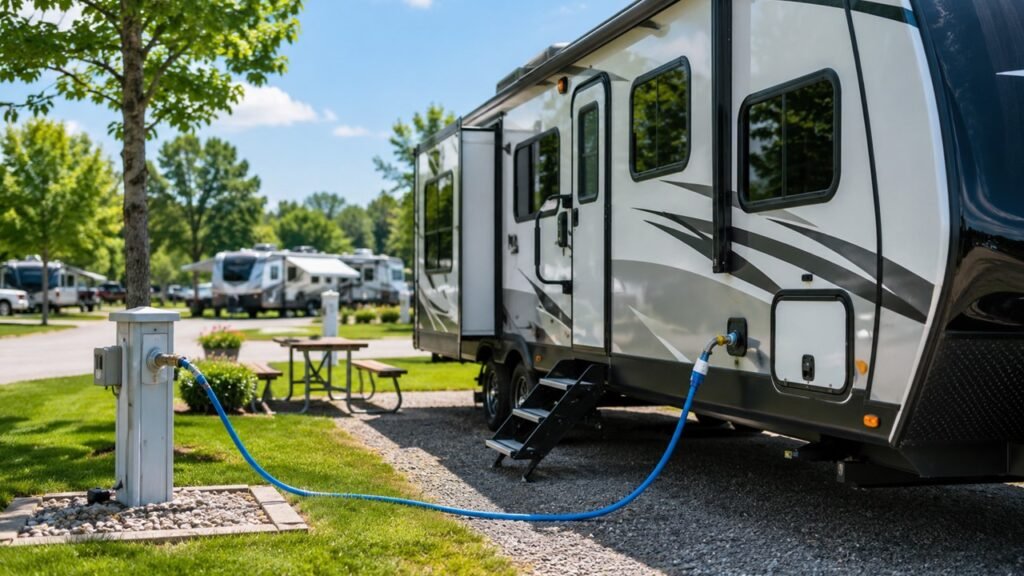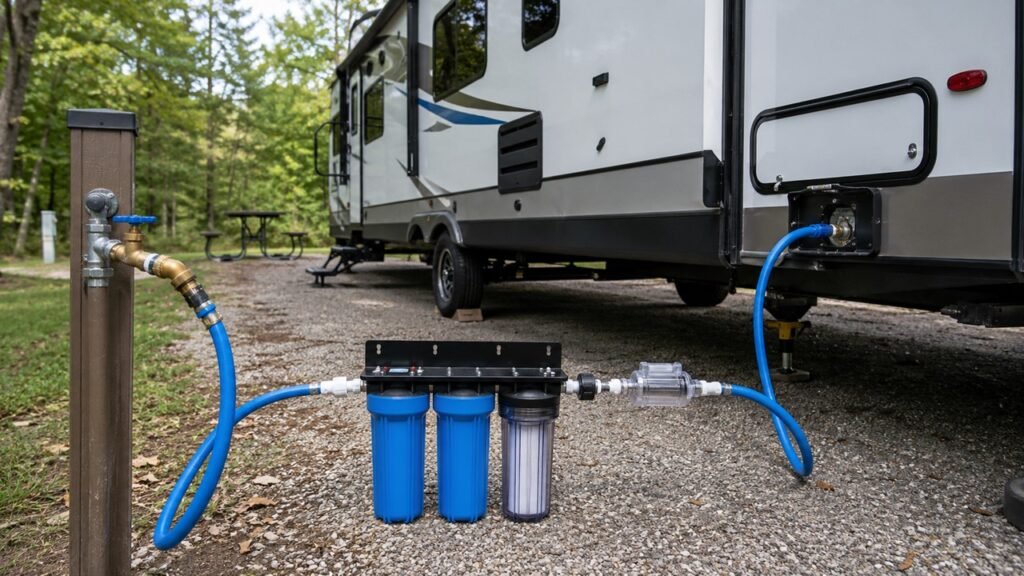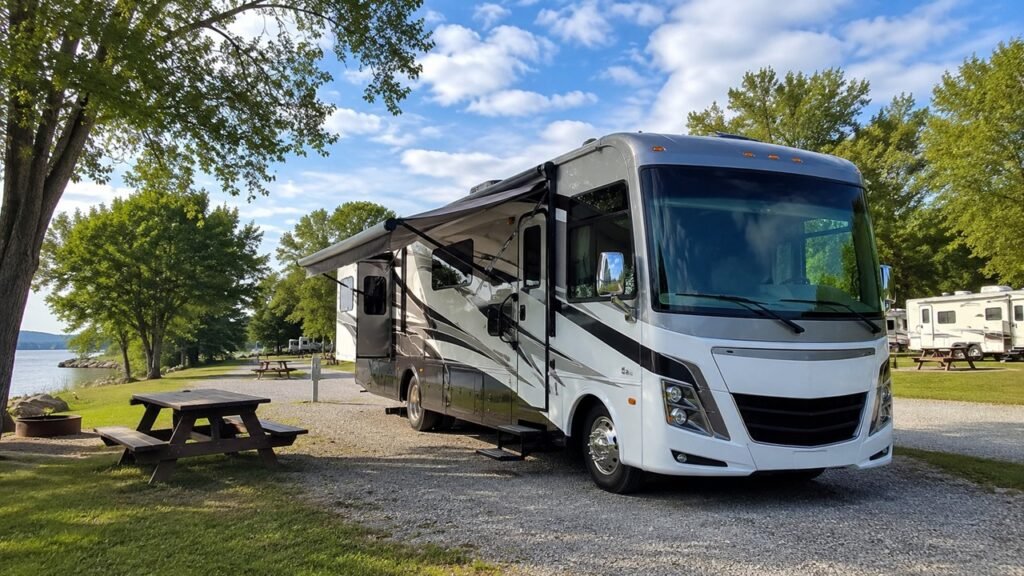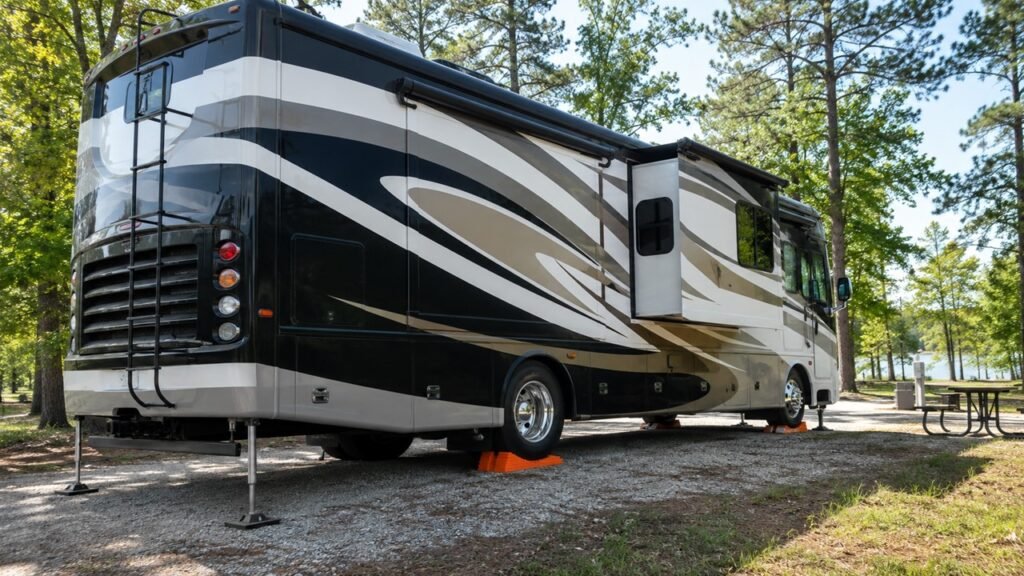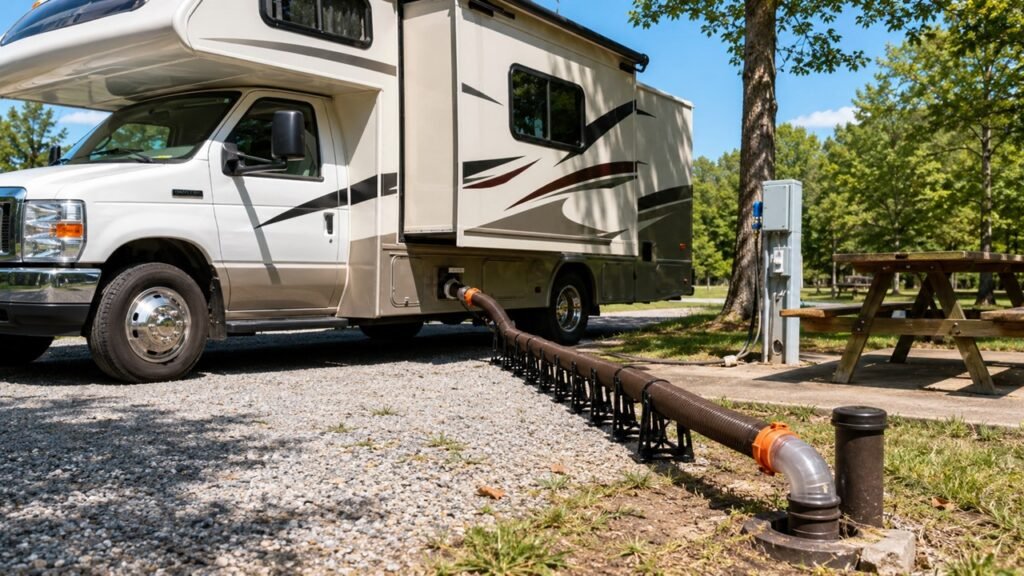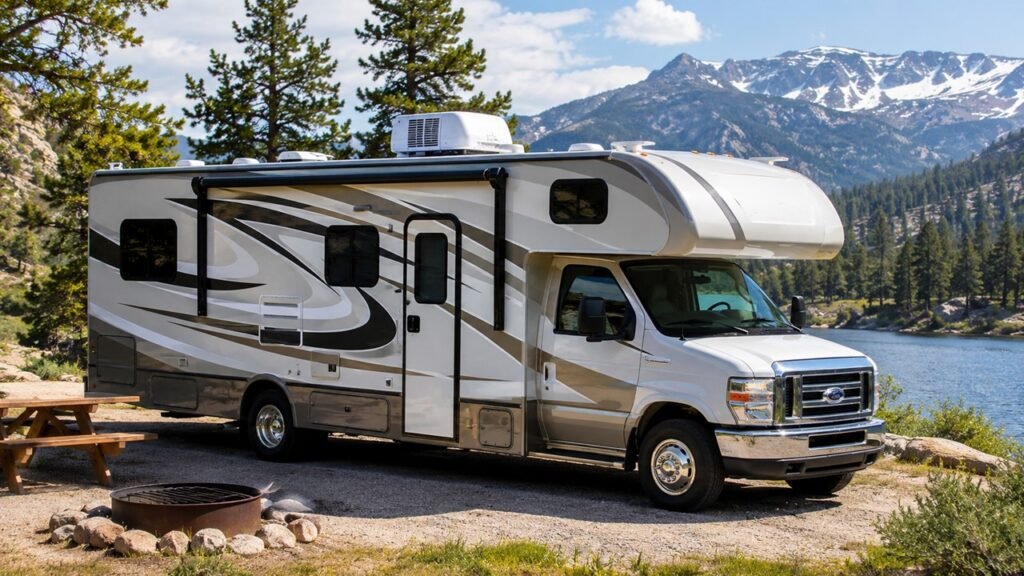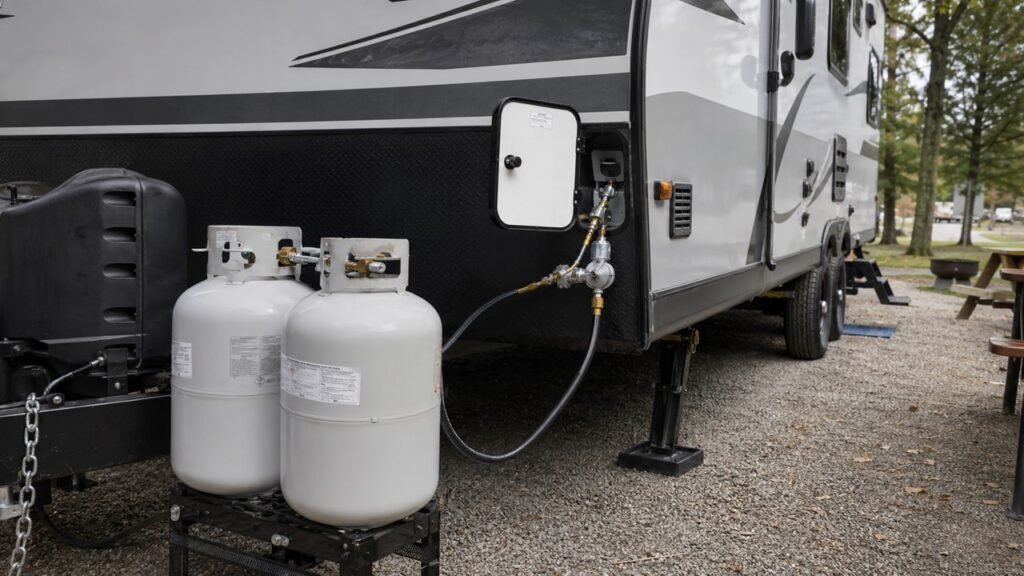
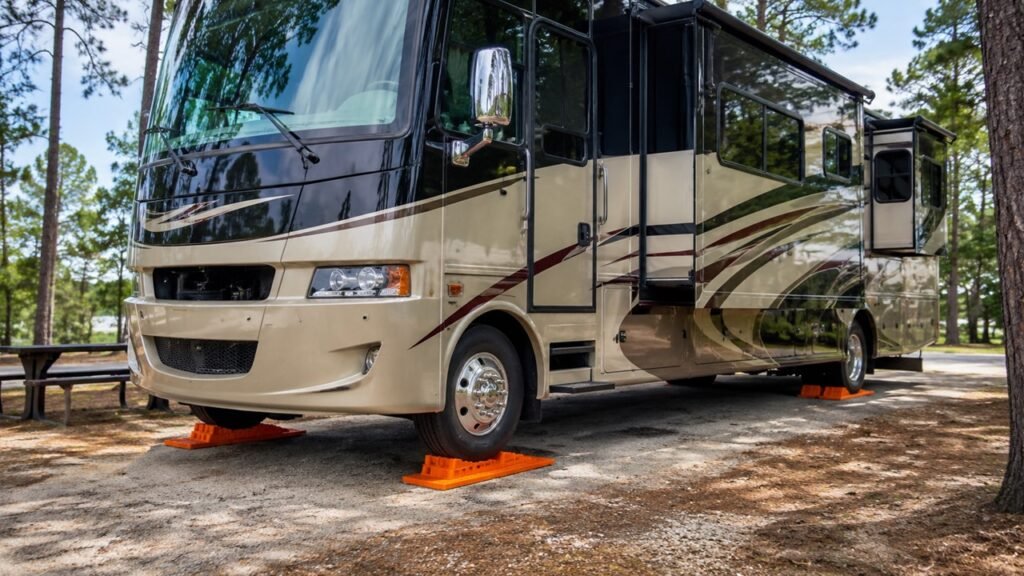
An RV needs to be level so its refrigerator, slide-outs, plumbing, holding tanks, doors, and other systems work correctly. Proper leveling also reduces structural strain and makes sleeping, cooking, walking, and living inside the RV more comfortable.
In this article, I’ll explain what can happen when your RV is unlevel, how level it actually needs to be, and how to level different types of RVs safely.
Key Takeaways
- Absorption refrigerators may cool poorly or suffer damage when operated significantly off-level.
- A level RV helps slide-outs move smoothly and keeps doors properly aligned.
- Sinks, showers, drain lines, and holding tanks work better when positioned correctly.
- Sleeping, walking, cooking, and moving around feel more comfortable on a level floor.
- Leveling jacks and stabilizer jacks do not always perform the same job.
- Towable RVs should normally be leveled side to side before unhitching.
- Always follow the instructions for your RV, refrigerator, and leveling system.
Why Does an RV Need to Be Level?
Leveling affects much more than how the RV feels under your feet. It helps several mechanical, electrical, and plumbing systems operate as intended.
RV Refrigerators May Require a Level Surface
Many RVs use an absorption refrigerator that can operate on propane, electricity, or both. Unlike a household refrigerator, this type does not rely on a standard compressor to circulate refrigerant.
Instead, heat and gravity move a solution through a network of cooling tubes. When the RV is significantly unlevel, the liquid may not circulate correctly. It can collect in low areas of the tubing and interrupt the cooling process.
The refrigerator may then cool poorly, overheat, or experience internal buildup. Continued off-level operation can eventually damage the cooling unit.
That does not mean your RV must be perfectly level down to the smallest fraction. Most modern absorption refrigerators allow some operating tolerance. However, the permitted angle varies by model, so the refrigerator manual should be your main reference.
A 12-volt compressor refrigerator is generally less sensitive to small campsite slopes. Even so, leveling the RV remains important for the other systems inside your rig.
Slide-Outs Work Better When the RV Is Level
Slide-outs are heavy rooms supported by tracks, rollers, cables, gears, hydraulic cylinders, or electric motors. These parts are designed to move the room along a specific path.
When the RV frame is twisted by uneven ground, the slide opening may become slightly distorted. The slide can then move unevenly or place additional pressure on its mechanism.
You might notice:
- One side moving faster than the other
- Unusual popping, grinding, or clicking sounds
- Seals that do not sit evenly
- Gaps around the slide room
- Difficulty extending or retracting the slide
- Additional strain on the slide motor
A small slope will not automatically destroy a slide-out. However, regularly operating slides while the RV is badly unlevel may increase wear over time.
Most manufacturers recommend leveling the RV before deploying the slides. Some motorhomes use a different setup sequence, so check the instructions for your specific model.
Plumbing Fixtures Drain More Effectively
Your RV’s sinks and shower rely on gravity to move wastewater through the drain lines. When the RV leans away from a drain opening, water may collect instead of flowing out completely.
For example, an unlevel shower floor may leave a puddle along one wall. Water can also remain inside horizontal drain lines if the slope works against the intended flow direction.
Standing water may eventually cause:
- Unpleasant odors
- Soap residue
- Mold or mildew growth
- Slow drainage
- Additional buildup inside the pipes
Keeping the RV reasonably level allows water to move toward the drains as intended.
Holding Tanks May Not Empty Completely
Your gray and black holding tanks are usually mounted underneath the RV. Wastewater flows toward the outlet when you open the dump valve.
If the RV is leaning in the wrong direction, some liquid and waste may remain trapped on the opposite side of the tank. You may think the tank is empty even though a noticeable amount remains inside.
Leftover waste can contribute to odors, buildup, and inaccurate sensor readings. In black tanks, solid waste may also dry and collect in areas where liquid does not reach it.
An uneven liquid level can affect the monitoring system as well. Tank sensors may show more or less waste than the tank actually contains, depending on which direction the RV is leaning.
Doors, Cabinets, and Windows Stay Properly Aligned
One of the easiest ways to notice an unlevel RV is by watching the doors. Cabinet doors may swing open on their own, while entry doors may become difficult to close.
This happens because gravity pulls the door toward the lower side. Severe unevenness may also place some twisting pressure on the RV body or frame.
You may notice:
- Cabinet doors that will not stay open or closed
- Interior doors swinging across the room
- Entry doors rubbing against the frame
- Storage compartments becoming harder to latch
- Windows feeling tight or uneven
Occasional door movement may simply indicate a slight slope. Persistent sticking or misalignment can mean the RV needs repositioning or further inspection.
Sleeping and Walking Become More Comfortable
Sleeping inside an unlevel RV can become uncomfortable surprisingly quickly. You may feel yourself rolling toward one side or sliding toward the head or foot of the bed.
Sleeping with your head lower than your feet may also cause pressure, congestion, or general discomfort. Even a small tilt can feel more noticeable after several hours in bed.
Walking on a sloped floor may affect your balance as well. Children, older adults, and anyone with limited mobility may have more difficulty moving safely through the RV.
A level floor provides a more natural surface for standing, walking, and sleeping.
Cooking and Daily Activities Become Easier
An uneven countertop can make everyday tasks frustrating. Eggs, oil, and pancake batter may collect on one side of a frying pan. Drinks may sit at an angle, and round objects can roll off the counter.
Furniture may also feel unstable. Chairs can rock, tables may lean, and items inside cabinets may shift toward the lower side.
Leveling gives you a more practical living space and prevents many small annoyances from becoming constant problems.
What Happens If an RV Is Not Level?
The effects of an unlevel RV depend on the angle, RV design, appliance type, and how long it remains in that position.
| RV Area or Component | Possible Effect of Being Unlevel | Possible Severity |
| Absorption refrigerator | Poor cooling, overheating, or cooling-unit damage | Potentially serious |
| Compressor refrigerator | Usually tolerates small slopes better | Usually low |
| Slide-outs | Binding, uneven movement, seal gaps, or motor strain | Moderate to serious |
| Sinks and showers | Slow drainage or standing water | Low to moderate |
| Gray and black tanks | Incomplete dumping or incorrect sensor readings | Moderate |
| Cabinet and entry doors | Swinging, sticking, or poor alignment | Low to moderate |
| Beds and seating areas | Poor sleep and physical discomfort | Low |
| Counters and appliances | Uneven cooking and moving objects | Low |
| Frame and body | Uneven loading or twisting on severe slopes | Potentially serious |
| Leveling and stabilizing equipment | Uneven loads or sinking support points | Moderate to serious |
A slight temporary slope may only affect comfort. A severe or long-term tilt can place more stress on the refrigerator, slide-outs, frame, plumbing, and support equipment.
How Level Does an RV Need to Be?
Your RV usually does not need to be mathematically perfect. It should be level enough for safe appliance operation, effective drainage, and comfortable movement inside.
The permitted amount of slope depends partly on your refrigerator and RV manufacturer. Older absorption refrigerators may be more sensitive than modern compressor models.
Use these practical checks after setting up:
- The floor feels comfortable when you walk.
- Cabinet doors remain where you leave them.
- Water drains toward the sink and shower outlets.
- The refrigerator is within its approved operating angle.
- Slide-outs move without binding or unusual noises.
- Beds and seating areas do not feel noticeably tilted.
- The bubble or digital level shows only a small deviation.
Do not rely on a universal number found online. Check your refrigerator manual for the approved operating tolerance and follow your RV manufacturer’s leveling instructions.
Does Every RV Refrigerator Need to Be Level?
Different refrigerator designs respond differently to an uneven campsite. Knowing which type you have will help you understand how careful you need to be.
Absorption Refrigerators
Absorption refrigerators are commonly found in travel trailers, fifth wheels, and motorhomes. They may operate on propane, 120-volt power, or 12-volt power, depending on the model.
These refrigerators use heat and gravity to circulate a refrigerant mixture. When they are operated significantly off-level, circulation may slow or stop.
That can reduce cooling performance and allow excessive heat to build inside the cooling unit. Long-term off-level use may cause permanent damage.
You may have an absorption refrigerator if your RV has:
- A propane operating mode
- Exterior refrigerator vents
- A burner assembly behind the refrigerator
- Controls marked gas, auto, or electric
- A roof or sidewall refrigerator vent
Compressor Refrigerators
A compressor refrigerator works more like the refrigerator in your home. It uses an electric compressor to circulate refrigerant through the system.
These units generally tolerate normal campsite slopes better than absorption refrigerators. Many newer RVs use 12-volt compressor refrigerators because they cool quickly and do not rely on propane.
However, compressor models still have manufacturer limits. A severe tilt can affect oil circulation inside the compressor or prevent doors and internal drainage systems from working correctly.
How to Identify Your Refrigerator Type
Check the following if you are unsure which refrigerator your RV has:
- Find the model number inside the refrigerator.
- Read the appliance label or owner’s manual.
- Look for propane controls on the front panel.
- Check for exterior vents behind the refrigerator.
- Look for a propane burner or gas line.
- Confirm whether it runs only on electricity.
- Contact the manufacturer with the model number.
Once you identify the refrigerator, find the approved operating angle in its manual.
Leveling Versus Stabilizing an RV
Leveling and stabilizing are both important, but they are not the same process. Confusing them can damage the RV or its support equipment.
What RV Leveling Means
Leveling means raising the low side or low end of the RV until the floor is reasonably horizontal.
You might use:
- Leveling blocks
- Curved leveling ramps
- A tongue jack
- Fifth-wheel landing gear
- Hydraulic leveling jacks
- An automatic leveling system
The correct tool depends on your RV type.
What RV Stabilizing Means
Stabilizing reduces rocking and movement after the RV is already level. Stabilizer jacks support the corners or frame so the RV feels more solid when people walk inside.
They are not always designed to carry the full weight of the RV.
You should normally level first and stabilize afterward.
Can Stabilizer Jacks Be Used for Leveling?
Most travel-trailer stabilizer jacks should not be used to lift or level the trailer. They are designed to control movement, not raise the frame.
Using them as lifting jacks can bend the stabilizers, damage their mounting points, or twist the trailer frame.
Hydraulic leveling jacks on a motorhome are different. These systems may be designed to lift and level the vehicle.
Always identify the type of jack before putting weight on it. The owner’s manual should clearly state whether the system is intended for leveling, stabilizing, or both.
How to Level an RV Safely
The correct leveling process depends on whether you have a travel trailer, fifth wheel, or motorhome. Begin by choosing the flattest, firmest part of the campsite.
How to Level a Travel Trailer
- Inspect the campsite. Look for holes, soft soil, tree roots, and steep slopes.
- Position the trailer. Place it where the hookups, awning, and slide-outs have enough clearance.
- Check the side-to-side level. Use a bubble or digital level across the floor.
- Place blocks under the low-side tires. Stackable blocks or curved ramps work well.
- Pull onto the blocks. Move slowly until the trailer is level from side to side.
- Chock the wheels. Secure the trailer before disconnecting it from the tow vehicle.
- Unhitch the trailer. Follow your normal safe unhitching procedure.
- Level front to back. Raise or lower the tongue jack until the trailer is level.
- Lower the stabilizer jacks. Extend them firmly enough to reduce movement without lifting the trailer.
- Recheck the level. Slide-outs and people moving inside can slightly change the weight distribution.
How to Level a Fifth Wheel
- Check the campsite for firm, reasonably flat ground.
- Position the fifth wheel with enough room for the slides.
- Check the side-to-side level before unhitching.
- Place blocks or ramps beneath the low-side tires.
- Pull forward or backward until the fifth wheel is level.
- Chock the wheels securely.
- Lower the front landing gear onto suitable pads.
- Disconnect the fifth wheel from the truck.
- Use the landing gear to level front to back.
- Lower rear stabilizers if your RV has them.
- Follow the manufacturer’s instructions before opening the slides.
How to Level a Motorhome
- Park on the firmest and flattest available part of the campsite.
- Confirm that you have enough clearance for slides, steps, and awnings.
- Engage the parking brake and follow the transmission instructions.
- Place jack pads beneath the leveling jacks when the ground is soft.
- Start the manual or automatic leveling system.
- Allow the system to complete its leveling cycle.
- Check the result with a bubble or digital level.
- Make small adjustments if the system allows manual control.
- Confirm that the jacks and tires are safely supported.
- Recheck the level after extending the slides.
Never crawl beneath an RV supported only by hydraulic or electric leveling jacks. Use approved safety stands and service procedures when working underneath the vehicle.
What Tools Do You Need to Level an RV?
You can level most RVs with a few basic tools. Some rigs already include a built-in automatic leveling system.
Useful RV leveling tools include:
- Bubble level
- Digital RV level
- Smartphone leveling app
- Stackable leveling blocks
- Curved leveling ramps
- Heavy-duty wheel chocks
- Rubber or plastic jack pads
- Wooden support boards
- Tongue jack
- Fifth-wheel landing gear
- Hydraulic leveling system
- Work gloves
- Flashlight
A phone app can provide a quick reading, but the phone must rest on a flat, reliable surface. Calibrate it on a known level surface before relying on the measurement.
Where Should You Place a Level Inside an RV?
The measuring surface should be fixed, flat, and reasonably parallel to the RV frame. Use the same location each time for consistent readings.
Best Places to Check the Level
Good locations include:
- The main floor near the center of the RV
- A solid kitchen countertop
- A refrigerator shelf
- A fixed entry step
- A central frame reference point
- Permanently mounted exterior levels
The center floor is often the most reliable starting point. Check both side to side and front to back.
Some RV owners also place a small level inside the refrigerator. This allows them to confirm the appliance position directly.
Places That May Give Misleading Readings
Avoid surfaces that may already have a built-in slope or uneven construction, including:
- Shower floors
- Soft mattresses
- Folding tables
- Removable countertops
- Warped shelves
- Cushioned seating
- Storage compartment floors
Shower floors are often intentionally sloped toward the drain. They should not be used as the main reference for leveling the RV.
Should You Level an RV Before Extending the Slide-Outs?
In most cases, you should level and stabilize the RV before extending its slide-outs. This helps keep the frame and slide opening properly aligned while the room moves.
Extending a slide while the RV is badly unlevel may place uneven pressure on the tracks, rollers, cables, seals, or motor. You may also notice the slide moving unevenly or making unusual noises.
However, setup instructions vary. Some motorhome manufacturers recommend extending the slides before operating certain hydraulic leveling systems.
Follow the sequence in your RV owner’s manual instead of using one method for every RV.
Can an RV Be Slightly Unlevel Overnight?
An RV can usually remain slightly unlevel for a short period without immediate damage. A minor slope may mainly affect sleeping comfort, water drainage, or cabinet doors.
The main concern is whether an absorption refrigerator is running. If the refrigerator is outside its approved operating angle, even a short stay may increase heat and reduce refrigerant circulation.
You should correct any clearly noticeable tilt, especially when:
- The refrigerator is operating on propane
- Slide-outs are extended
- Water is pooling in the shower
- Doors will not stay closed
- Sleeping feels uncomfortable
- The RV feels unstable when walking
When in doubt, check the appliance manual and reposition the RV.
Common RV Leveling Mistakes
Most RV leveling problems happen when people use the wrong equipment, skip wheel chocks, or try to correct a slope that is too severe.
Using Stabilizer Jacks to Lift the Trailer
Standard stabilizer jacks are not designed to raise a travel trailer. Lifting with them can bend the jacks, damage brackets, or twist the frame.
Use leveling blocks beneath the tires for side-to-side adjustments. Use the tongue jack or landing gear for front-to-back leveling.
Forgetting to Chock the Wheels
Wheel chocks prevent the RV from rolling while you unhitch or make adjustments. The trailer can move unexpectedly when the coupler separates from the tow vehicle.
Chock the wheels before unhitching. Use chocks on firm ground and position them securely against the tires.
Stacking Blocks Too High
A tall stack of narrow blocks can become unstable. Blocks may slide, crack, or tip while you drive onto them.
Use equipment rated for the RV’s weight and follow the block manufacturer’s stacking instructions. Both tires on a tandem axle should remain properly supported.
Supporting Only Part of a Tire
A tire should sit fully on the leveling block or ramp. Allowing part of the tread to hang over the edge can place uneven pressure on the tire.
Use wide enough blocks to support the entire tread area.
Placing Jacks on Soft Ground
Jacks and stabilizers can sink into soil, sand, asphalt, or wet grass. The RV may move out of level several hours after setup.
Place wide pads underneath each contact point to spread the load. Recheck the RV after heavy rain or noticeable settling.
Ignoring the Manufacturer’s Instructions
RV frames, slides, refrigerators, and leveling systems do not all have the same requirements.
The owner’s manual should take priority over general online advice. Follow the recommended setup order, weight limits, jack positions, and operating tolerances.
Forgetting to Recheck the Level
An RV can move after you finish setting it up. Soft ground may settle, large slides can shift weight, and heavy rain may weaken the surface beneath the jacks.
Check the level again after extending the slides and during longer stays.
How to Keep an RV Level During a Longer Stay
A longer stay gives the ground more time to settle beneath the tires, blocks, and jacks.
Use these tips to keep the RV stable:
- Place wide pads beneath all jacks and stabilizers.
- Avoid setting up on loose soil whenever possible.
- Recheck the level after heavy rain.
- Inspect blocks for cracks or movement.
- Confirm that the wheel chocks remain tight.
- Recheck after extending large slide-outs.
- Adjust stabilizers if the RV begins rocking.
- Watch for jacks sinking into asphalt during hot weather.
- Avoid overextending stabilizer jacks.
- Move the RV if the campsite becomes unstable.
Do not keep adding height to one unstable support point. Repositioning the RV may be safer than trying to correct severe ground movement.
Is It Safe to Level an RV With the Wheels Off the Ground?
Whether an RV can safely be leveled with its wheels off the ground depends on the vehicle and leveling system.
Some motorhomes have hydraulic systems designed to lift a portion of the vehicle during leveling. Other manufacturers recommend keeping every tire in contact with the ground.
Lifting wheels may reduce traction and place unusual loads on the suspension or jacks. It may also make the motorhome feel less stable.
Never assume that seeing another motorhome with raised tires means your RV can be used the same way. Check the leveling-system manual and motorhome instructions.
For towable RVs, tires should remain properly supported unless the manufacturer provides a specific lifting procedure.
When Should You Move to a Different Campsite Position?
Leveling equipment is meant to correct ordinary campsite unevenness, not make a dangerously steep location usable.
Consider moving the RV when:
- The required block stack feels unstable.
- One side needs to be raised excessively.
- The tires cannot be fully supported.
- The jacks cannot reach firm ground.
- The campsite has a severe side slope.
- The automatic system reports excessive slope.
- The frame still feels twisted after adjustment.
- Slide-outs would hit trees, posts, or utility hookups.
- Rainwater collects beneath the tires or jacks.
- The RV begins shifting after setup.
Moving a few feet within the campsite can sometimes reduce the amount of leveling required. Inspect the entire pad before committing to one position.
Final Thoughts
Your RV needs to be level because many of its systems are designed to operate on a reasonably horizontal surface. Proper leveling helps protect absorption refrigerators, supports smoother slide-out operation, improves plumbing drainage, and keeps doors and cabinets aligned.
It also makes daily life inside the RV much more comfortable. You can sleep without sliding across the mattress, cook on a flat surface, and walk without feeling like the floor is pulling you toward one side.
Always remember that leveling and stabilizing are different. Use blocks, ramps, landing gear, tongue jacks, or approved hydraulic systems for leveling. Use stabilizer jacks only for their intended purpose.
Most importantly, follow the instructions provided with your RV, refrigerator, slide-outs, and leveling equipment. A few extra minutes spent leveling correctly can prevent expensive repairs and make your campsite far more enjoyable.
Related FAQs
Does an RV Need to Be Perfectly Level?
No, an RV does not normally need to be mathematically perfect, but it should be reasonably level and within the limits stated by the RV and appliance manufacturers.
Can an Unlevel RV Damage the Refrigerator?
Yes, operating an absorption refrigerator significantly off-level can interrupt refrigerant circulation, cause overheating, reduce cooling performance, and eventually damage the cooling unit.
Should I Level My RV Side to Side or Front to Back First?
Towable RVs are generally leveled side to side before unhitching, then leveled front to back with the tongue jack or fifth-wheel landing gear.
Can I Use Stabilizer Jacks to Level My Travel Trailer?
No, standard stabilizer jacks are usually designed to reduce movement, not lift or level the trailer, and using them incorrectly may damage the jacks or frame.
Should I Level My RV Before Connecting Water and Sewer?
Yes, leveling first helps you position the RV correctly and makes it easier to route water, electrical, and sewer connections without moving the rig afterward.
Do Slide-Outs Make an RV Become Unlevel?
Large slide-outs can shift the RV’s weight and cause a small change in level, especially when the ground is soft, so you should recheck the RV after extending them.
Can an RV Be Too Level for Water Drainage?
An RV should generally remain level rather than intentionally tilted, unless the manufacturer gives specific instructions for improving the drainage of a particular tank or appliance.
How Often Should I Recheck My RV Level?
Check the RV after the initial setup, after extending the slides, after heavy rain, and whenever you notice leaning, rocking, sticking doors, or poor drainage.
Why Does My RV Still Rock After It Is Level?
An RV may still rock if the stabilizer jacks are not firmly placed, the ground is soft, the tires are moving, or the jacks are extended too far.
Can I Level an RV Using Only the Tongue Jack?
A tongue jack can level a travel trailer from front to back, but side-to-side leveling must normally be completed with blocks or ramps beneath the low-side tires.
Do I Need to Level My RV When the Refrigerator Is Off?
You may not need to level the RV specifically for a switched-off refrigerator, but leveling is still important for slide-outs, plumbing, tank drainage, doors, stability, and comfort.

Michael Carter is an experienced RV traveler who focuses on practical outdoor trips across the States. He writes clear, step-by-step guides and realistic reviews based on real travel needs. His aim is to help RV and camper owners plan informed, simpler journeys with confidence.