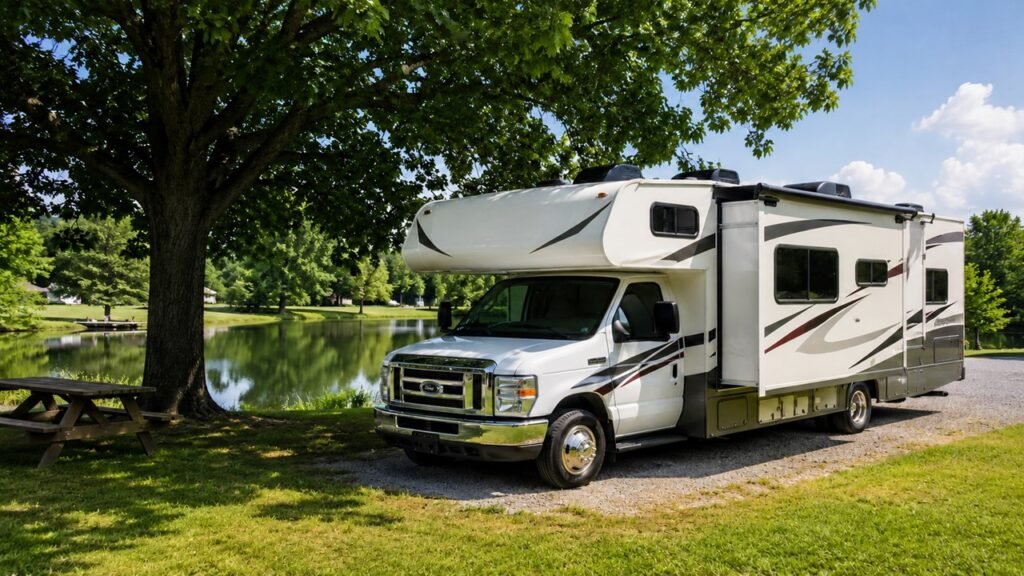
Yes, you can drink water from an RV fresh tank if the tank is clean, the water came from a potable source, and the RV plumbing has been properly sanitized. The fresh tank is designed to hold drinking water, but it only stays safe when you treat it like any other water storage container.
In this guide, I’ll walk you through when RV tank water is safe, when you should avoid it, how to sanitize your system, what filters actually help, and the simple habits that keep your RV water fresh for drinking, cooking, and brushing your teeth.
Key Takeaways
- You can drink from an RV fresh tank if the system is clean and maintained.
- Always fill the tank from a labeled potable water source.
- Use a dedicated drinking-water-safe RV hose, not a garden hose.
- Sanitize the fresh tank before the season, after storage, or after questionable water.
- Do not drink tank water that smells bad, looks cloudy, or tastes unusual.
- Water filters improve taste and protection, but they do not replace sanitizing.
- Drain and refill old water instead of letting it sit for weeks.
- Keep freshwater hoses and sewer gear completely separate.
- Use bottled water or jugs if anyone in your group is more vulnerable.
- When in doubt, drain, sanitize, flush, and refill before drinking.
Is Water From an RV Fresh Tank Safe to Drink?
Water from an RV fresh tank can be safe to drink, but the tank itself does not magically make water clean. It simply stores the water you put into it. So, if you fill it with safe drinking water and keep the system clean, you can use that water for drinking, cooking, coffee, brushing teeth, and washing produce.
The problem starts when the tank sits unused, the water gets stale, the hose is dirty, or the tank is filled from a questionable source. RV plumbing has several places where water can sit, including the tank, pump, water lines, faucet screens, and water heater. That means a clean-looking tank is only one part of the full picture.
The simple rule is this: RV fresh tank water is only as safe as the source water, the fill equipment, and the condition of your RV water system.
When Is RV Fresh Tank Water Safe to Drink?
RV tank water is usually safe when every part of the water path is clean, from the campground spigot to the cup in your hand.
The Water Source Is Potable
Only fill your RV fresh tank from a potable water source. That means the water is intended for drinking, not just washing, rinsing, or cleaning.
Good sources usually include home water, campground potable water hookups, RV fill stations labeled “potable water,” and municipal drinking water taps. Bad sources include dump station rinse hoses, random outdoor spigots, wash-down stations, lake water, creek water, and untested well water.
Even if the water looks clear, do not assume it is safe. A clear stream, old well, or unlabeled campground tap can still contain bacteria, parasites, chemicals, or other contaminants.
The Fresh Tank Has Been Sanitized
A fresh tank can grow biofilm, bacteria, algae, and stale odors if water sits inside for too long. This is especially common when the RV has been stored, used in hot weather, or filled from different campground sources.
Sanitizing helps clean the inside of the tank and water lines. It also helps remove stale smells and old-water taste. If you just bought a used RV and do not know the tank history, sanitize it before drinking from it.
You Use a Drinking-Water-Safe Hose
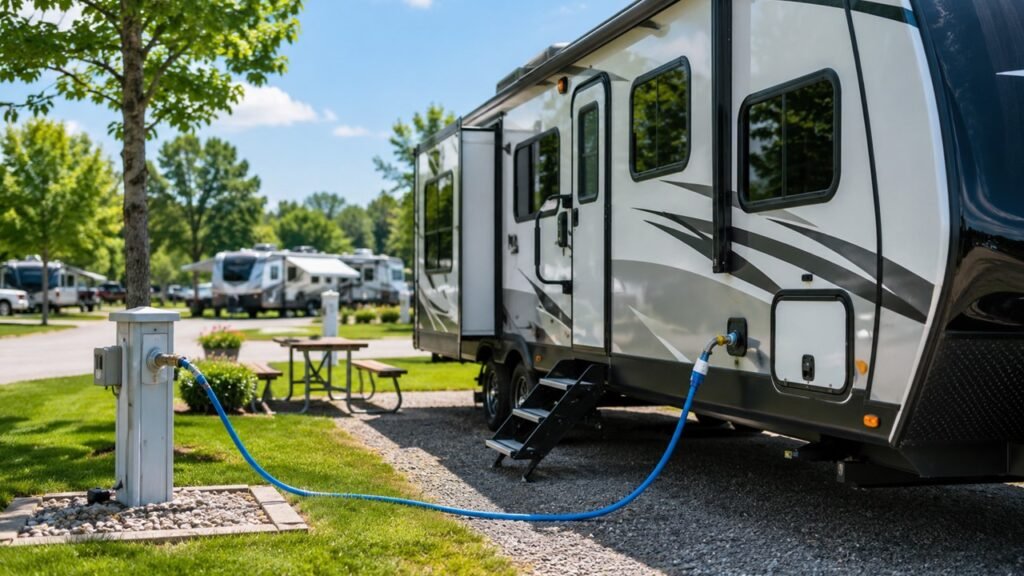
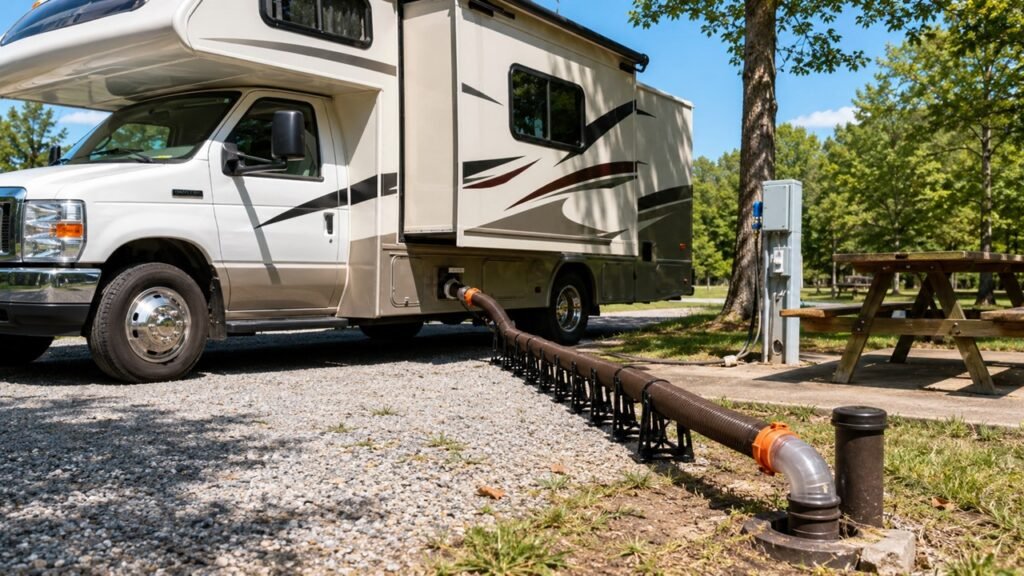
A dedicated RV drinking water hose is one of the easiest ways to protect your water. These hoses are usually white or blue and labeled safe for potable water.
Do not use a regular garden hose to fill your RV fresh tank. Garden hoses are not always made for drinking water and can add rubber, plastic, or chemical tastes. Also, never use the same hose for freshwater and sewer flushing.
Once you use a hose for black tank flushing, sewer cleanup, or general cleaning, it should never touch your drinking water system again.
The Water Has Not Sat Too Long
Fresh water does not stay fresh forever inside an RV tank. Heat, sunlight, tank age, and leftover residue can all affect water quality.
For a short weekend trip, tank water is usually fine if it came from a safe source and the system is clean. For water that has been sitting one to two weeks, use your senses carefully. If it smells, tastes, or looks wrong, drain it.
If the water has been sitting for several weeks or months, I would not drink it. Drain the tank, flush the lines, sanitize if needed, and refill with fresh potable water.
The Plumbing Has Been Flushed
Your RV tank is not the only place water sits. Old water can also remain inside water lines, the water pump, low-point drains, faucet aerators, outdoor shower lines, and the water heater.
That is why flushing the system matters. After filling the tank, run water through every faucet until the old water clears out. Run both hot and cold sides because they travel through different parts of the system.
When Should You Not Drink From an RV Fresh Tank?
There are times when the safest answer is simple: do not drink it. Use bottled water or refillable jugs until you fix the issue.
Avoid drinking from your RV fresh tank if:
- You filled the tank from an unknown source.
- The spigot was not labeled potable.
- The RV has been sitting unused for weeks or months.
- You bought a used RV and have not sanitized the system.
- The water smells like rotten eggs, must, sewage, plastic, or chemicals.
- The water looks cloudy, rusty, slimy, or discolored.
- You accidentally used a sewer hose or dirty hose near the freshwater system.
- You recently winterized the RV and have not flushed the antifreeze fully.
- You filled from untreated well water without testing it.
- Your fresh hose was stored with sewer gear.
- Your filters are old, clogged, or overdue for replacement.
- Someone in your RV has a sensitive stomach or weak immune system.
If the water seems questionable, do not try to “hope it is fine.” Drinking water is not the place to gamble. Drain the tank, sanitize the system, replace old filters, and refill from a safe source.
RV Fresh Tank Water Safety Checklist
Before drinking from your RV fresh tank, run through this quick check. It helps you decide whether the water is safe, questionable, or not worth the risk.
| Safety Check | Safe To Drink? | What To Do |
| Filled from a potable water source | Yes | Use normally after flushing or filtering if preferred |
| Filled with a drinking-water-safe hose | Yes | Keep the hose capped and stored cleanly |
| Tank sanitized recently | Yes | Continue your regular maintenance routine |
| Water has been sitting a few days | Usually | Check smell, taste, and clarity |
| Water has been sitting 1–2 weeks | Maybe | Drain and refill if it tastes or smells stale |
| Water has been sitting over a month | No | Drain, sanitize, flush, and refill |
| Used RV with unknown tank history | No | Sanitize before drinking |
| Water smells like sulfur, must, or sewage | No | Stop drinking and troubleshoot the cause |
| RV antifreeze may still be in lines | No | Flush and sanitize before use |
| Filled from a non-potable spigot | No | Drain, sanitize, and refill safely |
| Hose was stored with sewer equipment | No | Replace or deeply clean gear before use |
| Filter is old or clogged | Maybe | Replace the filter before drinking |
How To Make RV Fresh Tank Water Safe To Drink
Making tank water drinkable is mostly about preventing contamination before the water enters your RV and keeping the system clean after it is inside.
Start With a Clean Fresh Water Tank
Before you trust your tank water, start with a clean tank. Drain old water, sanitize the system, and flush all lines thoroughly.
This is especially important before the first trip of the season. It is also important after long storage, after winterizing, after buying a used RV, or after filling from any source you later question.
Use Only Potable Water Sources
Look for taps marked “potable water” or “drinking water.” At campgrounds, potable water is often located at each campsite or at a designated fill station.
Be careful around dump stations. Some dump stations have rinse hoses for cleaning sewer hoses and black tank equipment. Even if that water looks like normal tap water, do not use it unless it is clearly marked potable and safely separated from the dump area.
Use the Right RV Drinking Water Hose
Use one hose only for freshwater. Keep it clean, capped, and stored away from sewer hoses, gloves, adapters, and dump station tools.
A simple storage bin makes this easier. Use one bin for fresh gear and another bin for sewer gear. Never let the two mix.
Filter Water Before It Enters the Tank
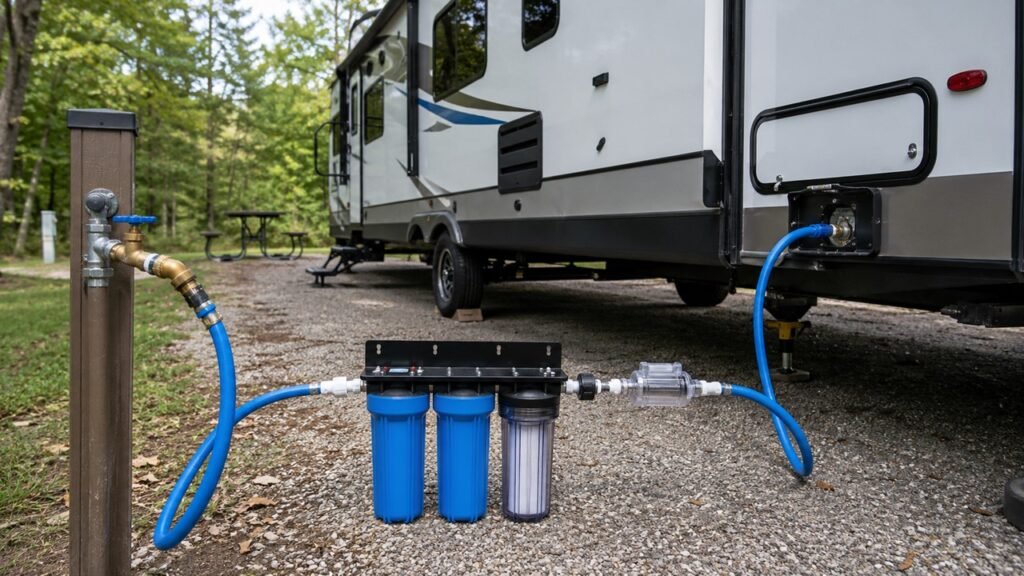
An inline RV water filter can reduce sediment, chlorine taste, and some odors before the water enters your tank. This is useful when campground water tastes different from one location to another.
A sediment pre-filter can also help if the water has sand, rust, or visible particles. This does not make unsafe water magically safe, but it helps protect your tank, pump, faucets, and water heater.
Filter Drinking Water Again at the Faucet
Many RVers use a second filter for drinking water. This might be an under-sink filter, countertop filter, fridge filter, or pitcher filter.
Activated carbon filters can improve taste and smell, and NSF notes that NSF/ANSI 42 is commonly linked with aesthetic improvements such as taste and odor reduction. For health-related contaminant claims, check the exact certification and what the product is tested to reduce.
Keep Freshwater Gear Separate From Sewer Gear
Cross-contamination is one of the biggest RV water mistakes. The freshwater hose, water filter, hose washers, pressure regulator, and fittings should never be stored with sewer hoses or dump station tools.
Use separate bins. Use separate gloves. Keep caps on hose ends. Wash your hands after handling sewer equipment before touching anything related to drinking water.
Replace Old Hoses and Filters
Hoses and filters do not last forever. If your hose smells odd, looks cracked, feels slimy inside, or has been stored poorly, replace it.
Filters should be replaced based on the manufacturer’s gallon rating or time recommendation. A clogged or old filter can slow water flow and may no longer do its job properly.
How Often Should You Sanitize an RV Fresh Water Tank?
Most RVers should sanitize the fresh water tank at least once or twice a year. A good habit is to sanitize before the first trip of the season and again after long storage.
You should also sanitize your RV fresh water system when:
- You buy a used RV.
- The RV has been stored for a long time.
- The tank water smells or tastes bad.
- You filled from a questionable water source.
- You used the wrong hose by mistake.
- You see cloudy or discolored water.
- You recently repaired the pump, tank, or plumbing.
- You finished winterizing and want the system ready for drinking water.
- You are preparing for a long boondocking trip.
- You simply do not remember the last time it was sanitized.
Think of sanitizing as resetting the system. It does not have to be scary, but it does need to be done carefully.
How To Sanitize an RV Fresh Water Tank
Sanitizing sounds complicated, but the basic process is simple: drain the old water, add a diluted sanitizer, run it through the lines, let it sit, then flush everything with clean water.
Step 1: Drain the Fresh Water Tank
Start by draining the fresh tank completely. Open the fresh tank drain and let the old water run out.
You should also open low-point drains if your RV has them. This helps remove old water from the plumbing lines.
Step 2: Turn Off the Water Heater and Pump
Before sanitizing, turn off the water heater. You do not want to heat an empty tank or run sanitizer through the system while the heater is operating.
Turn the water pump off while you prepare the bleach solution. You can turn it back on when it is time to move the solution through the lines.
Step 3: Mix the Bleach Solution Safely
Use plain, regular, unscented household bleach. Do not use scented bleach, splashless bleach, color-safe bleach, gel bleach, or bleach with added cleaners. The EPA also advises using only regular, unscented chlorine bleach suitable for disinfection and sanitization when disinfecting water.
A common RV sanitizing ratio is 1/4 cup of bleach for every 15 gallons of fresh tank capacity. Always dilute the bleach in water first before adding it to the tank. Do not pour straight bleach directly into the plumbing.
Example:
| Fresh Tank Size | Common Bleach Amount |
| 15 gallons | 1/4 cup |
| 30 gallons | 1/2 cup |
| 45 gallons | 3/4 cup |
| 60 gallons | 1 cup |
| 75 gallons | 1 1/4 cups |
| 90 gallons | 1 1/2 cups |
Step 4: Add the Solution to the Tank
Pour the diluted bleach solution into the fresh tank. Depending on your RV, you may use the gravity fill port, a funnel, a winterizing kit, or a short hose setup.
After adding the solution, fill the rest of the tank with potable water. A full tank helps the sanitizer contact more of the inside surface.
Step 5: Run Water Through Every Faucet
Turn on the water pump and run water through each faucet until you smell a light bleach odor. Do this for both hot and cold sides.
Do not forget:
- Kitchen faucet
- Bathroom faucet
- Shower
- Outdoor shower
- Toilet sprayer, if connected to freshwater
- Low-point lines
- Any extra sink or wet bath fixture
This step matters because the tank is not the only thing you are sanitizing. You also want the solution inside the water lines.
Step 6: Let the System Sit
Let the bleach solution sit inside the tank and plumbing for several hours. Many RVers let it sit overnight.
Do not drink or cook with this water while the bleach solution is in the system. Also, do not leave a strong bleach solution sitting longer than needed because it may be hard on seals, rubber parts, and plumbing components.
Step 7: Drain the Tank Again
After the contact time, drain the fresh tank completely. Open faucets and low-point drains as needed to clear the treated water from the system.
At this stage, the water will smell like bleach. That is normal.
Step 8: Flush Until the Bleach Smell Is Gone
Refill the tank with fresh potable water. Run water through every faucet again. Drain and repeat until the bleach smell is gone or very faint.
Take your time here. If you rush the flushing step, your water may taste like pool water for the next trip.
Step 9: Refill With Fresh Drinking Water
Once the system is flushed, refill the fresh tank with potable water. Add your filter setup if you use one.
Now your RV fresh water system is ready for drinking, cooking, brushing teeth, and regular use.
Fresh Tank Water vs City Water Hookup: Which Is Better for Drinking?
Both RV fresh tank water and city water hookup water can be safe. The better choice depends on your water source, your filter setup, and how well your RV system is maintained.
| Option | Best For | Main Benefit | Main Risk |
| RV fresh tank | Boondocking, travel days, dry camping | You carry your own water | Water can become stale if stored too long |
| City water hookup | Campgrounds and RV parks | Continuous water supply | Campground water quality can vary |
| Bottled water | Backup, emergencies, sensitive travelers | Sealed and convenient | Takes space and creates plastic waste |
| Refillable water jugs | Extra drinking supply | Easy to clean and refill separately | Must be sanitized and stored properly |
| Countertop filtered water | Daily drinking and coffee | Better taste and extra filtration | Takes counter space |
If I were camping at a trusted campground for a weekend, I would be comfortable drinking filtered water from either the city hookup or the fresh tank. If I were boondocking, I would rely on a sanitized fresh tank and carry extra drinking jugs as backup.
Do You Need a Filter To Drink RV Fresh Tank Water?
A filter is not always required if the source water is safe and your RV system is clean, but I still recommend using one. Filters improve taste, reduce sediment, and add another layer of protection.
Inline Hose Filters
Inline filters are the easiest option for beginners. They attach to your hose and filter water before it enters the RV.
They are helpful for reducing sediment, chlorine taste, and odor. They are also affordable and easy to store.
Canister Filters
Canister filters are stronger and more flexible than basic inline filters. Some RVers use single, dual, or triple-canister systems.
A canister setup can handle sediment, carbon filtration, and finer filtration depending on the cartridges you choose. This is a better option for full-time RVers or frequent travelers.
Under-Sink Drinking Water Filters
Under-sink filters are good if you only want extra filtration at the kitchen faucet. Instead of filtering every gallon used for showering and washing, they focus on the water you drink and cook with.
This can be a smart setup if your main concern is taste.
Pitcher or Countertop Filters
Pitcher filters and countertop filters are simple because they do not require major plumbing changes. You fill them from the faucet, and they filter water before you drink it.
They are useful for renters, weekend campers, or anyone who wants a simple backup layer.
What Filters Cannot Fix
Filters are helpful, but they are not magic. A basic RV inline filter will not make sewage-contaminated water safe. It also will not replace tank sanitizing.
The CDC explains that filter pore size matters when removing germs, because parasites, bacteria, and viruses are different sizes. The CDC also notes that activated carbon and NSF Standard 42 filters are mainly associated with improving taste and smell.
So, choose filters based on what you actually want to reduce. If you are worried about bacteria, cysts, heavy metals, PFAS, or chemicals, check the product’s certification instead of relying on vague marketing claims.
How Long Can Water Sit in an RV Fresh Tank?
There is no perfect number because water age depends on heat, tank cleanliness, sunlight, source water, and how often you use the system. Still, fresh tank water is best when it is actually fresh.
For practical RV use:
- A few days is usually fine if the system is clean.
- A weekend trip is usually fine with potable water.
- One to two weeks may be okay, but check taste and smell.
- Several weeks is too long for drinking water in most cases.
- Months of storage means you should drain, sanitize, and refill.
- Hot weather shortens the time water stays pleasant.
- If water smells stale, drain it instead of trying to save it.
Personally, I would rather drain questionable water than wonder about it. Fresh water is cheaper than a ruined trip or stomach trouble.
Why Does RV Fresh Tank Water Taste or Smell Bad?
Bad taste does not always mean the water is dangerous, but it is a sign you should pause before drinking it. Your RV water is telling you something changed.
Plastic or Rubber Taste
A plastic or rubber taste often comes from a new hose, low-quality hose, new tank, or water sitting inside plastic plumbing.
If the taste started after using a different hose, replace the hose with a drinking-water-safe RV hose. If the RV is new, flush the system several times and consider using a filter.
Rotten Egg Smell
A rotten egg smell usually points to sulfur or bacteria-related issues. In RVs, this often comes from the water heater, stagnant water, or sulfur in the source water.
Do not ignore this smell. Drain and flush the system. If the smell is mostly from the hot water side, check the water heater and anode rod if your model uses one.
Musty or Stale Taste
A musty taste usually means water sat too long in the tank or lines. It can also happen when the tank has not been sanitized recently.
Drain the old water, flush the lines, sanitize the system, and refill with fresh potable water.
Chlorine Taste
A chlorine taste can come from city water treatment or leftover sanitizer after cleaning the tank. If you just sanitized the system, flush it again.
A carbon filter can also improve chlorine taste in drinking water.
Metallic Taste
A metallic taste may come from campground water minerals, old plumbing, water heater issues, or the water source itself.
If the taste is strong, do not drink it until you investigate. Use bottled water or filtered jug water until you know what is causing it.
Can You Cook, Brush Teeth, and Make Coffee With RV Tank Water?
If your RV tank water is safe to drink, it is also safe for cooking, brushing teeth, making coffee, washing produce, and filling pet bowls.
But if you would not drink it, do not use it for food prep either. That includes brushing your teeth. People often avoid drinking questionable water but still rinse their toothbrush with it, which defeats the point.
Boiling can kill many germs, and the CDC says boiling is the surest method for killing disease-causing germs in emergency water situations. However, boiling does not remove many chemicals, fuels, heavy metals, or all bad tastes. Chemical disinfectants can help with many germs, but the CDC notes they may not work as well as boiling for some parasites, including Cryptosporidium and Giardia.
So, if your concern is old tank water, sanitize the RV system. If your concern is a questionable source, do not rely on boiling alone.
Who Should Be Extra Careful With RV Tank Water?
Some people should be more cautious with RV tank water, even when the system seems fine. For them, a separate drinking water plan may be smarter.
Be extra careful if your RV includes:
- Babies
- Toddlers
- Pregnant travelers
- Elderly travelers
- People with weak immune systems
- People recovering from illness
- People with stomach sensitivity
- Pets with health issues
In these cases, consider using bottled water, tested refillable jugs, boiled water, or a certified filter system for drinking and food prep. The fresh tank can still be used for washing, showering, and toilet use if the system is clean.
Best Practices for Drinking Water From an RV Fresh Tank
Good RV water habits are simple, but they need to be consistent. Most problems start when people skip small steps.
Use these best practices:
- Sanitize the fresh tank at least once or twice per year.
- Sanitize after storage or after buying a used RV.
- Fill only from potable water sources.
- Use a dedicated drinking-water-safe RV hose.
- Keep freshwater gear away from sewer gear.
- Cap both ends of your fresh hose after each use.
- Store fresh hoses in a clean bin.
- Use an inline filter when filling the tank.
- Replace filters on schedule.
- Drain old water before each trip if it has been sitting.
- Flush hot and cold lines after storage.
- Clean faucet aerators occasionally.
- Do not drink water that smells or looks wrong.
- Carry bottled water or drinking jugs as backup.
- Use a pressure regulator when connecting to campground water.
- Avoid filling from taps near dump station rinse areas.
- Label your freshwater gear so nobody mixes it up.
- Wash your hands after handling sewer equipment.
These habits may sound basic, but they are what keep your RV water system dependable.
Common Mistakes That Make RV Tank Water Unsafe
Most RV drinking water problems come from small habits that seem harmless in the moment. Avoid these mistakes and your water will stay much easier to trust.
Using a Garden Hose
A garden hose might look clean, but it is not the right tool for drinking water. It can add bad taste and may not be made from drinking-water-safe materials.
Use a proper RV freshwater hose instead.
Filling From a Non-Potable Spigot
Not every campground spigot is for drinking. Some are for rinsing sewer hoses, cleaning equipment, or washing down dump areas.
Only fill from a source clearly marked potable.
Forgetting To Sanitize After Storage
When an RV sits, water residue can remain inside the tank and lines. Warm weather makes this worse.
Sanitize the system after storage before trusting it for drinking water.
Storing Fresh Hoses With Sewer Gear
This is one of the easiest ways to contaminate your freshwater setup. Even if the hose itself is clean, the outside of the hose and fittings can pick up bacteria from sewer equipment.
Use separate storage bins.
Trusting a Filter To Solve Everything
A filter is not a replacement for safe water, clean hoses, and a sanitized tank. It is an extra layer, not the whole system.
If the tank is dirty, filter the water after sanitizing—not instead of sanitizing.
Ignoring Bad Smells or Cloudy Water
If water smells odd, tastes strange, or looks cloudy, stop using it for drinking. Do not wait to see what happens.
Drain, flush, sanitize, and refill.
What To Do If You Are Not Sure the RV Tank Water Is Safe
When you are unsure, act carefully. You do not need to panic, but you should stop drinking the water until you fix the system.
Follow these steps:
- Stop drinking the tank water.
- Use bottled water or clean refillable jugs temporarily.
- Drain the fresh water tank.
- Flush the cold and hot water lines.
- Sanitize the fresh tank and plumbing.
- Replace old or questionable filters.
- Inspect your freshwater hose and fittings.
- Replace the hose if it smells, leaks, or looks dirty.
- Clean faucet aerators and screens.
- Refill only from a potable water source.
- Run water through every faucet again.
- Taste and smell the water before using it normally.
If you suspect chemical contamination, fuel contamination, sewage contamination, or unsafe well water, do not simply sanitize and keep going. Use a safe water source and consider testing the water.
Final Verdict
Yes, you can drink water from an RV fresh tank when the system is properly maintained. The fresh tank is made for potable water, but safe drinking water depends on clean habits.
Fill only from a potable source. Use a drinking-water-safe hose. Sanitize the tank regularly. Filter the water if you want better taste and extra protection. Drain stale water instead of keeping it for the next trip.
Bottled water is fine as a backup, especially for emergencies or sensitive travelers. But you do not need to be afraid of your RV fresh tank. With basic care, it can provide safe water for drinking, coffee, cooking, brushing teeth, and everyday camping life.
Related FAQs
Can You Drink Water Straight From an RV Tap?
Yes, you can drink water straight from an RV tap if the fresh water system is clean, sanitized, and filled from a potable source. A filter can improve taste and add extra protection.
How Often Should I Sanitize My RV Fresh Water Tank?
Sanitize your RV fresh water tank at least once or twice per year. You should also sanitize after storage, after buying a used RV, or anytime the water smells, tastes, or looks wrong.
Is RV Fresh Tank Water Safe for Coffee?
Yes, RV fresh tank water is safe for coffee if it is safe to drink. If the coffee tastes odd, use a carbon filter or refill the tank with fresher water.
Can I Brush My Teeth With RV Tank Water?
Yes, but only if the water is safe enough to drink. If you would not drink the water, do not brush your teeth with it either.
Can I Put Bleach in My RV Fresh Water Tank?
Yes, you can use properly diluted plain, unscented household bleach to sanitize an RV fresh water tank. Do not use scented, splashless, gel, or cleaner-added bleach.
How Long Is Water Good in an RV Fresh Tank?
Fresh water is best used within a short period. For weekend trips, it is usually fine if the system is clean. If water sits for weeks, drain and refill before drinking.
Can I Fill My RV Fresh Tank With Well Water?
You can fill your RV fresh tank with well water only if the well water is tested and safe for drinking. Untested well water should not be treated as automatically potable.
Do RV Water Filters Remove Bacteria?
Some advanced filters may reduce certain bacteria, cysts, or microbes, but many basic RV inline filters mainly reduce sediment, chlorine taste, and odor. Always check the filter’s certification and claims.
Why Does My RV Tank Water Taste Like Plastic?
Plastic taste can come from a new hose, old hose, new tank, plastic plumbing, or stagnant water. Flush the system, use a drinking-water-safe hose, and consider a carbon filter.
Why Does My RV Fresh Tank Water Smell Like Rotten Eggs?
A rotten egg smell often comes from sulfur, bacteria, stagnant water, or the water heater. Drain and flush the system, then sanitize if the smell continues.
Should I Use Bottled Water Instead of RV Tank Water?
You can use bottled water as backup, but it is not always necessary. If your RV tank is clean, filled safely, and properly maintained, tank water can be drinkable.
Is City Water Better Than Fresh Tank Water in an RV?
Not always. City water gives you a continuous supply, but campground water quality can vary. Fresh tank water is better for boondocking and travel days if the tank is clean and the water is fresh.
Can Old RV Tank Water Make You Sick?
Old tank water can become stale and may support bacteria or biofilm growth, especially in warm weather. If water has been sitting too long, drain, sanitize, and refill before drinking.
Do I Need To Sanitize After Winterizing My RV?
Yes, it is a good idea to flush and sanitize after winterizing. This helps remove antifreeze taste, stale water, and any buildup that formed while the RV was stored.

Michael Carter is an experienced RV traveler who focuses on practical outdoor trips across the States. He writes clear, step-by-step guides and realistic reviews based on real travel needs. His aim is to help RV and camper owners plan informed, simpler journeys with confidence.