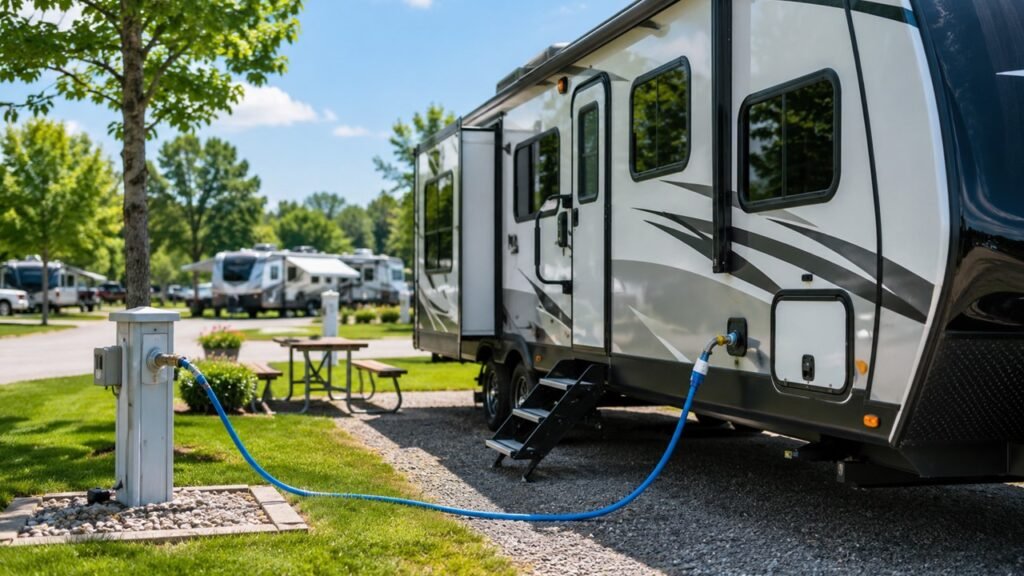
RV water smells like rotten eggs because of hydrogen sulfide gas, which often forms when sulfur bacteria grow in stagnant water or react inside the RV water heater. If the smell only comes from hot water, the water heater is usually the first place to check. If both hot and cold water smell bad, the problem may be in the freshwater tank, water source, hose, filter, or plumbing lines.
In this guide, we’ll walk through how to find the source of the rotten egg smell, what causes it, how to fix it, and how to stop it from coming back. I’ll also explain when it is a simple DIY job and when you should call an RV technician.
Key Takeaways
- RV water usually smells like rotten eggs because of hydrogen sulfide gas.
- Hot-water-only odor usually points to the RV water heater.
- If both hot and cold water smell, check the freshwater tank, hose, filter, and water source.
- Warm, stagnant water makes sulfur odor more likely.
- A worn or reactive anode rod can make the smell worse.
- Flushing the water heater may solve hot-water odor.
- Sanitizing the full freshwater system may be needed when all water smells.
- Filters can improve taste and odor, but they do not replace proper cleaning.
- If the smell is in the air and not from the faucet, treat it as a safety issue.
Is Rotten Egg Smell in RV Water Dangerous?
A rotten egg smell from your RV faucet is usually a sign of a water quality problem, not something you should ignore. In most cases, the odor comes from hydrogen sulfide gas, sulfur bacteria, stagnant water, or a reaction inside the water heater. It smells terrible, but the bigger concern is that your RV water system may need cleaning, flushing, or sanitizing.
That said, you should be careful. If the smell comes only when you run water, it is probably connected to the water system. But if your whole RV smells like rotten eggs even when no faucet is running, do not assume it is just water. Propane odorant, sewer gas, battery issues, or drain problems can also create strong smells inside an RV.
So, start by asking one simple question: does the smell come from the faucet water, or does the RV smell even when the water is off? If the odor is in the air, ventilate the RV, shut off propane if needed, and investigate safely before using appliances.
First, Find Where the Smell Is Coming From
Before you flush the water heater or pour anything into your freshwater tank, you need to find the source. The smell can come from different places, and each source needs a different fix.
| What You Notice | Most Likely Source | What To Check First |
| Hot water smells, but cold water does not | Water heater, anode rod, sediment, or stagnant hot water | Drain and flush the water heater |
| Both hot and cold water smell | Freshwater tank, hose, plumbing lines, filter, or water source | Sanitize the full fresh water system |
| Smell only happens on campground water | Sulfur-rich hookup water | Test the spigot and switch to onboard water |
| Smell appears after the RV sat unused | Stagnant water or bacteria | Drain, flush, and sanitize |
| Smell starts after installing or using an old filter | Contaminated filter | Replace the filter and flush the lines |
| Smell is near the sink but not in the water | Gray tank, drain, or P-trap issue | Clean the drain and check the trap |
| Smell is inside the RV even with faucets off | Propane, sewer gas, battery, or drain issue | Treat it as a safety concern first |
This quick check saves time. If you only smell it on the hot side, focus on the water heater. If every faucet smells on both hot and cold, the entire freshwater system needs attention.
What Causes RV Water To Smell Like Rotten Eggs?
The rotten egg smell can come from a few different parts of the RV water system. The most common source is the water heater, but it is not the only possibility.
Hydrogen Sulfide Gas
The classic rotten egg smell usually comes from hydrogen sulfide gas. This gas can naturally exist in some water sources, especially well water, or it can form inside plumbing systems where bacteria are active.
In an RV, hydrogen sulfide is more noticeable because the water system is small and often sits unused. When water stays in the tank, heater, hose, or lines for too long, the smell can build quickly.
Sulfur Bacteria in the Water System
Sulfur bacteria can live in low-oxygen water. These bacteria are not always visible, but they can create a strong odor when they grow inside the freshwater system.
RVs are especially prone to this because they are not always used every day. Water may sit in the freshwater tank, water heater, hose, and plumbing lines between trips. In hot weather, the problem can get worse faster.
A Reaction Inside the Water Heater
If the smell only happens when you run hot water, your RV water heater is the most likely source. A tank-style water heater creates the perfect place for odor problems: warm water, darkness, low oxygen, and mineral buildup.
Some RV water heaters also use an anode rod. The anode rod helps protect the tank from corrosion, but it can react with certain water conditions. When sulfur-heavy water, bacteria, and an anode rod interact, that rotten egg smell can become much stronger.
Stagnant Water Sitting Too Long
Old water is one of the most common reasons RV water starts smelling bad. Maybe you came back from a camping trip, parked the RV, and planned to use it again soon. Then a few weeks passed. During that time, the water sat inside the tank, heater, and lines.
Warm, stagnant water gives bacteria more time to grow. That is why the smell often appears after storage, after a long break between trips, or after camping in hot weather.
Sulfur-Rich Campground or Well Water
Sometimes the RV is not the problem at all. The water source may already contain sulfur. This is more common with well water, rural campgrounds, older parks, or private hookups.
A good test is to smell the water directly from the campground spigot before it enters your RV. If the spigot water already smells like rotten eggs, your RV system may simply be carrying that odor inside.
Old Filters, Dirty Hoses, or Biofilm
Your hose and filter can also trap bacteria, minerals, and odor. This happens more often when hoses are stored wet, filters are used too long, or a regular garden hose is used instead of a drinking-water-safe hose.
Biofilm can also form inside plumbing lines. Even if you flush the water heater, the smell may return if bacteria are still sitting in the water lines.
Why Does Only My RV Hot Water Smell Like Rotten Eggs?
If your RV cold water smells normal but the hot water smells like rotten eggs, the problem is usually inside the water heater. This is one of the most common sulfur-smell situations RV owners face.
The hot water tank gives bacteria and minerals a place to sit. When the water heater stays warm or holds old water for too long, the odor can become strong. Sediment at the bottom of the tank can also hold bacteria and make the water smell worse.
Common hot-water-only causes include:
- Old water sitting inside the water heater
- Sediment buildup in the heater tank
- Sulfur bacteria inside the heater
- A worn or reactive anode rod
- Sulfur-heavy water from the last fill-up
- A water heater that was not drained before storage
- Hot water lines that were not flushed properly
This mostly applies to tanked RV water heaters. If your RV has a tankless water heater, the issue is less likely to be tank sediment or an anode rod. In that case, check the water source, fresh tank, filter, hose, and plumbing lines first.
Why Do Both Hot and Cold RV Water Smell Like Rotten Eggs?
If both hot and cold water smell bad, the issue is probably not limited to the water heater. In this case, the odor may be coming from the freshwater tank, campground water, hose, filter, pump, or plumbing lines.
The Freshwater Tank May Need Sanitizing
Your RV freshwater tank can hold bacteria if water sits too long. This is especially common after storage, winterization, or a long break between trips.
If the tank is the source, every faucet may smell. You may notice the odor from the kitchen sink, bathroom sink, shower, and outside shower. Flushing only the water heater will not fully solve this problem because the smell is already in the cold side of the system.
The Campground Water May Already Smell
Sometimes the water smells bad before it ever reaches your RV. If you are connected to city water at a campground, disconnect the hose and test the water at the spigot.
If the spigot smells like sulfur, the best short-term fix is to use your onboard freshwater tank if it has clean water. You can also use a filter, but if the sulfur smell is strong, a basic inline filter may not remove everything.
The Hose or Filter May Be Contaminated
A drinking water hose can still become dirty if it is stored wet, dragged on the ground, left in the sun, or connected to questionable water. Filters can also become a problem if they are old or used beyond their service life.
If the smell started after using an old filter or hose, replace the filter and flush the hose. In some cases, replacing the hose is easier than trying to save it.
The Plumbing Lines May Have Biofilm
Biofilm is a slimy buildup that can form inside plumbing lines. You may not see it, but it can hold bacteria and odor.
This is why full-system sanitizing matters. If the smell is in both hot and cold water, you need to run the sanitizing solution through every faucet, shower, and low-point line, not just the freshwater tank.
How To Test the Source of the Rotten Egg Smell
You do not need fancy tools to start diagnosing the smell. Use your nose and test each part of the system in a simple order.
- Run cold water from the kitchen faucet.
- Smell the water itself, not just the sink area.
- Run hot water from the same faucet.
- Repeat the test at the bathroom sink and shower.
- Disconnect campground water and test water from the freshwater tank.
- Smell water directly from the campground spigot.
- Remove or bypass the inline filter and test again.
- Check whether the smell is coming from the drain instead of the faucet.
- Look at how long the water has been sitting in the RV.
- Check whether the water heater has been drained recently.
Here is the simple rule:
Hot water only smells bad? Start with the water heater.
Hot and cold water both smell bad? Clean the full freshwater system.
The sink area smells but the water does not? Check the drain or gray tank.
How To Fix Rotten Egg Smell From an RV Water Heater
If the smell is only on the hot side, flushing the water heater is usually the best first step. Be careful here because hot water, pressure, propane, and electricity can all be involved.
Turn Off the Water Heater and Let It Cool
Before touching the water heater, turn everything off. Shut off the electric water heater switch, the propane water heater switch, the water pump, and city water if you are connected.
Then give the water time to cool. Do not remove the drain plug or anode rod while the tank is hot or under pressure. Hot water can spray out and burn you.
Relieve Pressure Safely
Open a hot water faucet inside the RV to help release pressure. You can also carefully use the temperature and pressure relief valve on the outside water heater panel.
Do this slowly. If the water is still hot, wait longer. Rushing this step is not worth the risk.
Drain the Water Heater Tank
Once the system is cool and pressure is relieved, remove the drain plug or anode rod. Use the correct socket size for your model.
Be ready for water to drain out. If the water smells bad or looks dirty, that confirms the heater needed attention.
Some RV water heaters use a plastic drain plug. Others use a metal anode rod. Do not install an anode rod unless your water heater is designed for one.
Inspect the Anode Rod
If your heater uses an anode rod, take a close look at it. A used rod may look rough, pitted, or partly eaten away. That is normal because the rod is designed to sacrifice itself to protect the tank.
But if the rod is mostly gone, heavily deteriorated, or the center wire is exposed, replace it. A bad rod may not protect the tank well, and it may also contribute to odor issues in certain water conditions.
Flush Out Sediment
Attach a water heater flushing wand to a hose and insert it into the drain opening. Turn on the water and move the wand around inside the tank.
You may see white chunks, mineral flakes, or dirty water coming out. That is common. Keep flushing until the water runs clear.
This step matters because sediment can sit at the bottom of the tank. Even after draining, some debris can remain below the drain opening. That buildup can hold odor and reduce water quality.
Reinstall the Drain Plug or Anode Rod
After flushing, reinstall the drain plug or anode rod carefully. Start threading it by hand to avoid cross-threading.
Do not overtighten it. If your water heater manual recommends potable-water-safe thread sealant or tape, use it. If you are unsure, check your specific water heater model before forcing anything.
Refill the Tank Before Turning It On
This step is very important. Never turn the water heater back on until the tank is full.
To refill it, turn the water pump back on or reconnect city water. Open a hot water faucet inside the RV and let the air push out. Wait until you get a steady stream of water from the hot side.
Once the hot water faucet runs steadily, the tank should be full. Then you can turn the water heater back on.
Turning on an electric water heater with an empty tank can damage the heating element quickly.
Should You Replace the Anode Rod?
If your RV water heater uses an anode rod, it may need replacement from time to time. The rod protects certain steel water heater tanks from corrosion. Instead of letting the tank rust, the anode rod wears down first.
However, not every RV water heater uses an anode rod. Some heaters use aluminum tanks and plastic drain plugs. Installing an anode rod in the wrong heater can cause problems, so always check the owner’s manual.
You may need to replace the anode rod if:
- The rod is mostly eaten away.
- The center wire is exposed.
- The rod breaks during removal.
- The hot water smell returns after flushing.
- The water heater manual recommends replacement.
- The rod looks heavily deteriorated.
- You are dealing with repeated sulfur odor in hot water.
Some RV owners switch from a magnesium rod to an aluminum-zinc rod to help reduce odor. Zinc can sometimes help with sulfur smell. However, this is not a one-size-fits-all fix. Use the rod type recommended for your water heater and tank material.
How To Sanitize the RV Freshwater Tank and Lines
If both hot and cold water smell like rotten eggs, flushing the water heater alone probably will not fix it. You need to sanitize the freshwater tank, pump, and plumbing lines.
- Drain the old water from the freshwater tank.
- Remove or bypass water filters before sanitizing.
- Mix the sanitizing solution according to your RV owner’s manual.
- Add the solution to the freshwater tank.
- Fill the tank with clean water.
- Turn on the water pump.
- Run each faucet until you smell the solution.
- Run both hot and cold sides at every faucet.
- Include the shower, outside shower, and toilet sprayer if equipped.
- Let the system sit for the recommended time.
- Drain the tank and water lines.
- Refill with clean water.
- Flush every faucet until the odor is gone.
- Install a fresh filter before using the water again.
Many RV manuals use a diluted household bleach method for sanitizing, but the exact amount and contact time can vary by RV manufacturer. So, use your owner’s manual as the final guide.
Also, never mix bleach with vinegar, peroxide, ammonia, or other cleaners. Mixing chemicals can create dangerous fumes.
Can Vinegar or Hydrogen Peroxide Remove the Rotten Egg Smell?
Vinegar and hydrogen peroxide are common options RV owners talk about when dealing with sulfur smell. They can help in some cases, but they should be used carefully and only in the right part of the system.
| Option | Best For | Important Notes |
| Fresh water flush | Light odor or old water | Safest first step before using cleaners |
| Water heater flush | Hot-water-only smell | Helps remove old water and sediment |
| Vinegar | Mineral scale and mild odor | Often used for cleaning, but check appliance guidance |
| Hydrogen peroxide | Odor inside the water heater | Common RV owner method, but use carefully |
| Bleach sanitizing | Fresh tank and plumbing lines | Follow RV manual dilution and flush fully |
| New filter | Taste and odor improvement | Does not replace sanitizing |
Vinegar is often used for mineral buildup and light cleaning. Hydrogen peroxide is often used by RV owners to help neutralize odor in the water heater. Bleach is commonly used for sanitizing the freshwater tank and lines.
The safest approach is to start simple. Flush with fresh water first. Then use the method recommended by your RV or water heater manual.
What If You Have a Tankless RV Water Heater?
A tankless RV water heater does not store hot water in a tank the same way a traditional water heater does. That means the typical anode rod and tank sediment issue may not apply.
If your RV has a tankless water heater and the water smells like rotten eggs, check the incoming water source first. Then check the freshwater tank, hose, filter, and plumbing lines.
Tankless heaters can still need maintenance, including descaling, but you should follow the manual for your specific model. Do not pour vinegar, bleach, or hydrogen peroxide through a tankless unit unless the manufacturer allows it.
If the smell is on both hot and cold water, treat it as a full freshwater system issue. If it only happens when hot water runs, check the heater manual and consider professional help if you are unsure.
What If the Smell Is Actually Coming From the Drains?
Sometimes the water is not the problem. The smell may be coming from the sink, shower drain, gray tank, or plumbing vent. This is why testing the water in a clean cup can help.
Dry P-Traps
A P-trap holds a small amount of water to block tank odors from coming back into the RV. If a sink or shower has not been used in a while, that water can evaporate.
When the trap dries out, gray tank odor can enter the RV. Run water into the drain and see if the smell improves.
Dirty Sink or Shower Drains
Food particles, soap scum, hair, toothpaste, and grease can build up inside drains. That buildup can smell sour, rotten, or sulfur-like.
Clean the drain and flush it with plenty of water. Avoid harsh chemicals unless they are safe for RV plumbing.
Gray Tank Odor
Your gray tank holds sink and shower water. Even though it does not hold toilet waste, it can still smell awful. Food grease, soap, body oils, and stagnant water can create a strong odor.
If the smell is strongest near drains, the gray tank may need cleaning or flushing.
Air Admittance Valve Issues
Some RV sinks use an air admittance valve under the cabinet. This valve helps the drain system breathe. If it fails, tank odor can leak into the RV.
If the smell is strongest under the sink cabinet, check this valve. It may need replacement.
How To Prevent Rotten Egg Smell in RV Water
Prevention is much easier than fixing a smelly system before a trip. A few simple habits can keep your RV water fresher.
- Drain the water heater after trips if the RV will sit unused.
- Flush the water heater regularly.
- Sanitize the freshwater tank at least yearly.
- Sanitize after storage or winterization.
- Use only drinking-water-safe hoses.
- Replace inline filters on schedule.
- Do not store hoses wet and uncapped.
- Avoid filling from questionable water sources.
- Test campground water before connecting.
- Run water through the system during long stays.
- Do not leave warm water sitting in the heater for weeks.
- Flush both hot and cold lines before long trips.
- Keep the freshwater tank clean and covered.
- Use a sediment filter when filling from older hookups.
- Follow your RV owner’s manual for water system care.
If your RV sits in hot weather, be extra careful. Heat can make stagnant water smell worse faster.
Filters and Add-Ons for Sulfur Smell in RV Water
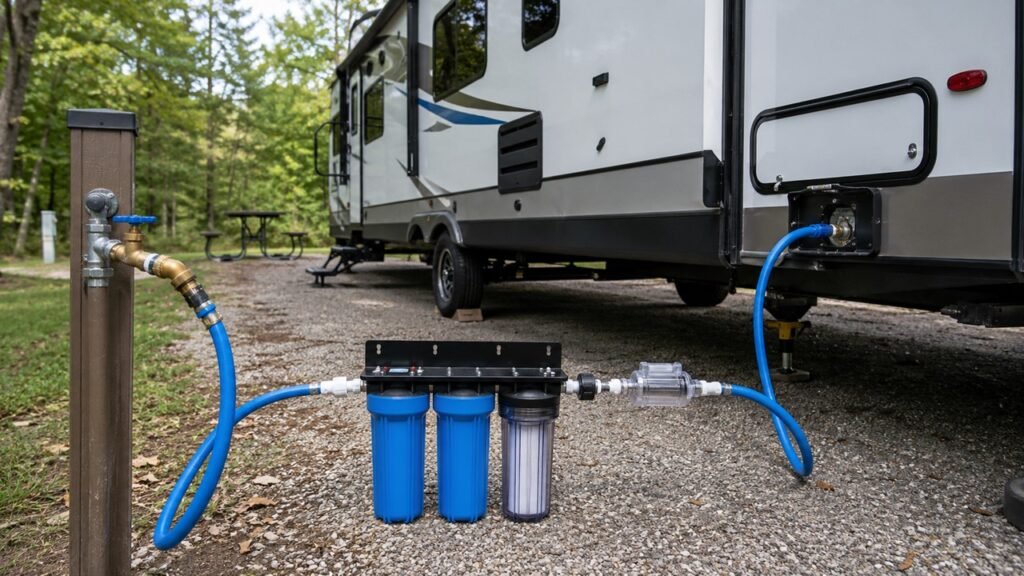
Filters can help improve taste, odor, and sediment control, but they are not magic. If bacteria are already growing in the freshwater tank or water heater, a filter will not solve the root problem by itself.
Useful RV water filter and add-on options include:
- Inline carbon water filter
- Sediment pre-filter
- Two-stage RV water filtration system
- Whole-RV water filter setup
- Drinking-water filter at the kitchen sink
- Water softener for hard water areas
- Fresh hose washer with screen
- Dedicated potable water hose
- Water pressure regulator
- Hose caps for clean storage
A basic carbon filter can reduce some taste and odor issues from incoming water. A sediment filter can catch sand, rust, and particles before they enter your RV. A two-stage system gives better protection if you camp often or use different water sources.
Still, remember this: filters help prevent problems, but sanitizing fixes contamination.
Common Mistakes That Make the Smell Come Back
Rotten egg smell often returns when the real source was never fixed. Here are the mistakes I would avoid.
- Flushing only the water heater when the fresh tank is contaminated
- Sanitizing the tank but not running solution through every faucet
- Reusing an old filter after sanitizing
- Leaving water in the heater during storage
- Using a regular garden hose for drinking water
- Forgetting to flush the hot water lines
- Installing an anode rod in a heater that does not use one
- Using the wrong anode rod type
- Turning on the electric water heater before refilling the tank
- Ignoring campground water quality
- Storing a hose while it is still wet inside
- Assuming every rotten egg smell is water-related
- Mixing cleaning chemicals
- Skipping the owner’s manual
Most of these mistakes are easy to avoid once you understand the system. Test first, clean the right area, and do not rush the safety steps.
When To Call an RV Technician or Plumber
Many RV owners can flush a water heater or sanitize a freshwater tank themselves. But there are times when calling a professional is the smarter choice.
Call an RV technician or plumber if:
- The anode rod or drain plug is stuck.
- The drain plug threads are damaged.
- The anode rod breaks during removal.
- The water heater leaks after reinstalling the plug.
- The smell returns after flushing and sanitizing.
- You do not know what type of water heater you have.
- You are unsure whether your heater uses an anode rod.
- The smell may be propane, sewer gas, or battery-related.
- You are uncomfortable working around hot water.
- You are uncomfortable working around propane or electrical parts.
- Your tankless heater needs service and the manual is unclear.
Water system maintenance is usually simple, but hot water and pressure can cause injury. If something feels wrong, stop and get help.
Quick Troubleshooting Checklist
Use this quick checklist when your RV water smells like rotten eggs.
- Smell only from hot water? Flush the water heater.
- Smell from both hot and cold water? Sanitize the freshwater tank and lines.
- Smell only at one faucet? Clean the faucet, aerator, and drain.
- Smell only on campground water? Test the spigot and use a filter.
- Smell after storage? Drain, flush, and sanitize.
- Smell returns quickly? Inspect the anode rod and replace filters.
- Smell near the sink drain? Check the P-trap and gray tank.
- Smell inside the RV air? Rule out propane, sewer gas, or battery issues first.
- Smell after changing filters? Replace the filter and flush the line.
- Smell after filling from a well? Test the source water.
This quick process helps you avoid guessing. The goal is not just to remove the smell once. The goal is to stop it from coming back.
Related FAQs
Why Does My RV Hot Water Smell Like Rotten Eggs?
Your RV hot water usually smells like rotten eggs because of sulfur bacteria, stagnant water, sediment, or an anode rod reaction inside the water heater. Flushing the water heater is usually the best first step.
Why Does My RV Cold Water Smell Like Rotten Eggs?
Cold water odor usually points to the freshwater tank, hose, water filter, campground water, or plumbing lines. If cold water smells bad, you may need to sanitize the full freshwater system.
Can I Shower in RV Water That Smells Like Rotten Eggs?
It is better to avoid using smelly RV water until you find the source. The smell may not always mean immediate danger, but it can indicate bacteria, stagnant water, or contaminated water lines.
Will an RV Water Filter Remove Rotten Egg Smell?
An RV water filter may reduce odor from incoming water, especially if it has carbon media. However, it will not fix bacteria or stagnant water inside your tank, heater, or plumbing lines.
How Often Should I Sanitize My RV Freshwater Tank?
You should sanitize your RV freshwater tank at least once a year, after storage, after winterization, or whenever the water smells bad. Always follow your RV owner’s manual.
Should I Use Bleach, Vinegar, or Hydrogen Peroxide?
Bleach is commonly used for sanitizing freshwater tanks and lines. Vinegar is often used for mineral buildup, and hydrogen peroxide is sometimes used for odor in water heaters. Do not mix chemicals, and follow your manual.
Can a Bad Anode Rod Cause Rotten Egg Smell?
Yes, an anode rod can contribute to rotten egg smell when it reacts with sulfur-heavy water or bacteria inside the water heater. If the rod is mostly worn away, it may also need replacement.
Do Tankless RV Water Heaters Get Rotten Egg Smell?
Yes, but the cause is usually the water source, freshwater tank, hose, filter, or plumbing lines. Tankless heaters do not usually have the same tank sediment and anode rod issue as tanked heaters.
Why Does My RV Water Smell Bad After Sitting?
Water that sits too long can become stagnant. In warm weather, bacteria can grow faster inside the freshwater tank, heater, hose, and lines, causing sulfur or musty odors.
Can Campground Water Make My RV Smell Like Rotten Eggs?
Yes, campground water can already contain sulfur odor, especially if it comes from a well. Test the spigot before connecting your hose to see if the smell starts at the source.
Final Thoughts
If your RV water smells like rotten eggs, do not panic, but do not ignore it either. Start by testing the hot and cold water separately. That one step will tell you where to focus.
If only the hot water smells, the water heater probably needs draining, flushing, or anode rod attention. If both hot and cold water smell, the freshwater tank, plumbing lines, hose, filter, or water source may need cleaning.
The best fix is the one that matches the source. Flush the heater when the heater is the problem. Sanitize the whole system when the smell is everywhere. Replace old filters and use a clean drinking water hose to prevent the issue from returning.
Most importantly, use your RV owner’s manual and be careful around hot water, pressure, propane, and electrical parts. And if the rotten egg smell is in the RV air instead of the faucet water, treat it as a safety issue before assuming it is just a water problem.

Michael Carter is an experienced RV traveler who focuses on practical outdoor trips across the States. He writes clear, step-by-step guides and realistic reviews based on real travel needs. His aim is to help RV and camper owners plan informed, simpler journeys with confidence.