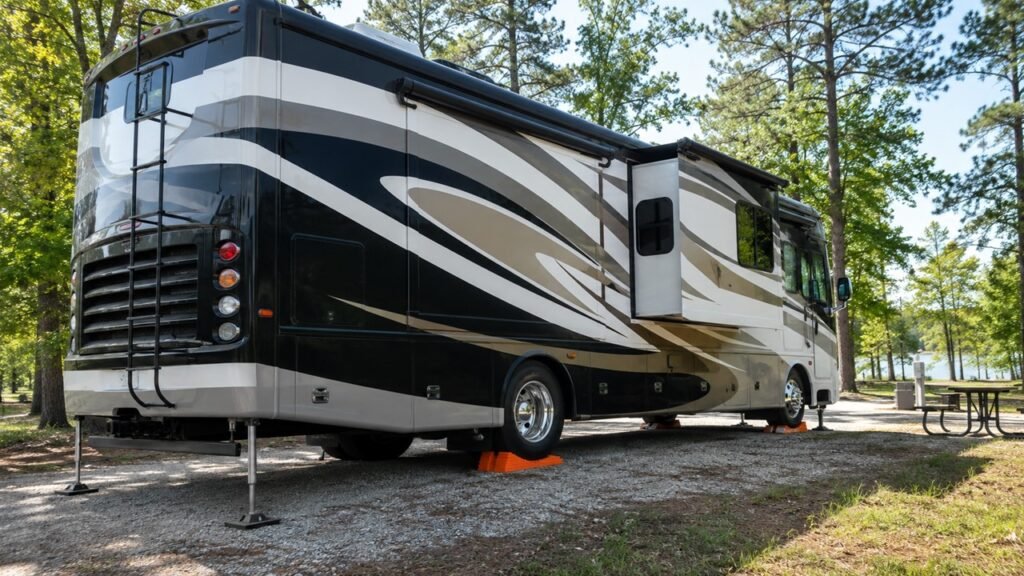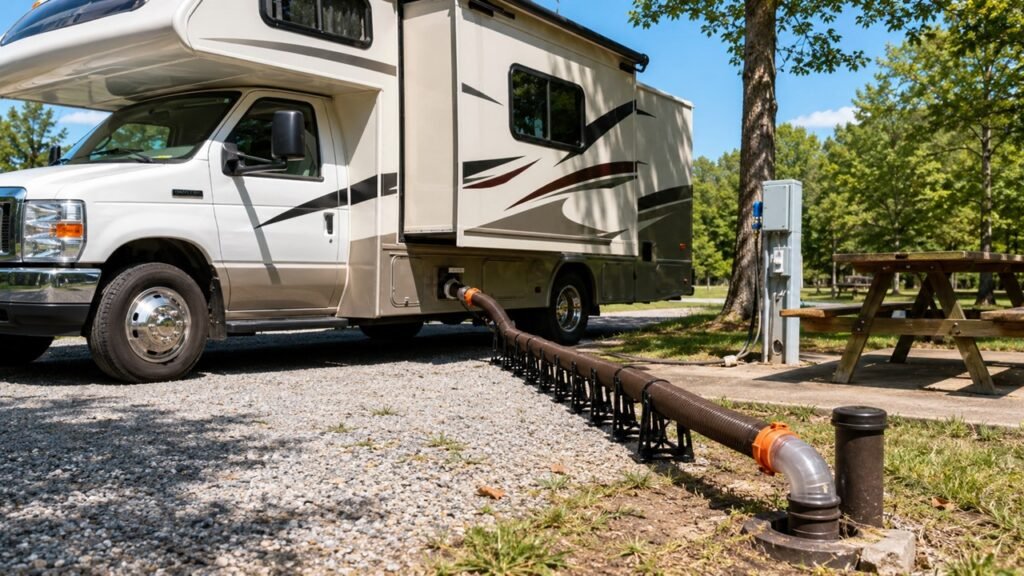
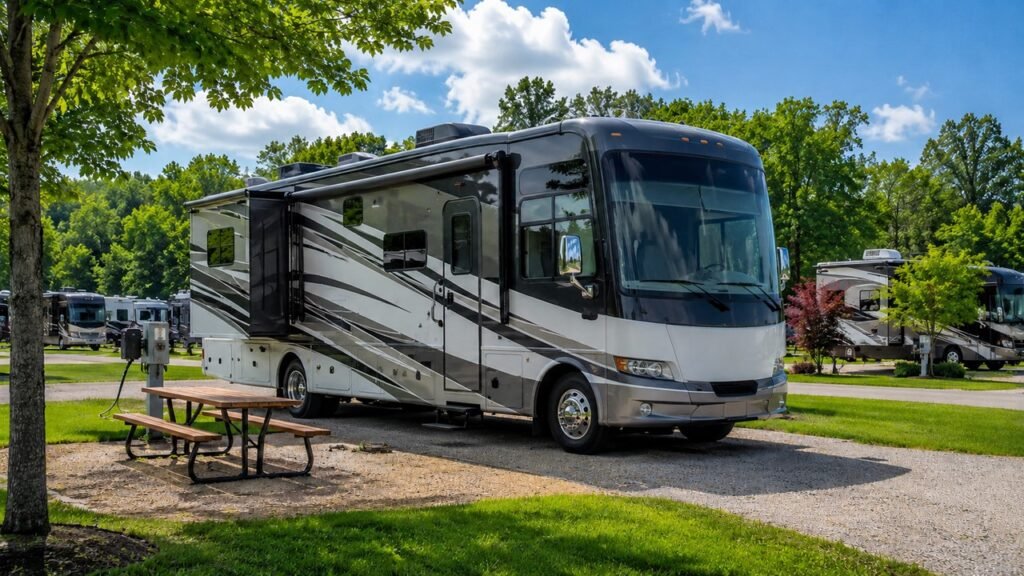
RV safety systems work by using cameras, sensors, alarms, brakes, electrical protection, and emergency exits to reduce risk while driving, camping, cooking, sleeping, and storing your RV. Some systems help you see and control the rig on the road, while others warn you about hidden dangers like propane leaks, smoke, carbon monoxide, tire problems, and electrical faults.
In this guide, I’ll walk you through how the main RV safety systems work, what each one actually protects you from, and how to keep them reliable before every trip.
Key Takeaways
- RV safety systems work in layers, not as one single device.
- Backup cameras and side cameras help reduce blind spots while parking or towing.
- TPMS sensors warn you about tire pressure and temperature problems early.
- Propane, smoke, and carbon monoxide alarms protect against hidden indoor hazards.
- GFCI outlets and breakers help reduce shock, overload, and electrical fire risks.
- Fire extinguishers and egress windows help you respond when prevention fails.
- Safety systems need regular testing, cleaning, battery checks, and replacement.
What Are RV Safety Systems?
RV safety systems are the built-in and add-on devices that help protect your RV, passengers, appliances, and campsite setup. Some are active while you drive. Others work quietly in the background while the RV is parked, plugged in, or being used as a living space.
| RV Safety System | Where It Helps | What It Does |
| Backup camera | Driving and parking | Shows the area behind the RV |
| Side camera | Lane changes and turns | Helps reduce blind spots |
| TPMS | Highway driving | Monitors tire pressure and temperature |
| Brake controller | Towing | Helps trailer brakes match tow vehicle braking |
| Sway control | Towing | Reduces side-to-side trailer movement |
| Propane detector | Inside RV | Warns about LP gas leaks |
| Smoke alarm | Inside RV | Warns about fire or smoke |
| Carbon monoxide alarm | Inside RV | Warns about dangerous CO buildup |
| GFCI outlet | Wet electrical areas | Trips when a ground fault is detected |
| Circuit breaker | Electrical panel | Cuts power during overloads or faults |
| Fire extinguisher | Emergency response | Helps fight small, contained fires |
| Egress window | Emergency escape | Gives a second way out |
| Door/window sensors | Parked RV | Alert you to possible intrusion |
| Security cameras | Campsite or storage | Let you monitor the RV remotely |
A good way to think about RV safety is this: your RV is both a vehicle and a small home. That means it needs road safety, fire safety, gas safety, electrical safety, and personal security all working together.
How RV Driving Safety Systems Work
RV driving safety systems help you see better, stop more safely, and react earlier. They are especially important because RVs are longer, heavier, wider, and harder to maneuver than normal passenger vehicles.
Backup Cameras And Observation Cameras
A backup camera is usually mounted on the rear wall of the RV. It sends video to a monitor inside the tow vehicle or motorhome cab. When you shift into reverse, the screen shows what is behind the rig.
That sounds simple, but it solves a major RV problem: you cannot see directly behind a tall trailer or motorhome with mirrors alone.
Backup cameras help when you are:
- Reversing into a campsite
- Backing near trees, posts, or hookups
- Watching for people behind the RV
- Aligning the trailer with a driveway
- Checking a towed vehicle behind a motorhome
An observation camera works in a similar way, but it can stay on while driving. That makes it useful for watching traffic behind you, checking a tow car, or seeing vehicles that are following too closely.
Wired camera systems usually give a more stable signal because the camera and monitor are physically connected. Wireless systems are easier to install, but long RVs, metal walls, interference, and distance can sometimes affect the signal.
Side Cameras And Blind Spot Cameras
Side cameras are usually mounted near the side mirrors or along the exterior of the RV. Some turn on automatically when you use the turn signal. Others stay visible on a split-screen monitor.
These cameras help because RV mirrors do not always show the whole side area. A long trailer can hide a small car, motorcycle, cyclist, or low obstacle.
Side cameras are helpful when you are:
- Changing lanes
- Turning through tight roads
- Pulling into fuel stations
- Moving through campgrounds
- Passing parked vehicles
- Backing at an angle
They do not replace mirrors or careful driving, but they give you another viewing angle. That extra angle can make a big difference when your RV is long or your campsite is tight.
Tire Pressure Monitoring Systems
A Tire Pressure Monitoring System, or TPMS, uses sensors to monitor tire pressure. Many RV TPMS kits also monitor tire temperature. If pressure drops or temperature climbs too high, the system warns you on a dash monitor.
This matters because RV tires carry heavy loads. A tire may look normal from the outside but still be underinflated. NHTSA explains that if a TPMS warning light appears, at least one tire is already significantly underinflated and needs attention.
Most RV TPMS setups use sensors that screw onto the tire valve stems. These sensors send data wirelessly to the monitor. Some larger RVs and trailers may need a repeater to strengthen the signal from the rear tires.
A TPMS can alert you to:
- Slow air leaks
- Sudden pressure loss
- High tire temperature
- Sensor battery problems
- Signal loss
- Incorrect pressure settings
A TPMS does not prevent tire failure by itself. It gives you a warning early enough to slow down, pull over, and check the tire before the situation gets worse.
Trailer Brake Controllers
A trailer brake controller connects your tow vehicle’s braking system to the trailer brakes. When you press the brake pedal, the controller tells the trailer brakes how much braking force to apply.
Without a brake controller, the tow vehicle does too much of the stopping. That can increase stopping distance, wear out brakes faster, and make the trailer push the vehicle during hard braking.
There are two common types:
- Time-delay brake controllers: Apply trailer braking at a preset rate.
- Proportional brake controllers: Apply braking based on how hard the tow vehicle is slowing down.
For most RV towing, proportional brake controllers feel smoother and more natural. They adjust braking force based on actual movement, so the trailer brakes harder during sudden stops and lighter during gentle stops.
The key setting is called brake gain. If the gain is too low, the trailer may push the tow vehicle. If it is too high, the trailer brakes may grab or lock up.
Sway Control Systems
Trailer sway happens when the trailer starts moving side to side behind the tow vehicle. A little movement can turn dangerous quickly if wind, speed, steering, or weight balance make it worse.
Sway control systems help reduce that motion.
There are three common types:
- Friction sway control: Uses resistance to slow side-to-side movement.
- Weight distribution hitches with sway control: Improve balance and reduce trailer movement.
- Electronic sway control: Uses sensors and braking action to correct sway.
Electronic sway control systems can detect sudden trailer movement and apply braking to help bring the trailer back in line. Some systems work through the trailer brakes. Others work through the tow vehicle’s stability control.
Common causes of sway include:
- Crosswinds
- Passing trucks
- Poor weight distribution
- Low tongue weight
- Overloaded rear storage
- Underinflated tires
- Sudden steering corrections
- Driving too fast for conditions
Sway control is helpful, but it is not magic. The best safety system is still a properly loaded trailer, correct tire pressure, a good hitch setup, and slower driving when conditions get rough.
How RV Tire Safety Systems Prevent Blowouts
RV tire safety systems mostly work by warning you before tire damage becomes obvious. This is important because many tire problems begin quietly with heat, air loss, overloading, or age.
A TPMS is the main tire safety system most RV owners use. It gives you real-time information instead of forcing you to guess what is happening at highway speed.
A TPMS can warn you about:
- Low tire pressure
- Fast pressure loss
- High tire temperature
- Overinflation
- Sensor battery failure
- Signal interruption
Tire pressure matters because underinflated tires flex more as they roll. That extra flex creates heat. Heat can damage the tire structure, especially when the RV is heavy or the weather is hot.
But here is the part many people miss: you should still check tire pressure manually before travel. A TPMS is a warning system, not a replacement for a tire gauge.
The best habit is simple. Check cold tire pressure before driving, inspect the tread and sidewalls, then use the TPMS as your real-time safety monitor during the trip.
Also, do not set your RV tire pressure by guesswork. Use the RV manufacturer’s label, the tire load chart, or weighed axle data when available. The number on the tire sidewall is usually the maximum pressure for a maximum load, not always the perfect pressure for your exact RV setup.
How RV Propane Safety Systems Work
RV propane safety systems matter because propane is used for cooking, heating, water heating, and sometimes refrigeration. These systems help control gas pressure, detect leaks, and let you shut the system down quickly.
Propane Leak Detectors
A propane detector is a small alarm mounted low inside the RV. It constantly samples the air for LP gas. If propane reaches a dangerous level, the detector sounds an alarm.
Propane detectors are placed low because propane is heavier than air and can collect near the floor. Fire safety guidance for RVs commonly recommends installing propane leak alarms close to floor level, and one municipal fire safety guide says no more than 6 inches above the floor or lowest level.
You will usually find the propane detector near:
- The kitchen area
- The furnace area
- The floor near propane appliances
- The lower wall of the living space
If the propane alarm goes off, do not simply silence it and go back to sleep. It may be warning you about a real leak.
Propane Regulators And Shut-Off Valves
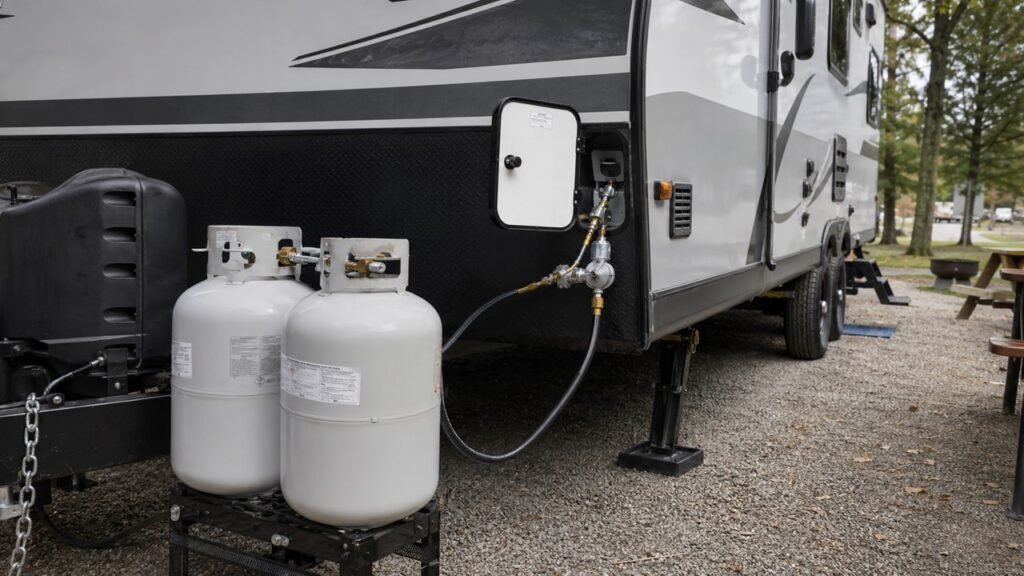
Propane is stored in a tank under pressure. Your RV appliances cannot use that high-pressure gas directly. The propane regulator reduces the tank pressure to a safe, usable level for appliances.
The regulator is usually installed near the propane tanks. From there, gas travels through lines to the stove, furnace, water heater, refrigerator, or other propane appliances.
Shut-off valves let you stop propane flow. Some are at the tank. Others may be near individual appliances.
You should shut propane off when:
- You smell gas
- The LP alarm sounds
- You are storing the RV
- You are repairing propane appliances
- The manual or campground rules require it
- You are fueling, if your RV instructions require propane to be off
Excess Flow Protection
Some propane fittings include excess flow protection. This can reduce gas flow if a line breaks or gas escapes too quickly.
That sounds reassuring, but it should not make you careless. These devices are backups, not permission to ignore leaks, cracked hoses, loose fittings, or old regulators.
A propane system should be treated with respect. If you suspect a leak, shut the gas off, ventilate the area, avoid sparks, and get the system checked before using it again.
What To Do If The Propane Alarm Goes Off
If your RV propane alarm sounds, follow a calm but serious process:
- Do not ignore the alarm.
- Do not light matches, candles, or burners.
- Avoid switching electrical devices on or off if you suspect gas.
- Open doors and windows if it is safe.
- Turn off propane at the tank if you can do so safely.
- Get everyone out of the RV.
- Stay away until the smell clears and the system is checked.
- Do not use propane again until the cause is found.
Sometimes propane alarms can be triggered by low battery voltage, aerosols, cleaning products, or sensor age. Still, you should treat every alarm as real until you know it is not.
How Smoke And Carbon Monoxide Alarms Work In An RV
Smoke alarms and carbon monoxide alarms protect against different dangers. Smoke alarms warn you about fire. Carbon monoxide alarms warn you about a poisonous gas you cannot see or smell.
Smoke Alarms
A smoke alarm detects smoke particles in the air. When smoke reaches the sensor, the alarm sounds loudly to wake or warn people inside the RV.
In an RV, smoke alarms are especially important because the space is small. Smoke can spread quickly, and exits may be limited.
Smoke can come from:
- Cooking fires
- Electrical overheating
- Faulty appliances
- Smoking materials
- Nearby campfires
- Heater problems
Install smoke alarms near sleeping areas and follow the alarm manufacturer’s instructions. If your RV has separate sleeping spaces, one smoke alarm may not be enough.
Carbon Monoxide Alarms
Carbon monoxide, or CO, is dangerous because it has no smell, color, or taste. You can breathe it without realizing anything is wrong.
In an RV, CO can come from:
- Generator exhaust
- Furnace problems
- Water heater problems
- Vehicle exhaust
- Nearby idling engines
- Blocked vents
- Improper appliance use
RV fire safety guidance recommends installing and maintaining at least one carbon monoxide alarm near the sleeping area.
This is especially important at night. You may not notice symptoms while sleeping, so the alarm becomes your first warning.
Combination Alarms Vs Separate Alarms
Some RVs use combination alarms that detect more than one hazard. Others use separate smoke, propane, and CO alarms.
Combination alarms save space and can simplify installation. Separate alarms may allow better placement because propane, smoke, and CO do not always collect in the same areas.
As a simple rule:
- Smoke alarms usually go higher.
- Propane alarms usually go low.
- CO alarms should follow the manufacturer’s placement instructions.
Do not move alarms randomly. Their location affects how quickly they detect danger.
Where RV Alarms Should Be Placed
Alarm placement matters because different hazards behave differently.
Use this basic guide:
- Smoke alarm: Near sleeping areas and placed according to the manual.
- CO alarm: Near sleeping areas, following the product instructions.
- Propane alarm: Low near the floor.
- Fire extinguisher: Easy to reach, often near an exit.
- Extra alarm: Useful in larger RVs with separate rooms.
Avoid placing alarms where they may be blocked, painted, covered, or exposed to heavy grease and dust.
How RV Electrical Safety Systems Work
RV electrical safety systems protect people, wiring, appliances, batteries, and the RV itself. This is important because RVs often use both 12-volt DC power and 120-volt AC power.
GFCI Outlets
A GFCI outlet stands for Ground Fault Circuit Interrupter. It compares the electrical current going out with the current coming back. If the outlet senses a difference, it trips quickly.
That difference may mean electricity is leaking through another path, possibly through water or a person. So the GFCI shuts the circuit down to reduce shock risk.
You often find GFCI protection in:
- Bathrooms
- Kitchens
- Exterior outlets
- Wet bays
- Outlets near sinks
- Basement storage areas
GFCI outlets have test and reset buttons. Pressing the test button should trip the outlet. Pressing reset should restore power.
If a GFCI keeps tripping, do not keep forcing it back on. Moisture, a bad appliance, damaged wiring, or an overloaded circuit may be causing the problem.
Circuit Breakers And Fuses
RV circuit breakers and fuses protect wiring from too much current.
Breakers are usually used for 120-volt AC circuits. These power items like outlets, air conditioners, microwaves, and other AC appliances.
Fuses are commonly used for 12-volt DC circuits. These power lights, fans, water pumps, control boards, slides, and other low-voltage systems.
When a breaker trips or a fuse blows, it is doing its job. It is stopping power before the wire overheats or equipment gets damaged.
A tripped breaker or blown fuse can happen because of:
- Overloaded circuits
- Short circuits
- Faulty appliances
- Loose wiring
- Water intrusion
- Damaged cords
Replacing a fuse with a larger one is dangerous. The fuse is sized to protect the wire. A bigger fuse may allow the wire to overheat.
Surge Protectors And EMS Units
A surge protector helps protect your RV from voltage spikes. These spikes can happen when power is unstable or during certain electrical events.
An Electrical Management System, or EMS, goes further. It can check for more campground power problems before allowing power into the RV.
Depending on the model, an EMS may detect:
- High voltage
- Low voltage
- Open ground
- Reverse polarity
- Open neutral
- Surge events
- Frequency problems
- Wiring faults
This matters because campground power is not always perfect. A basic surge protector is better than nothing, but a good EMS gives broader protection.
Battery Disconnects And Overcurrent Protection
The battery disconnect switch lets you shut off battery power to many RV systems. This helps during storage, maintenance, and troubleshooting.
Batteries also need proper fuses or breakers near the power source. If a wire shorts, the overcurrent protection cuts power before the wire overheats.
This is especially important with lithium battery upgrades, solar systems, inverters, and large battery banks. More stored energy means the system needs proper protection.
How RV Fire Safety Systems Work
RV fire safety systems work in three stages: early warning, quick response, and safe escape. You want to know there is a problem early, respond only if it is safe, and get out fast if the fire grows.
The main RV fire safety systems include:
- Smoke alarms
- Propane detectors
- Carbon monoxide alarms
- Fire extinguishers
- GFCI outlets
- Circuit breakers
- Egress windows
- Emergency exits
A fire extinguisher is for small, contained fires only. If the fire is spreading, smoke is heavy, or your exit is at risk, leave the RV first.
Keep the extinguisher somewhere visible and easy to reach. Many RVs place it near the entry door, which makes sense because you can grab it while keeping an exit behind you.
The best fire safety mindset is simple: people first, RV second. You can replace gear. You cannot replace seconds during a fast-moving fire.
How RV Emergency Exit And Egress Systems Work
Emergency exit systems give you another way out if the main door is blocked by fire, crash damage, smoke, or an outside obstacle. They are simple systems, but they matter a lot.
Egress Windows
An egress window is designed to open wide enough for escape. In many RVs, it has a red handle or clearly marked latch.
When opened, the window may swing outward, lift out, or release differently depending on the RV design. Some have screens that must be pushed out or removed.
The problem is that many owners never test these windows. Then, during an emergency, they may discover the latch is stuck, the screen is jammed, or cargo is blocking the exit.
Check your egress windows before trips. Make sure everyone knows which window is the emergency exit and how it opens.
Roof Hatches And Secondary Exits
Some RVs may have roof hatches or other secondary exits depending on the layout. These are not as common as emergency windows, but they serve the same purpose.
The goal is to avoid being trapped if the main door cannot be used.
If you travel with kids, elderly family members, or pets, think through escape in advance. A window exit may be difficult for some passengers without help.
Why You Should Practice Opening Them
You do not need to run a full emergency drill every weekend. But you should open the emergency exit enough to understand how it works.
Practice helps you answer important questions:
- Which latch opens first?
- Does the window stick?
- Can the screen come out?
- Is furniture blocking the exit?
- Can everyone reach it?
- Where would you land outside?
This is one of those safety checks that takes a few minutes but can matter when there is no time to learn.
How RV Security Systems Work When Parked
RV security systems help protect the rig when it is parked at a campground, driveway, storage lot, trailhead, or boondocking spot. These systems are mostly about deterrence, alerts, and remote visibility.
Keyless Entry And Smart Door Locks
Keyless RV locks use a keypad, remote, or app to lock and unlock the entry door. Many RV owners like them because they reduce the need to carry keys around the campground.
Some systems can also sound an alarm if someone enters the wrong code repeatedly.
However, keyless locks depend on batteries. Always keep a backup key somewhere safe, and change the lock batteries before they get weak.
Also, change default codes. A lock is much less useful if the previous owner, dealer, or installer still knows the code.
Door, Window, And Motion Sensors
Door and window sensors detect opening or movement. Motion sensors detect movement inside or near the RV.
When triggered, these sensors may sound a local alarm or send a notification to your phone.
These systems are helpful when:
- Your RV is in storage
- You leave pets inside briefly with climate monitoring
- You camp in remote areas
- You park at trailheads
- You want alerts while away from the campsite
Just remember that sensors need power, signal, and correct placement. A dead battery or weak Wi-Fi connection can make a smart system useless.
Cellular And Wi-Fi Cameras
Security cameras can show live video, record motion clips, and send phone alerts. Some use campground Wi-Fi. Others connect through a cellular router or built-in cellular service.
Wi-Fi cameras are useful when internet is strong. Cellular cameras are better for remote lots or boondocking, but they need data service.
Cameras can help you monitor:
- Entry doors
- Campsite area
- Storage lots
- Tow vehicle
- Bike racks
- Hitch area
- Exterior compartments
They are not perfect theft prevention, but they can discourage casual theft and give you more awareness.
Smart RV Control Hubs
Modern RVs may have smart control systems that connect multiple features into one app. Depending on the setup, you may be able to monitor or control lights, locks, slides, awnings, tank levels, tire pressure, temperature, or propane levels.
The RV Industry Association says its standards program includes inspections that monitor adherence to standards used in RV construction and safety-related systems.
Smart systems are convenient, but they also add complexity. Keep manual controls, backup keys, and basic troubleshooting knowledge available. An app should help you, not become the only way you can operate the RV.
How RV Safety Systems Work Together
RV safety systems are most effective when they work as layers. One system warns you early, another helps you respond, and another helps you escape or recover.
| Situation | Systems Involved | How They Work Together |
| Backing into a campsite | Backup camera, mirrors, spotter | Helps you see obstacles and guide the RV safely |
| Highway tire issue | TPMS, mirrors, hazard lights | Warns you early so you can slow down and pull over |
| Trailer sway | Hitch setup, sway control, brake controller | Helps stabilize the trailer and reduce movement |
| Propane leak at night | LP detector, shut-off valve, ventilation | Warns you and lets you stop gas flow |
| Cooking smoke | Smoke alarm, vent fan, extinguisher | Alerts you before smoke spreads |
| Wet outlet fault | GFCI, breaker panel | Trips power before a dangerous fault continues |
| Campground power issue | Surge protector or EMS | Blocks unsafe power before it reaches the RV |
| Fire blocking main door | Smoke alarm, extinguisher, egress window | Warns you and gives you another escape route |
| Storage lot intrusion | Door lock, camera, motion sensor | Deters entry and sends alerts |
This layered approach is important because no single system catches everything. A backup camera will not warn you about low tire pressure. A propane alarm will not stop trailer sway. A GFCI will not help if the emergency exit is blocked.
Each system has a different job.
RV Safety System Maintenance Checklist
RV safety systems only help if they are working. A detector with an expired sensor, a dead camera monitor, or a missing fire extinguisher is just false confidence.
Before Every Trip
Use this checklist before you leave:
- Test the smoke alarm.
- Test the carbon monoxide alarm.
- Test the propane detector.
- Check the fire extinguisher gauge.
- Confirm the extinguisher is easy to reach.
- Check tire pressure manually.
- Confirm TPMS sensors are reading correctly.
- Test the backup camera and monitor.
- Clean camera lenses.
- Test trailer brakes.
- Check brake lights and turn signals.
- Test GFCI outlets.
- Inspect propane hoses visually.
- Open and close emergency exit windows.
- Make sure exits are not blocked.
- Check door locks and security batteries.
Monthly During Camping Season
Once a month, do a slightly deeper check:
- Clean dust from alarms.
- Inspect alarm dates and labels.
- Check TPMS sensor batteries if needed.
- Look for cracked propane hoses.
- Test exterior lights.
- Check security camera power.
- Inspect shore power cord ends.
- Test surge protector or EMS function.
- Check battery terminals.
- Review your emergency plan.
Some fire safety guidance recommends testing smoke, carbon monoxide, and propane leak alarms weekly when the RV is in use.
Annually
Once a year, review the bigger safety items:
- Replace expired detectors.
- Service brakes.
- Inspect tires for age and cracks.
- Check fire extinguisher condition.
- Inspect roof vents and appliance vents.
- Review propane system condition.
- Check emergency exits.
- Replace weak lock batteries.
- Update security app settings.
- Review your insurance and roadside assistance details.
If you are not comfortable inspecting propane, brakes, or electrical systems yourself, get a qualified RV technician to check them.
Common RV Safety System Problems
RV safety systems can fail, chirp, disconnect, or give false warnings. The key is knowing what the warning might mean instead of ignoring it.
False Propane Alarm
A propane alarm may sound because of a real leak, but it can also react to other conditions.
Possible causes include:
- Actual propane leak
- Low RV battery voltage
- Aerosol sprays
- Cleaning chemicals
- Pet odors
- Sensor age
- Moisture
- Wiring issue
Treat it as real first. Ventilate, shut off propane if safe, and leave the RV if needed.
TPMS Signal Loss
TPMS signal loss is common on long trailers and large motorhomes.
Possible causes include:
- Weak sensor battery
- Long distance from sensor to monitor
- Metal blocking the signal
- Missing repeater
- Incorrect sensor pairing
- Sensor installed on the wrong tire position
If your system often loses rear tire readings, a signal repeater may help.
Backup Camera Lag Or Black Screen
A backup camera may lag, flicker, or lose picture because of power or signal problems.
Common causes include:
- Loose wiring
- Weak wireless signal
- Dirty camera lens
- Monitor power issue
- Pairing problem
- Water intrusion
- Damaged cable
- Blown fuse
For wireless cameras, interference can be worse in crowded campgrounds or near other electronics.
GFCI Keeps Tripping
A GFCI that keeps tripping is trying to tell you something.
Common causes include:
- Moisture in an outlet
- Faulty appliance
- Damaged cord
- Wiring issue
- Overloaded circuit
- Exterior outlet exposure
- Water inside a compartment
Unplug appliances and reset the outlet. If it trips again, stop using that circuit until the cause is found.
Smoke Or CO Alarm Chirping
A chirping alarm usually means the unit needs attention.
Common causes include:
- Low battery
- End-of-life warning
- Dust inside the alarm
- Loose connection
- Sensor fault
- Low 12V power
Do not remove the battery and forget about it. Replace the battery or the unit as needed.
RV Safety Systems For Different RV Types
Different RVs need different safety priorities. A small camper van and a 40-foot fifth wheel do not have the same risks.
| RV Type | Most Important Safety Focus | Why It Matters |
| Travel trailer | TPMS, brake controller, sway control, backup camera | Towing stability and trailer tires are major concerns |
| Fifth wheel | TPMS, hitch checks, side cameras, brake system | Heavy trailers need strong braking and visibility |
| Class A motorhome | Cameras, TPMS, CO alarm, fire extinguisher | Large blind spots and onboard systems increase risk |
| Class B camper van | CO alarm, propane detector, GFCI, ventilation | Small spaces concentrate hazards quickly |
| Class C motorhome | Rear camera, tire safety, propane alarm, smoke alarm | Family layouts often use many appliances |
| Truck camper | Tie-down checks, propane safety, weight balance | Load security and compact systems matter most |
| Toy hauler | Fire safety, ventilation, fuel storage, rear camera | Gear, fuel, and cargo add extra safety concerns |
No matter which RV you own, the basics stay the same. You need safe tires, working alarms, protected electrical circuits, clear exits, and a way to respond quickly.
What RV Safety Systems Do Not Do
This is important because safety systems can create overconfidence. They are helpers, not replacements for good habits.
A TPMS does not replace tire inspections. You still need to check pressure, tread, sidewalls, valve stems, and tire age.
A backup camera does not replace mirrors. It can miss side obstacles, low branches, or fast-moving people outside the camera view.
A propane alarm does not fix a leak. It only warns you that gas may be present.
A fire extinguisher does not make every fire safe to fight. If the fire is spreading, get out.
A surge protector does not repair bad campground wiring. It may block unsafe power, but the source problem still exists.
A smart lock does not stop every thief. It adds convenience and deterrence, but it is not a complete security plan.
A carbon monoxide alarm does not make unsafe generator placement okay. You still need proper ventilation and safe exhaust direction.
The best RV safety setup combines devices, inspections, habits, and common sense.
Best Practices To Keep RV Safety Systems Reliable
RV safety systems work best when you treat them as active maintenance items. They are not “install once and forget forever” devices.
Follow these best practices:
- Read the owner’s manual for each safety device.
- Test alarms before sleeping in the RV.
- Replace detectors before their expiration date.
- Keep spare batteries for alarms and sensors.
- Keep the fire extinguisher visible and reachable.
- Do not block emergency exits with bags or furniture.
- Keep camera lenses clean.
- Check tire pressure before driving.
- Do not ignore chirping alarms.
- Keep propane off when required.
- Teach every traveler what each alarm sound means.
- Keep a flashlight near the bed.
- Know where the shut-off valves are.
- Use a departure checklist before towing.
- Keep emergency numbers and campsite details easy to find.
Also, do not assume a new RV means every safety system is ready. Test everything yourself before your first trip.
Conclusion
RV safety systems work by helping you detect hazards early, control the rig better, protect electrical circuits, monitor tires, respond to fire, escape in an emergency, and secure the RV when parked. Each system has a specific job, but the real protection comes from how they work together.
The smartest thing you can do is treat safety checks as part of every trip. Test your alarms, inspect your tires, check your camera, keep exits clear, and make sure everyone inside the RV knows what to do when something sounds, smells, sparks, or feels wrong.
Related FAQs
Do RVs Have Built-In Safety Systems?
Yes, most RVs come with several built-in safety systems. These usually include smoke alarms, carbon monoxide alarms, propane detectors, GFCI outlets, breakers, fuses, emergency exits, and fire extinguishers. Some newer RVs may also include backup cameras, TPMS compatibility, smart control hubs, keyless entry, and app-based monitoring.
Where Is The Propane Detector In An RV?
The propane detector is usually mounted low on an interior wall near the floor. That is because propane is heavier than air and can collect in low areas first. You may find it near the kitchen, furnace, or main living area. Do not cover, paint, or block it.
Does An RV Need A TPMS?
An RV does not always legally require an aftermarket TPMS, but it is highly recommended. RV tires carry heavy loads, and pressure or heat problems can become dangerous quickly. A TPMS gives you real-time warning while driving, which is much better than discovering a tire problem after damage has already happened.
Why Does My RV Propane Alarm Keep Going Off?
Your RV propane alarm may go off because of a real propane leak, low battery voltage, cleaning sprays, aerosols, pet odors, moisture, or an expired sensor. Treat the alarm seriously first. Ventilate, shut off propane if safe, and inspect the system before using propane again.
How Often Should I Test RV Alarms?
You should test RV alarms before every trip and regularly while the RV is in use. If you are camping full-time or for long stretches, weekly testing is a smart habit. Always follow the alarm manufacturer’s instructions because replacement and testing schedules can vary.
Can I Use Home Smoke And CO Alarms In An RV?
It is better to use alarms designed or rated for RV use. RVs deal with vibration, temperature changes, battery power, and compact layouts that regular home alarms may not handle as well. Also, plug-in residential CO alarms only work when they have 120-volt power. That can be a problem when you are boondocking or not plugged into shore power.
What Is The Most Important RV Safety System?
There is no single most important RV safety system. Tires, brakes, alarms, electrical protection, fire response, and emergency exits all protect you in different ways. If one system fails, another may give you time to react. That is why RV safety works best as a layered setup.
Why Does My RV GFCI Outlet Keep Tripping?
An RV GFCI outlet may keep tripping because of moisture, a faulty appliance, damaged wiring, or a ground fault. Exterior outlets and bathroom outlets are especially likely to trip when water is involved. Do not keep resetting it without checking the cause. The outlet may be preventing a shock hazard.
Are RV Backup Cameras Worth It?
Yes, RV backup cameras are worth it for most RV owners. They make reversing, parking, lane awareness, and campsite setup much easier. They are especially useful for large motorhomes, travel trailers, fifth wheels, and anyone who camps without a spotter.
How Do I Know If My RV Safety Systems Are Working?
You know they are working by testing them, not by assuming. Press the test buttons on alarms, check GFCI outlets, verify camera video, inspect the extinguisher gauge, and confirm TPMS readings before travel. If a system has an expiration date, replace it before it fails.

Michael Carter is an experienced RV traveler who focuses on practical outdoor trips across the States. He writes clear, step-by-step guides and realistic reviews based on real travel needs. His aim is to help RV and camper owners plan informed, simpler journeys with confidence.